Key Takeaways
Singapore’s older playgrounds were more than places to climb and slide. They were colourful, tactile parts of estate life, and many still carry memories of how neighbourhood childhood once felt.
- Dragon playgrounds turned concrete into imaginative landmarks.
- Pelican and other animal forms made everyday play feel theatrical.
- Sand pits, corridors and void decks supported spontaneous social life.
- Mosaic and terrazzo gave public design a distinctive local character.
- Surviving playgrounds connect present-day families with shared memories.
The rise of old Singapore playgrounds
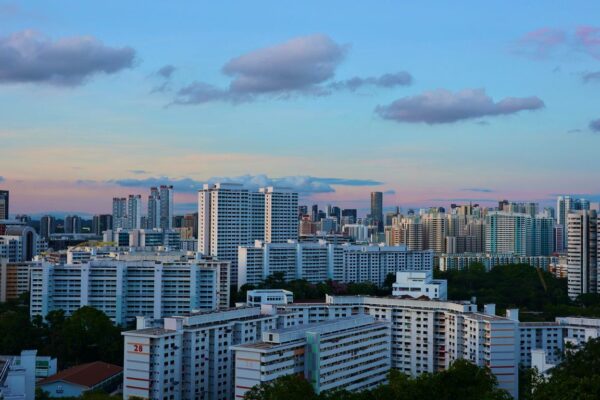
The story of old singapore playgrounds is closely tied to the growth of Singapore’s public housing estates. As families moved from kampongs and older urban settlements into new towns, childhood began to unfold around shared blocks, paved paths and communal amenities. The playground became one of the most familiar parts of that new landscape. It was close to home, free to use and open to children from many different households.
Housing estates and the changing shape of childhood
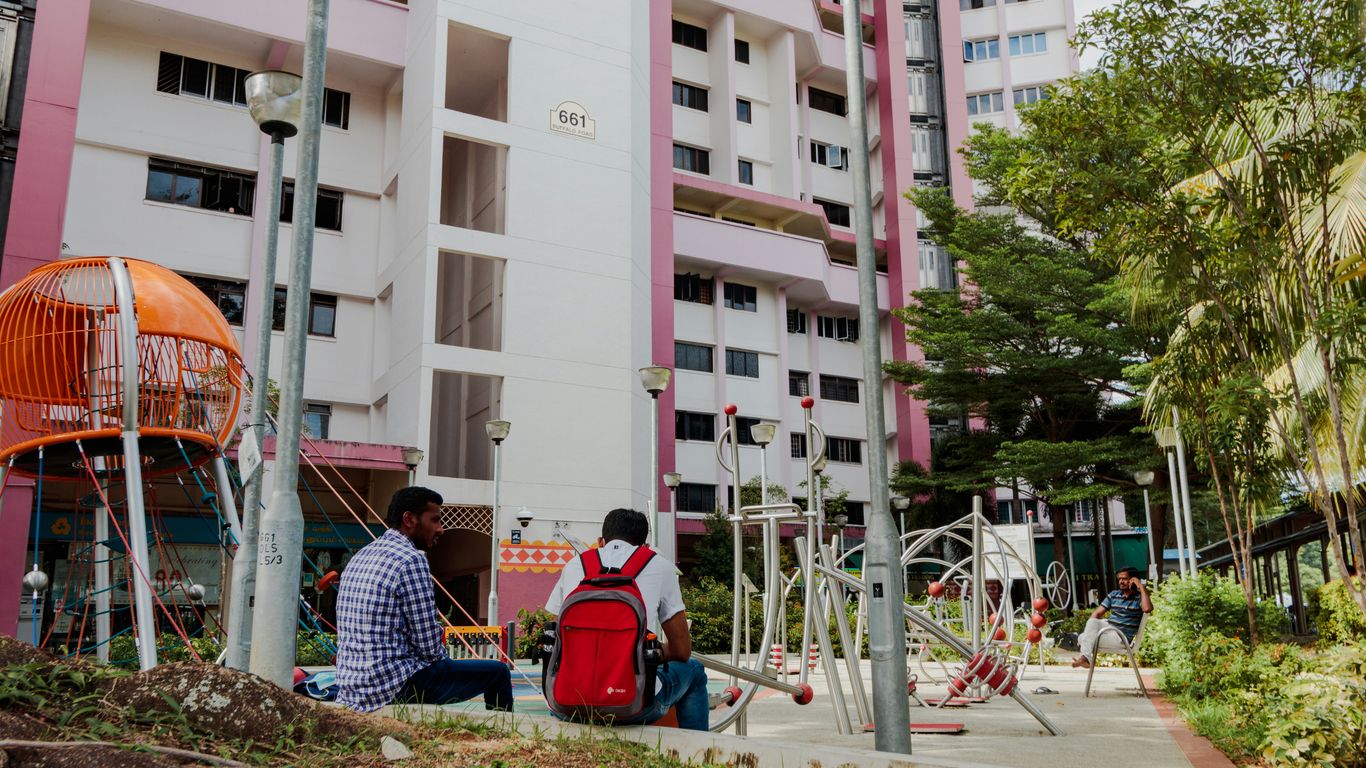
The new housing estates brought many families into closer physical proximity. A child might live several floors above the ground but still know the neighbours gathered near the sand pit, the auntie watching from a corridor, or the older children racing around the blocks. Playgrounds helped soften the scale of high-rise living by giving children a low, accessible world of their own.
Toa Payoh is a particularly useful place to understand this change. Its development from a rural district of kampongs and swamps into a planned HDB town brought new infrastructure as well as new routines. The story of Toa Payoh shows how housing, resettlement and community ties shaped the town, and the playgrounds belong within that wider story rather than standing apart from it.
Why playgrounds became part of Singapore’s nation-building story
A playground might appear small beside the larger work of building housing, schools and transport. Yet it expressed the same belief in shared public life. Children from different backgrounds could meet there without an appointment, while parents and grandparents built their own informal circles nearby. These spaces made the new estates feel lived in.
Public design also offered a way to give young neighbourhoods a recognisable identity. Instead of repeating anonymous equipment, designers introduced animals, boats, fruit and other forms that encouraged children to see their surroundings with curiosity. The result was practical recreation with a distinctly local imagination.
From practical recreation spaces to neighbourhood landmarks
At first, the playground was simply part of the estate’s amenities. Over time, particular structures became meeting points and directions: near the dragon, behind the pelican, beside the sand pit. Their shapes were easy to remember, even for children who did not yet know the names of the roads around them.
That everyday usefulness helped turn them into landmarks. A playground could be a place to wait for a sibling, cool down after school or spend an hour before dinner. Today, when residents revisit an old estate, the structure often brings back not one grand event but a scatter of ordinary afternoons.
The visual language of public play in the 1970s and 1980s
The playgrounds of the period were bold without being polished. Curved concrete, painted surfaces, terrazzo and ceramic mosaic tiles gave them a handmade visual presence. Their colours could fade under the sun, but the designs remained legible: a dragon was still a dragon, and a pelican’s beak still suggested a slide.
This visual language reflected a confident young city making room for pleasure in its built environment. The structures were not hidden behind elaborate landscaping. They sat among blocks, paths and open ground, asking children to invent the action themselves.
The dragons that became local icons
Among Singapore’s older playgrounds, the dragon is the form that has travelled furthest through memory. Its long body could be read as a climbing route, a tunnel or a bridge, while its head gave the whole structure a story. The design was recognisable across generations, even when individual playgrounds differed in scale, colour or layout.
How the dragon playground design captured children’s imaginations
The dragon offered an immediate invitation to pretend. Children did not need instructions to understand that its body could become a path through an imaginary landscape. One child might be the traveller, another the guard at the head, while a younger sibling stayed close to the safer curves below.
Its appeal came partly from being neither entirely realistic nor entirely abstract. The concrete form suggested a creature, but left enough gaps for children to supply the rest. That balance made the playground feel like a permanent prop for stories that changed every afternoon.
Sand pits, concrete curves and climbing routes
The classic dragon arrangement combined several kinds of movement. Children climbed over rounded sections, crawled through openings and used the body’s curves to reach a slide or raised platform. Where sand remained beneath the structure, it also provided a softer surface and a separate world of digging, building and collecting.
The sand pit was social as much as physical. A child who was not ready to climb could still join in with a bucket or a makeshift road. Meanwhile, the older children treated the dragon’s body as a route to master, returning to the same challenge until it felt easy.
The differences between Singapore’s dragon playgrounds
Not every dragon playground looked or worked in exactly the same way. Some were fuller, longer forms, while others were smaller or arranged for younger children. Mosaic patterns, colour schemes, surrounding surfaces and the presence or absence of a sand pit changed the experience from one estate to another.
Those differences matter because memory is usually attached to a particular place. A resident may remember the dragon near a certain block, the roughness of its steps or the view of laundry above it. The shared design created a national image, but local details made each playground personal.
Why the dragon remains a symbol of shared childhood memories
The dragon has endured because it holds several kinds of memory at once. It recalls public housing, children’s independence and the close observation of adults nearby. It also belongs to a period when a neighbourhood amenity could become a piece of civic character without being designed as a landmark.
A useful way to see the surviving structures is through the old dragon playgrounds guide, which places the remaining examples in their estate settings. Their value lies not only in rarity. They show how design, play and everyday Singaporean life once met in the same small patch of ground.
Pelican slides and the imagination of everyday play
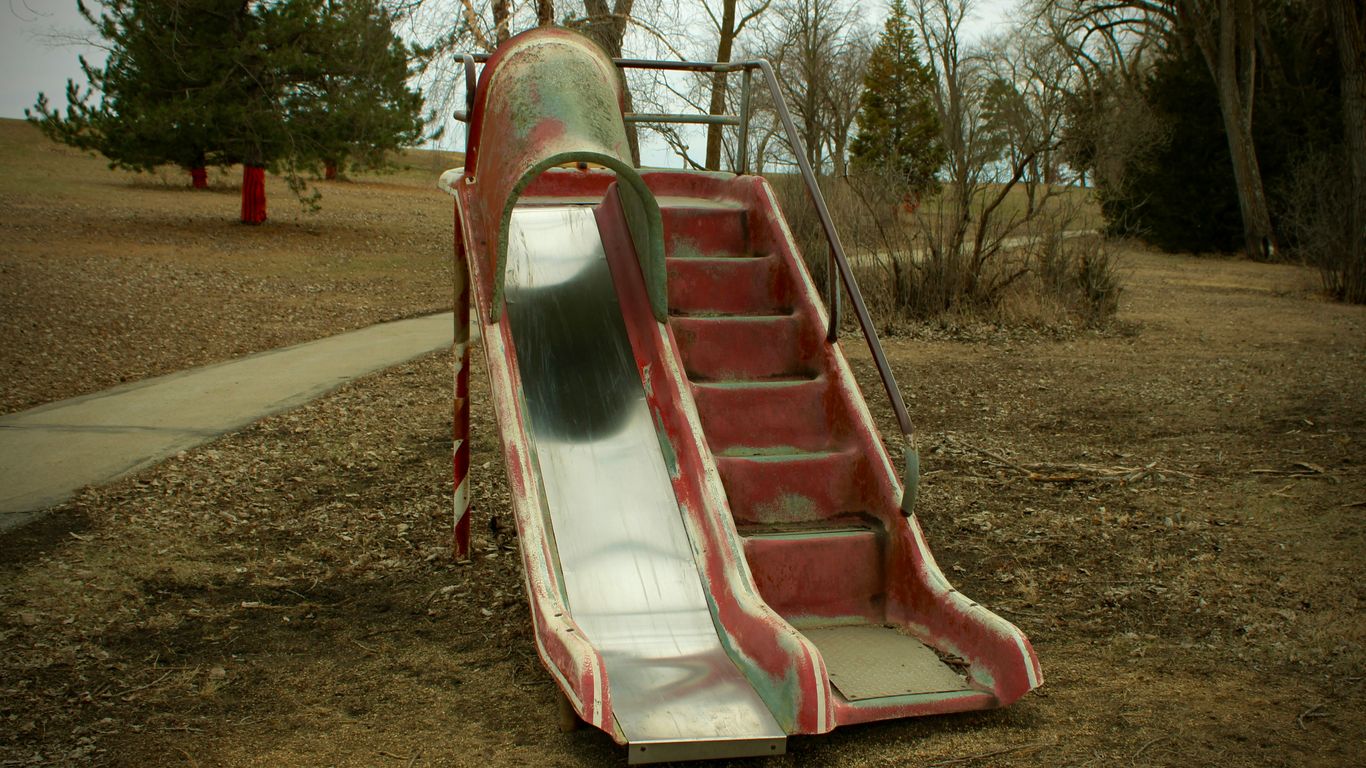
The pelican slide belonged to the same broad family of imaginative public structures, but it created a different mood. Its animal shape made the slide itself part of the story, rather than a separate piece of equipment attached to a frame. In an estate filled with repeated blocks, such a form could give children a memorable visual pause.
What made the pelican slide so distinctive
A pelican slide was easy to recognise because the animal’s body and beak suggested how it should be used. The slide’s route became part of the creature’s identity, turning a simple descent into an act of entering, travelling through or emerging from the animal. The design encouraged children to talk about what they were playing on, not merely what they were doing.
Its distinctiveness also came from scale. To a small child, the structure could feel like a large creature settled in the estate. That sense of encounter was central to the old designs: children were not just surrounded by equipment but invited to negotiate a strange, friendly object.
Animal-shaped structures across Singapore’s estates
Animal forms gave neighbourhoods their own small cast of characters. Alongside dragons and pelicans, residents remember elephants, birds and other themed structures, each using familiar images to make play more vivid. These designs were especially effective in places where the blocks and roads followed a broadly planned pattern.
The nostalgic elephant and watermelon playgrounds offer another view of this tradition. Their importance is not simply that they look unusual. They show how a functional estate space could also carry references to animals, food and childhood fantasy.
How children turned fixed designs into open-ended adventures
The designers fixed the concrete in place, but children supplied the rules. A slide could become a waterfall, a dragon’s opening a cave, and the ground around an animal a shoreline or campsite. The same structure supported quiet solitary play in the morning and noisy group games after school.
A few recurring habits often shaped an afternoon:
- Children claimed the highest reachable point before anyone else arrived.
- Younger players used the sand or lower platforms as their own territory.
- Older children invented races around the structure and nearby blocks.
- A familiar adult became the lookout, caller or referee without planning to.
These routines made the playground feel changeable despite its permanent materials. The structure stayed put; the meaning moved with the children.
The tactile appeal of mosaic, concrete and painted surfaces
Old playgrounds were designed to be touched. Hands met warm concrete, small tile joints and painted edges worn smooth by years of use. The surfaces carried heat after a sunny afternoon and held a different coolness when clouds gathered, making the playground part of the sensory life of the estate.
That tactility is one reason photographs cannot fully replace a visit. The colours and patterns may be visible, but not the scale of the curves or the feel of standing beneath a large concrete form. A careful look at mosaic playgrounds can suggest their faded beauty, while the physical places reveal how children once moved through them.
Growing up around the playground
For many residents, the playground was less an occasional destination than part of the daily route home. It sat between school, the lift lobby, the provision shop and dinner. Children could arrive without a booking, and adults could keep an eye on them while continuing a conversation or an errand nearby.
That informality gave the spaces their particular social texture. The playground was public, but it was also known territory, watched by people who recognised the children and noticed when someone new appeared.
After-school rituals and spontaneous neighbourhood games
The afternoon often began with a loose gathering rather than a formal plan. School bags were put down, shoes became dusty and a simple visit stretched longer than expected. Games changed according to who arrived, how hot the day was and whether the sand pit or slide was already occupied.
There was room for repetition. Children returned to the same routes, argued over turns and then resumed play minutes later. The ritual mattered because it gave the day a dependable pause between school and home.
The role of parents, grandparents and older siblings
Adults were present without always directing the action. A grandparent might sit near the edge, a parent might call from a block entrance, and an older sibling might quietly decide which parts were safe for a younger child. Supervision was woven into the setting rather than separated into a dedicated activity.
This arrangement also allowed adults to meet one another. Information about school, work, weather and neighbours travelled through these small gatherings. The playground was therefore an intergenerational space, with children’s movement and adult conversation happening side by side.
Friendships formed across corridors, void decks and sand pits
High-rise living did not automatically create community. Familiarity had to be made through repeated encounters, and playgrounds provided one of the easiest places for that to happen. Children met others from nearby floors, then carried those friendships into corridors, stairwells and the void deck.
The wider history of Singapore is often told through major changes, but the stories of ordinary people help recover these quieter forms of connection. A childhood friendship formed beside a sand pit may seem small, yet such encounters gave a new estate its feeling of belonging.
Play before smartphones and organised enrichment
Before screens and tightly scheduled enrichment filled so much family time, outdoor play could remain pleasantly unplanned. Children learnt to make their own entertainment from what was available: concrete, sand, chalk, a ball and the presence of other children. Boredom was not always solved by an adult; it often became the beginning of a game.
This did not make every afternoon idyllic. There were quarrels, falls, heat and the occasional instruction to go home. Still, the looseness of the experience gave children practice in negotiation and invention, qualities that are easy to miss when play is always organised in advance.
Materials, memories and the character of public design
The old playgrounds were memorable partly because their materials gave them a strong physical character. They were not interchangeable plastic units, and their surfaces changed visibly with use and weather. In that sense, wear was not merely damage; it became another layer of the neighbourhood’s history.
Their construction also reflected the practical demands of an outdoor city. Heat, rain, heavy use and limited space all shaped what could endure. The result was a public design language that felt sturdy, bright and direct.
Mosaic tiles as an enduring decorative signature
Small ceramic tiles gave the playgrounds colour and pattern without requiring elaborate ornament. They could outline a dragon’s body, mark an eye or enliven a plain curve. The mosaic made the structure readable from a distance, but rewarded closer attention with tiny variations in colour and texture.
For residents, particular tiles could become part of the memory. A chipped patch, a faded blue section or a rough edge might be more recognisable than the full design. Such details explain why restoration requires care: replacing everything with a perfect surface can remove the evidence of use that made the place meaningful.
Why concrete suited Singapore’s climate and urban landscape
Concrete allowed designers to form broad curves, openings and raised routes in a material suited to permanent outdoor installation. It could sit directly within an estate, without the visual fragility of a temporary structure. Its weight also gave the playground a sense of permanence that children understood instinctively.
The material was not always gentle. It became hot in strong sun and demanded attention around edges, steps and landings. Yet its limitations were part of the design story. The playgrounds were substantial pieces of the built environment, not objects that could be folded away after use.
Safety, maintenance and the changing standards of play
Standards for playground safety have changed considerably. Surfaces, fall zones, heights and access are now assessed with a level of consistency that older structures did not always have. Some playgrounds have therefore disappeared, while others have been repaired, fenced or adapted for continued use.
The debate is not simply between nostalgia and progress. Children need safe spaces, and public equipment must be maintained responsibly. At the same time, conservation asks whether a structure can retain its identity while meeting current expectations, rather than being replaced until only the theme remains.
How familiar wear and weathering became part of the charm
Weathering gives an old playground a visible biography. Paint fades, tiles loosen, and concrete gathers marks from rain, shoes and years of play. These signs can make a structure seem less attractive by conventional standards, but they also show that it has been part of ordinary life.
The contrast between material and memory is especially clear in small details. A repaired section may be newer than the surrounding surface, yet it belongs to the same continuing story. The charm comes not from pretending the playground has never changed, but from seeing how it has lasted.
Finding the legacy of Singapore’s playgrounds today
The surviving playgrounds are now visited by former residents, curious families, photographers and people who simply remember the shape of a dragon from childhood. They sit within active neighbourhoods rather than behind museum glass. That makes a visit both accessible and delicate: the playground is heritage, but it is also part of someone’s everyday surroundings.
A thoughtful visit looks beyond the familiar photograph. It notices the blocks, footpaths, shops and mature trees around the structure, because those surroundings explain why the playground mattered in the first place.
Old playgrounds that can still be visited
Several older or carefully recreated playgrounds remain across Singapore, although their condition and access can change. Toa Payoh’s dragon is the most widely recognised, while other surviving animal and themed structures offer a less complete but equally valuable picture of estate play. Families planning a visit should check current access and treat the space as a working public amenity.
For a broader route, the heritage walks collection offers ways to explore neighbourhood history through housing, architecture, food and community life. A playground becomes more expressive when it is encountered as part of that wider street-level setting.
What has survived through restoration and relocation
Some structures have survived in their original locations, while others have been moved or restored after redevelopment. Relocation can preserve a recognisable object, but it may separate it from the blocks, routes and neighbours that gave it meaning. Restoration therefore raises a question of context as well as condition.
The most successful preservation keeps enough of the original form and setting for visitors to understand how the playground worked. Even when a site has changed, careful interpretation can connect the remaining structure with the estate’s earlier routines.
Balancing conservation with modern safety needs
Conservation and safety need not be treated as enemies. A restored playground can retain its outline, colours and cultural meaning while receiving discreet improvements where necessary. The difficult part is deciding which changes protect the structure’s use and which changes erase its character.
That decision is best made with attention to residents, children and the people responsible for maintenance. Heritage belongs in active neighbourhoods only when it remains respectful of present needs, not when it is frozen for the sake of an idealised past.
Why these playgrounds still matter to a new generation
A child today may approach a dragon without knowing its history, and that is perfectly fitting. The structure can first be a climbing challenge, then a curious old object, and only later a link to parents’ or grandparents’ memories. Its meaning grows through use and conversation.
Singapore Heritage’s neighbourhood heritage stories take a similar interest in the objects, routes and memories that make ordinary places significant. For residents, the old playgrounds offer a chance to see a familiar estate afresh; for visitors, they provide a gentler entry into the lived history beyond major landmarks. Those who want to plan a heritage walk can continue the story on foot, with attention to the people and places around the playground.
Conclusion
Dragon playgrounds, pelican slides and their weathered companions remain powerful because they joined imagination to ordinary estate life. They were made of concrete and mosaic, but remembered through friendships, family routines and the feeling of having a whole neighbourhood to explore. Preserving them means caring for both the structures and the living communities around them, so that a new generation can make its own memories there.
Frequently Asked Questions
Where can visitors see an old dragon playground in Singapore?
The best-known surviving example is in Toa Payoh, with other dragon-related structures and replicas found in different neighbourhoods. Visitors should check current conditions and access before travelling.
Why were dragon playgrounds built in Singapore?
Dragon playgrounds were designed as imaginative public recreation spaces within housing estates. Their distinctive forms also gave growing neighbourhoods memorable local landmarks.
What materials were used in older Singapore playgrounds?
Many used concrete, terrazzo, ceramic mosaic tiles and painted surfaces. These materials allowed large themed forms to stand outdoors and withstand regular use.
Did every dragon playground look the same?
No. Dragon playgrounds varied in size, layout, colour, mosaic treatment and surrounding features. Some included sand pits or different climbing and sliding arrangements.
What was special about the pelican slide?
The pelican slide combined an animal-shaped structure with the sliding experience itself. Its form encouraged children to treat the equipment as part of an imaginative story.
Why were sand pits common in older playgrounds?
Sand pits provided a flexible play surface for digging, building and quieter games. They also allowed younger children to participate while older children used climbing routes and slides.
Are old playgrounds still suitable for children today?
Some can still be used, while others are mainly appreciated as heritage structures or have been modified. Families should follow signs, observe safety guidance and respect any restricted areas.