
History Museums in Singapore: What Each One Tells Us About the City
Key Takeaways
These museums do more than preserve objects: together, they show how Singapore was made through movement, work, belief and memory.
- The National Museum offers a broad account of Singapore’s major historical turning points.
- The Asian Civilisations Museum places the island within wider Asian networks of trade and migration.
- The Peranakan Museum shows how cultures met, adapted and became something distinctive.
- The Malay and Indian Heritage Centres bring community, faith, language and everyday life into the story.
- Sun Yat Sen Nanyang Memorial Hall and Reflections at Bukit Chandu connect Singapore to political change, war and remembrance.
The National Museum of Singapore: the city’s broad national story
The National Museum is a natural starting point for anyone exploring history museums in Singapore. Its scale allows visitors to move from early settlement and port life towards colonial rule, war and independence. The building itself carries a sense of continuity, while the galleries ask how a small island became a modern nation. For a wider, street-level perspective, Singapore’s neighbourhood stories offer a useful companion to the formal museum narrative.
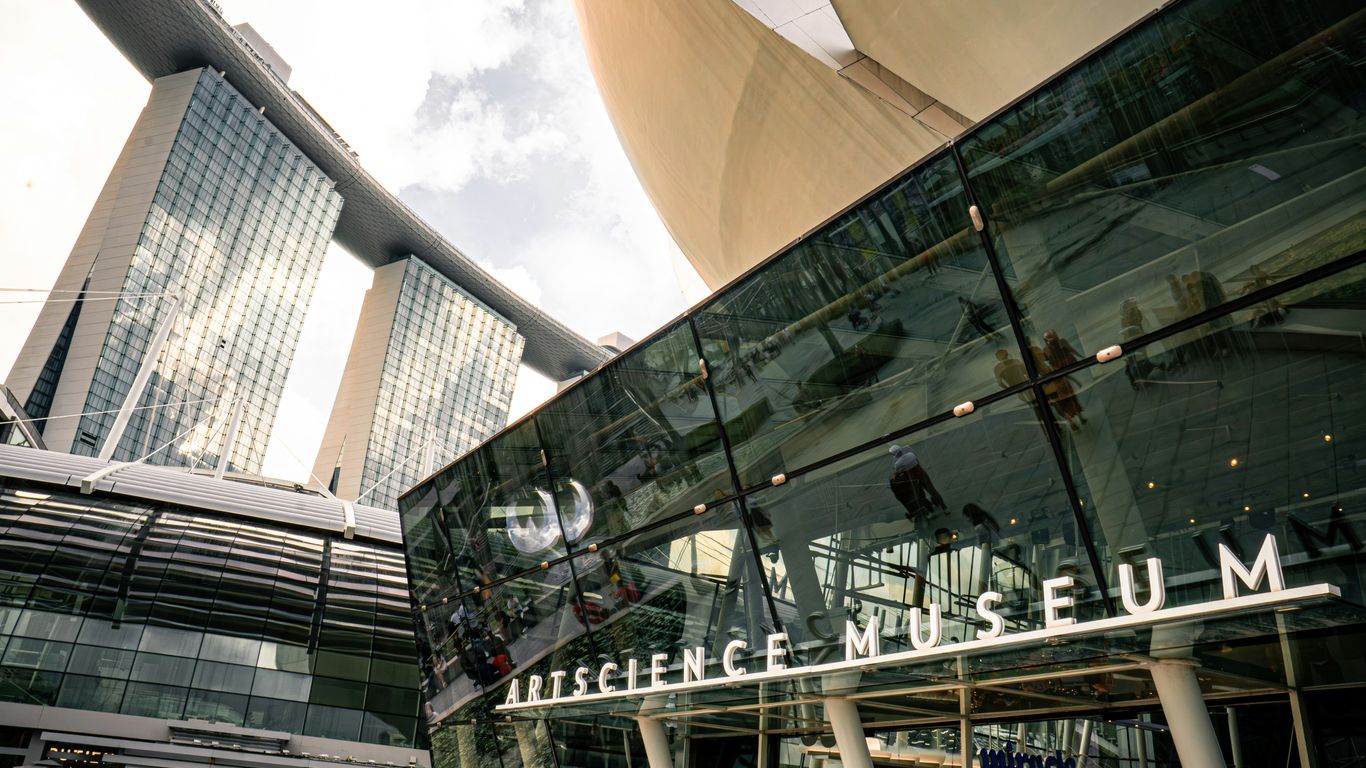
Reading Singapore’s past through its major turning points
A museum of national history has to make choices about sequence and emphasis. Turning points give visitors a clear route through complicated material, but they also invite questions about what happened between the famous dates. The most rewarding visit is therefore not a hunt for a single origin story, but a chance to notice how political decisions altered housing, work, movement and family life.
From colonial port to independent nation
Singapore’s transformation can be read through its changing role: a trading settlement, a British port, a colony shaped by global conflict, and an independent city-state. Each phase brought new institutions and new arrivals, but also uncertainty for people already living and working here. The National Museum of Singapore is especially helpful for seeing social history as a chain of lived changes rather than a list of official milestones.
What the museum includes — and what it leaves open to interpretation
No national museum can contain every voice or resolve every debate. Objects, photographs and personal accounts make the past tangible, while gaps in the record remind visitors that history is assembled from evidence. That openness matters: the museum provides a strong framework, but the streets, food stalls and family memories beyond its walls keep enlarging the picture.
Asian Civilisations Museum: Singapore as a crossroads of trade and migration
The Asian Civilisations Museum shifts the view from the island itself to the region around it. Singapore’s history becomes less a straight national journey and more a story of routes, exchanges and encounters. Objects can reveal how goods, techniques, religions and ideas travelled across seas long before the modern skyline appeared. This is one reason a museum visit pairs so naturally with a walk through the Civic District and Singapore River.
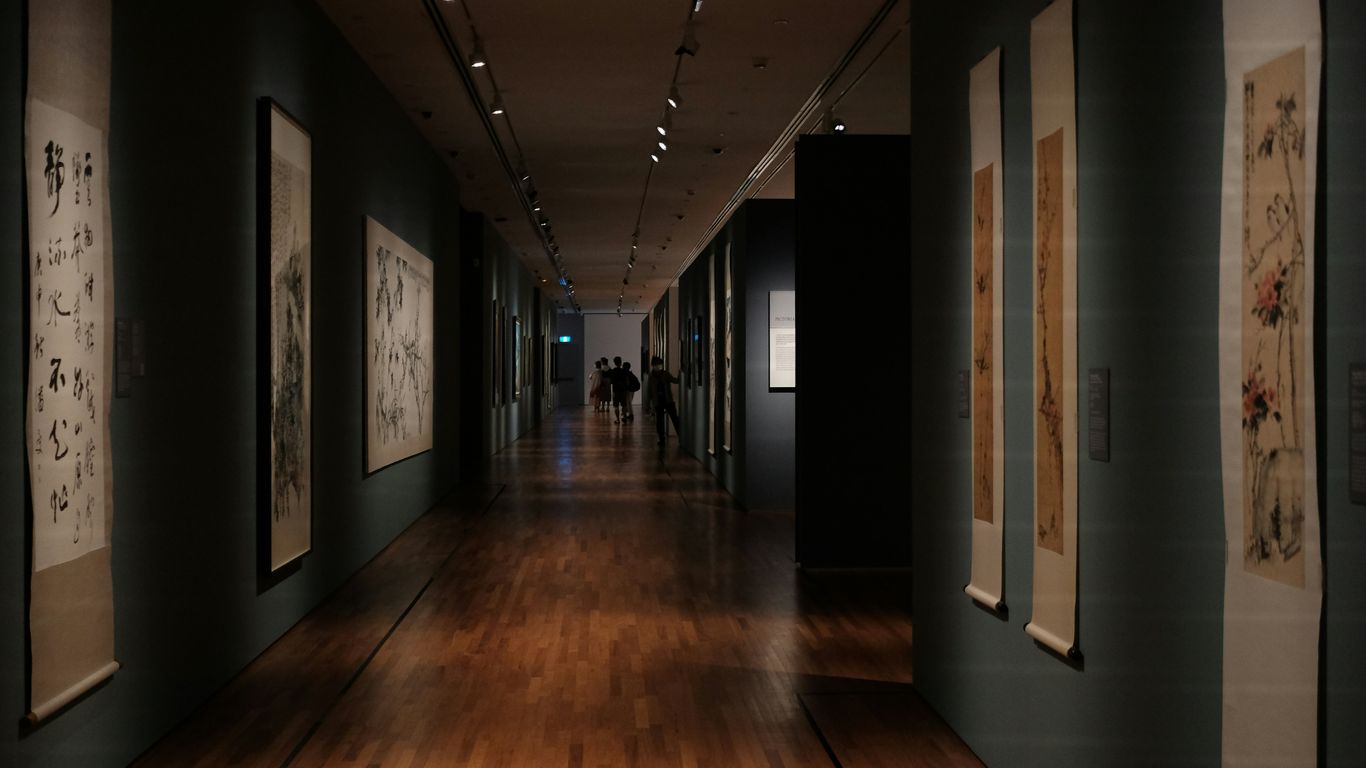
How regional connections shaped the port city
A port is defined by what passes through it, but also by the people who stay. Merchants, sailors, administrators, craftspeople and families created relationships that gave the port its social character. Trade brought wealth and competition, yet it also made the island dependent on wider systems of trust, language and exchange.
The influence of China, South Asia, Southeast Asia and the Islamic world
The museum’s collections allow visitors to compare traditions without treating them as sealed, separate worlds. Ceramics, textiles, religious objects and decorative arts carry traces of both local practice and distant influence. Even a small object may suggest a much larger story about patronage, travel and changing taste; the Hope Diamond, in a different setting, similarly shows how an object can gather stories of power, craft and human attachment around itself.
Why Singapore’s history cannot be separated from wider Asian networks
Singapore’s position was never simply geographical. Its significance came from connections that linked the island to ports, courts, markets and communities across Asia. A regional frame also helps explain why identity here has often been layered: people could belong to a household, a language group, a faith and a commercial network at the same time.
The Peranakan Museum: the making of a hybrid culture
The Peranakan Museum brings history close to the body and the home. Clothing, beadwork, furniture, jewellery and foodways show that culture is made through repeated choices, not inherited as a motionless package. The result is a story of intimacy as much as migration, with domestic rooms becoming places where identities were negotiated. Singapore Heritage’s living heritage stories take a similarly close interest in objects, practices and memories beyond museum cases.

The communities and trade routes behind Peranakan identity
Peranakan identity grew from encounters among communities connected by regional trade and settlement. It cannot be reduced to one ancestry or one neighbourhood; its forms developed through marriage, commerce, language and local adaptation. That history is best understood as a process, shaped by Southeast Asian routes and by the particular circumstances of families living in Singapore and the wider region.
How food, clothing, religion and domestic life preserve history
Everyday things often carry history with unusual clarity. A textile can preserve a preference for colour and technique; a recipe can hold memories of substitution, scarcity and celebration; a household object can show how ritual fitted into ordinary routines. The same principle appears in AL Metal Solutions, where metal design is discussed through materials, finishes and the way objects alter lived spaces, though the museum’s concern is cultural rather than industrial.
What Peranakan heritage reveals about cultural exchange in Singapore
Peranakan heritage complicates the idea that cultures meet only at grand political or commercial events. Exchange happens in kitchens, marriages, religious practices, wardrobes and patterns of hospitality. It can produce something recognisably local without erasing the many routes and communities that made it possible.
The Malay Heritage Centre: Singapore before and beyond the modern skyline
The Malay Heritage Centre anchors Singapore’s modern story in Kampong Gelam, a district with royal, commercial and religious associations. Its presence helps correct the impression that history began with colonial administration or the contemporary city centre. The galleries and surrounding streets encourage visitors to consider authority, migration and community together. They also make clear that heritage is lived in language, worship, food and neighbourhood relationships.
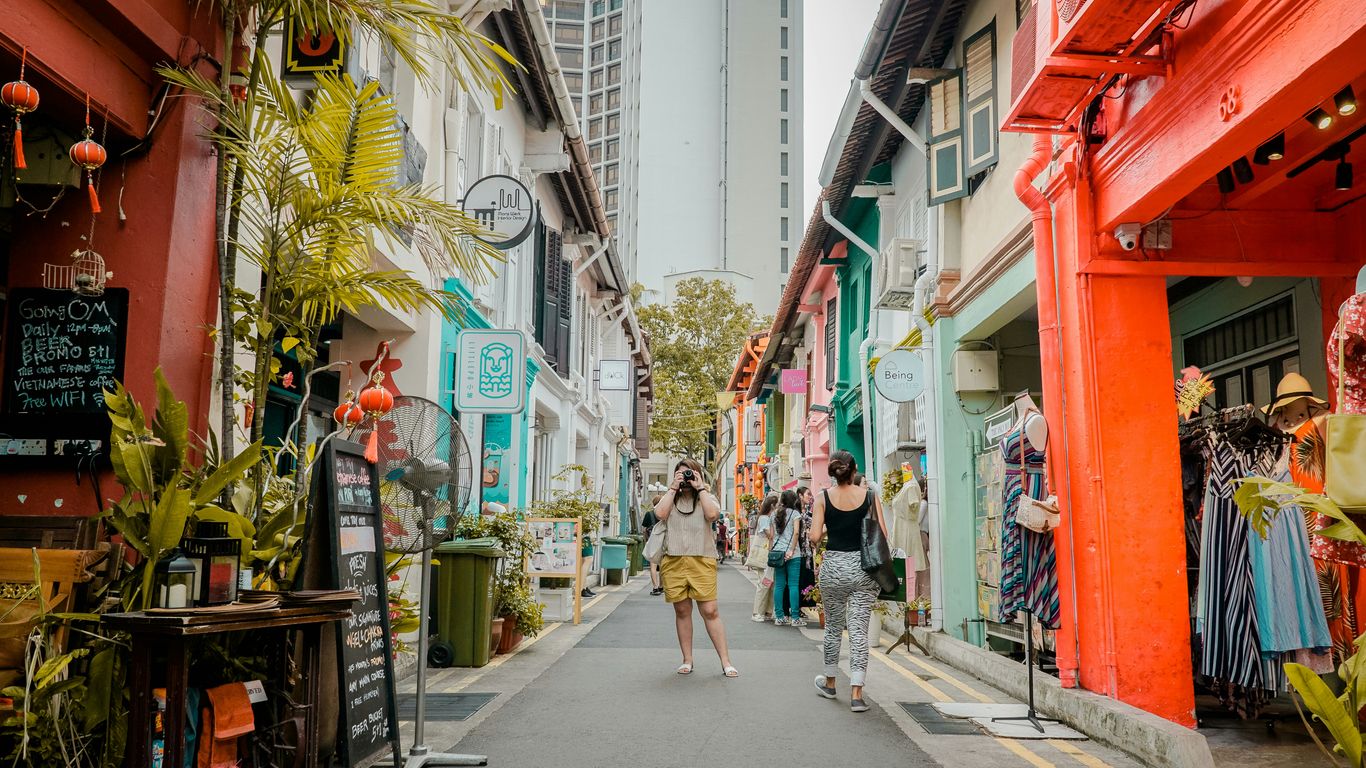
Kampong Gelam and the legacy of the Malay sultanate
Kampong Gelam’s history is tied to the Malay sultanate and to Singapore’s position within a maritime world. The district’s buildings and street patterns retain traces of political authority alongside later commercial life. Reading the area carefully reveals that a modern neighbourhood may carry several kinds of history at once, rather than a single preserved chapter.
The role of Malay communities in the city’s development
Malay communities were not simply observers of Singapore’s growth. They worked, traded, worshipped, raised families and adapted as land use and population changed. Their contributions belong within the main account of the city, not in a separate cultural footnote.
Why language, faith and migration matter to Singapore’s national story
Language and faith offer ways of belonging that cross administrative boundaries. Migration, meanwhile, brought people into contact with established communities and changed the sound, rituals and rhythms of neighbourhood life. A history walk through the Civic District can extend this perspective by placing official monuments beside everyday traces of the people who made the port work.
The Indian Heritage Centre: migration, work and community-building
The Indian Heritage Centre presents migration as a long and varied process rather than a single arrival. Its story includes merchants, professionals, labourers, religious leaders and families whose lives unfolded across generations. Little India provides an especially vivid setting because temples, shops, food businesses and homes still make community history visible. The Little India heritage guide is useful for connecting the museum’s context with the district outside.
The long history of Indian connections with Singapore
Indian connections with Singapore belong to the wider history of the Indian Ocean and Southeast Asian trade. People arrived for different reasons and from different regions, bringing distinct languages, faiths, skills and expectations. Over time, these connections became part of the island’s economic and social fabric rather than remaining an external influence.
From traders and professionals to everyday working communities
A well-rounded account must hold several kinds of work in view. Traders and professionals shaped commerce and institutions, while working communities built, served and maintained the city through less celebrated labour. Their routines—where they lived, ate, worshipped and found mutual support—often explain urban change better than a succession of grand buildings.
That broader human frame is also useful when considering practical cultural exchange today. Families looking for familiar food can find Saakshi’s Kitchen, which centres home-cooked Indian meals delivered to students and households; it is a contemporary service, not a museum exhibit, but it shows how food still carries care and belonging across distance.
How religious and cultural institutions helped shape neighbourhood life
Temples, associations, schools and other institutions offered more than places for ceremony. They created networks of advice, welfare, language learning and social connection. Their influence helped turn a settlement into a neighbourhood, giving migrants ways to build continuity while responding to the changing city.
Sun Yat Sen Nanyang Memorial Hall: politics, diaspora and the making of modern China
Sun Yat Sen Nanyang Memorial Hall introduces a political history that crossed the South China Sea. Singapore was part of the Nanyang, a region where overseas Chinese communities built businesses, associations and networks of news and ideas. The memorial hall therefore asks visitors to think about political commitment alongside questions of home and belonging. Its story is local in setting but international in consequence.
Why Singapore mattered to overseas Chinese political movements
A prosperous port with strong communications could connect activists, donors and readers across Southeast Asia and China. Political movements depended not only on famous leaders but also on ordinary networks of printing, fundraising, discussion and travel. Singapore’s position made it a significant meeting point within those wider movements.
The lives and networks of the Nanyang Chinese
“Nanyang Chinese” describes a broad and diverse population, not one uniform community. People differed in dialect, class, occupation and political outlook, even as associations and commercial ties connected them. Looking at those distinctions prevents the diaspora from becoming an abstract backdrop and restores the texture of individual choices.
What the museum shows about identity across borders
The memorial hall makes border-crossing identity easier to understand. A person might be rooted in a Singapore neighbourhood, connected to relatives in China and involved in a regional business network, all without seeing those loyalties as contradictory. The museum’s value lies in showing how modern identities were negotiated through correspondence, travel, memory and political hope.
Reflections at Bukit Chandu: war, occupation and public memory
Reflections at Bukit Chandu places wartime history in a landscape rather than leaving it solely inside a gallery. The site focuses attention on the Battle of Pasir Panjang, the Japanese Occupation and the lives affected by both military events and civilian hardship. It is a quieter kind of visit, asking for patience rather than spectacle. Among the city’s unusual museums and heritage places, it represents the importance of looking beyond familiar landmarks.
The Battle of Pasir Panjang and Singapore’s wartime experience
The battle is remembered through the actions of soldiers, but its meaning also belongs to the civilians who lived around the fighting. Landscapes can hold several memories at once: tactical decisions, fear, displacement and the uncertainty of families waiting for news. The site gives those events a physical setting, allowing visitors to connect military history with the ground beneath them.
How the Japanese Occupation changed civilian life
Occupation altered food supplies, work, schooling, movement and personal safety. Such changes were experienced unevenly, according to where people lived and the resources they could access. The most revealing accounts often begin with ordinary questions: what could be bought, which routes remained open, and how did neighbours help one another survive?
A concise way to approach the city’s wartime and post-war history is to keep four threads in view:
- military conflict and the defence of the island
- disruption to food, work, education and movement
- family memory, loss and survival
- the later choices involved in public remembrance
These threads keep the story grounded in lived experience rather than turning remembrance into a distant ceremony. They also explain why wartime sites remain connected to the wider social history of Singapore.
Why remembrance remains an important part of the city’s history
Remembrance gives a city a way to acknowledge suffering without allowing the past to become decorative. It can honour courage, recognise civilian experiences and make room for questions that do not have easy answers. A visit to Bukit Chandu is therefore not only about what happened in 1942; it is about how later generations choose to carry that knowledge.
Plan a Heritage Walk
After visiting museums, readers can book a tour to explore Singapore’s neighbourhoods with local storytellers and encounter the streets, foodways and everyday memories that museums help set in context.
Conclusion
Taken together, these history museums in Singapore reveal a city shaped by movement and memory: a port connected to Asia, a home built by many communities, and a nation still interpreting its past. Their galleries become more meaningful when visitors continue the conversation outside, noticing the shop signs, places of worship, meals and ordinary objects that keep history in use.
Frequently Asked Questions
Which museum is best for a broad introduction to Singapore’s history?
The National Museum of Singapore is the clearest starting point for a wide overview, taking visitors through major political, social and wartime turning points.
Which museum focuses most on Singapore’s Asian connections?
The Asian Civilisations Museum is particularly suited to this question because it places Singapore within wider networks linking China, South Asia, Southeast Asia and the Islamic world.
What can visitors learn at the Peranakan Museum?
Visitors can explore how migration and cultural exchange shaped Peranakan identity through clothing, food, religion, furniture and domestic life.
Where can visitors learn about Malay history in Singapore?
The Malay Heritage Centre in Kampong Gelam offers context on the Malay sultanate, the district’s development and the continuing importance of Malay community life.
What does the Indian Heritage Centre cover?
It explores Indian migration and settlement, varied forms of work, and the religious and cultural institutions that helped communities establish neighbourhood connections.
Why is Sun Yat Sen Nanyang Memorial Hall significant?
It shows how Singapore participated in overseas Chinese political networks and how people in the Nanyang negotiated identity across places and borders.
Why visit Reflections at Bukit Chandu?
The site provides a focused way to consider the Battle of Pasir Panjang, the Japanese Occupation, civilian experience and the continuing responsibilities of public memory.
Key Takeaways
Singapore’s history is best understood through the ordinary routines that changed as the island became a port, colony, city and nation.
- Temasek’s trading connections laid the groundwork for Singapore’s later port economy.
- Colonial rule brought new infrastructure, migration and unequal urban development.
- War and occupation disrupted daily life, while the post-war years opened a path to self-government.
- Housing, water, education, defence and industry became pillars of nation-building after 1965.
- The past remains visible in neighbourhoods, objects, transport routes and community memories.
1. c. 1299 — Temasek emerges as a regional trading settlement
The Singapore history timeline begins long before the modern city, with Temasek as a settlement connected to the sea routes of Southeast Asia. Its position near the meeting point of the Singapore Strait and the wider Malay Archipelago made it useful to merchants, sailors and rulers. The place was never isolated; its story began through movement.
The date 1299 is closely associated with the founding of Singapura in the Malay Annals, although the surviving evidence combines legend, later writing and archaeology. What matters for everyday history is the settlement’s regional setting: people arrived with goods, languages, beliefs and habits that met one another on the island.
The early port world also helps explain why Singapore’s later identity became so layered. Long before colonial administration, the island was already part of a network shaped by Malay polities, Chinese trade, Indian Ocean connections and shifting regional power. A useful historical timeline can place these early references beside the political changes that followed.
2. 1819 — Stamford Raffles establishes a British trading post
When Stamford Raffles arrived in 1819, he was acting for the British East India Company, which wanted a trading post along the busy route between India and China. Agreements with Sultan Hussein Shah and Temenggong Abdul Rahman gave the British a foothold, while William Farquhar became the settlement’s first Resident. The arrival changed the island’s political and commercial direction.
The new port grew quickly because the British promoted it as a free port. Merchants could trade with fewer restrictions, and workers, sailors and families followed the opportunities. Streets, wharves and markets expanded around the river, bringing together communities whose homes and businesses would shape the town’s character.
Yet 1819 was not a simple founding story. Malay authority, local communities and existing trade networks were already present, and colonial accounts often placed British decisions at the centre. The more careful view sees a negotiated and contested beginning, with consequences felt in land, labour and everyday life.
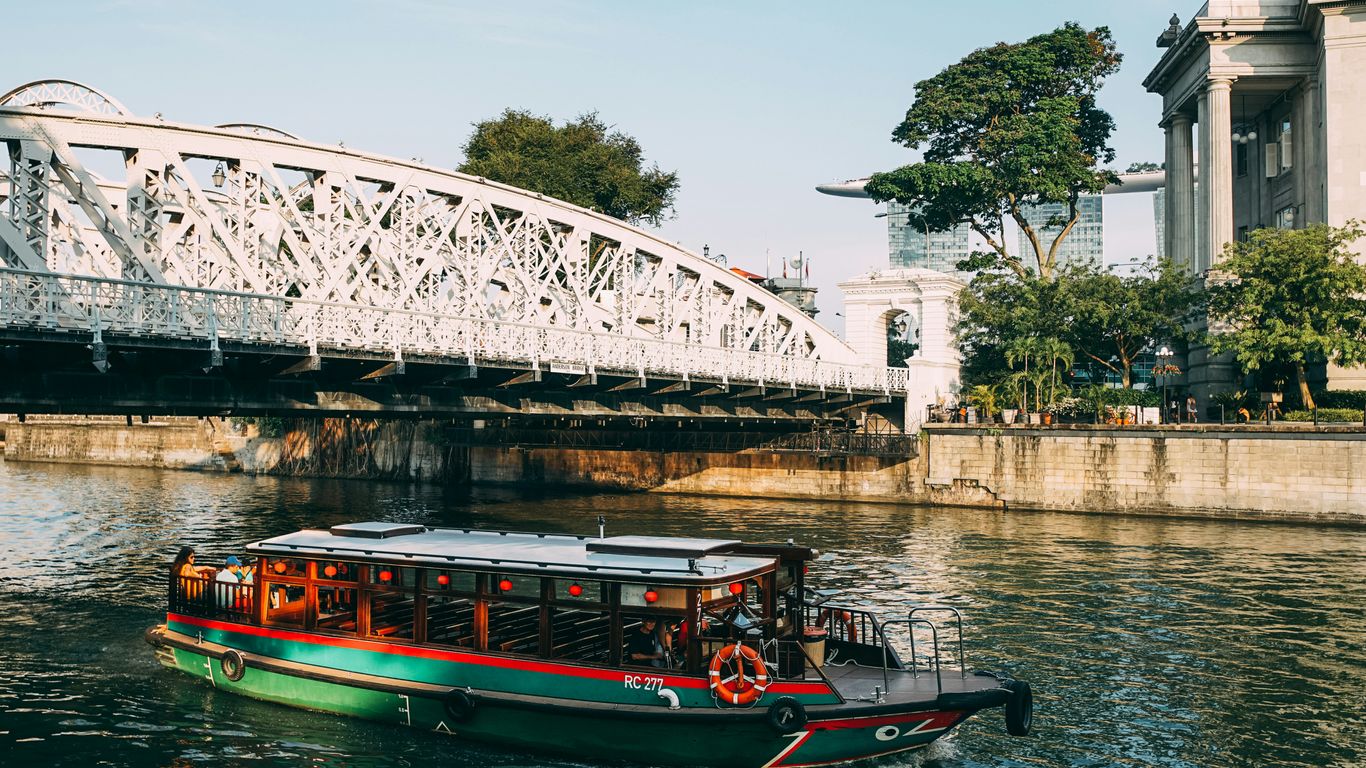
3. 1824 — Singapore becomes a British possession
The Anglo-Dutch Treaty of 1824 confirmed the division of influence between the two European powers in the region. Singapore passed firmly into the British sphere, while the Dutch consolidated their position farther south. This removed much of the uncertainty surrounding the settlement’s colonial future.
For residents, the change was less about a single flag than about administration becoming more settled. British laws, land arrangements and commercial rules gained greater reach, while the port attracted further investment. The river became a working corridor of warehouses, boats, godowns and crowded streets.
The possession also tied Singapore to a wider imperial system. Goods and decisions moved through routes that connected the island to London, Calcutta, Penang, Malacca and Canton. That system generated wealth, but it also organised people unequally, shaping where communities lived and the kinds of work open to them.
4. 1867 — Singapore becomes a Crown colony
In 1867, Singapore became part of the Straits Settlements as a Crown colony, administered directly by the British government rather than the East India Company. The change placed the settlement under a more formal colonial bureaucracy. Penang and Malacca were administered alongside it.
A Crown colony brought clearer official structures, but it did not mean political equality. Governors and appointed officials held substantial power, while most residents had little say in public decisions. Colonial order was visible in courts, police stations, schools and regulations, yet it rested on sharp differences of status and access.
The period also saw Singapore becoming more recognisably urban. Commercial buildings, religious institutions and neighbourhood associations multiplied as the population grew. The streets carried many languages, and daily life depended on the practical negotiations of people living close together in a fast-expanding port.
5. 1869 — The Suez Canal brings faster trade and migration
The opening of the Suez Canal in 1869 shortened the sea journey between Europe and Asia. Singapore benefited from its position along the new route, and shipping activity intensified. The canal did not create the port from nothing, but it accelerated patterns already under way.
More ships meant more work around the harbour, from loading and repair to provisioning and paperwork. Migrants continued to arrive from southern China, India, the Malay world and elsewhere, looking for employment or joining family networks. Their presence altered food, speech, worship and the rhythms of neighbourhood life.
The boom also brought crowding, illness and insecurity. Prosperity was uneven, and port labour could be dangerous and poorly paid. Singapore’s cosmopolitan character grew through real human effort, not merely through the movement of commodities.
6. Late 19th century — Electricity, piped water and new public services reshape the town
Late nineteenth-century Singapore saw public services develop alongside commercial growth. Piped water, drainage, street improvements and eventually electric lighting changed what residents expected from an urban settlement. These systems were unevenly distributed, but they gradually altered the practical shape of the town.
Electricity extended activity after sunset and made streets, businesses and public buildings feel different. Water infrastructure mattered even more quietly, affecting household routines, sanitation and the ability of the growing population to live in a dense environment. Modernity arrived through pipes, lamps, schedules and maintenance crews.
Public health remained a difficult challenge. Epidemics and overcrowding exposed the limits of colonial planning, while hospitals and sanitation campaigns expanded in response. Behind the grand story of progress were workers who dug drains, carried supplies, cleaned streets and kept the new systems functioning.
7. Early 20th century — The rubber boom transforms work, wealth and the port
Rubber became one of the defining commodities of early twentieth-century Malaya, and Singapore served as a major centre for its trade, finance and shipping. Rising demand for tyres and industrial goods made the port busier and linked local estates to factories and markets around the world. Wealth accumulated rapidly in some quarters.
The boom reshaped work far beyond the docks. Plantation labour, clerical employment, brokerage and processing all expanded, while families moved through networks connecting rural estates, town neighbourhoods and overseas markets. The benefits were real but uneven, and the industry depended on difficult labour and vulnerable commodity prices.
Rubber also entered the cultural landscape through shop signs, advertisements, clothing and household purchases. A street could hold a merchant’s office, a provision shop and a workers’ lodging house within a short walk. Such details are part of the heritage stories that make economic history feel lived rather than abstract.
8. 1923 — The Causeway links Singapore to the Malay Peninsula
The Causeway opened in 1923, joining Singapore physically to Johor across the narrow channel. Rail and road connections made movement of people, goods and mail more direct. The link strengthened the island’s role as the southern end of a peninsula-wide transport network.
For businesses, the Causeway made supply chains more dependable. For families and workers, it offered a new route for travel, although crossing remained shaped by documents, fares and colonial controls. The physical bridge did not erase political boundaries; it made their management more visible.
Its effect could be felt in ordinary goods. Food, building materials and commercial cargo moved more easily, while newspapers and news travelled faster. The Causeway became both infrastructure and symbol: a practical connection that tied Singapore more closely to the peninsula’s economy.
9. 1942 — Japan captures Singapore and everyday life changes overnight
Japanese forces captured Singapore in February 1942 after a rapid campaign down the Malay Peninsula. The British surrender ended colonial rule for the duration of the war and began a harsh occupation. The name Syonan-to replaced Singapore in official use.
Daily life was governed by fear, scarcity and surveillance. Food became difficult to obtain, prices rose and people relied on rationing, bartering and family networks. The Sook Ching operation brought mass killings and trauma to many Chinese residents, while other communities experienced their own forms of coercion and uncertainty.
The occupation altered the meaning of familiar places. Schools, offices, temples and public buildings could be reassigned or monitored, and people learned to navigate rules that changed quickly. Memories of those years remained deeply personal, carried through families long after the war ended.
10. 1945 — The British return to a city facing shortages and reconstruction
Japan surrendered in 1945, and British forces returned to Singapore. The formal restoration of colonial rule could not restore the old order, however. The war had exposed the weakness of imperial protection and deepened demands for political change.
The city faced damaged infrastructure, shortages and disrupted trade. Families searched for missing relatives, businesses reopened cautiously and public authorities struggled to provide food, housing and work. Reconstruction was a physical task, but it was also an emotional recovery from occupation and loss.
Post-war residents increasingly asked who should govern Singapore and whose interests government should serve. Labour activism, student politics and anti-colonial feeling grew stronger. The years after 1945 made self-government seem less like a distant idea and more like a necessary answer to lived experience.
11. 1955 — Singapore holds its first major elections under limited self-government
The 1955 elections followed constitutional changes that expanded the number of elected seats in the Legislative Assembly. David Marshall became Singapore’s first Chief Minister, while the British Governor retained important powers. The result was limited self-government, but it marked a significant shift in public life.
Campaigns brought political arguments into streets, meeting halls and workplaces. Voters encountered competing ideas about labour, citizenship, education and the island’s relationship with Britain and Malaya. Elections made government more visibly connected to popular support, even though the constitutional arrangement remained incomplete.
The decade was restless. Strikes and demonstrations reflected real grievances over wages, working conditions and political rights, while debates about language and identity became more urgent. Singapore’s future would be shaped not only in official chambers but also through organised action in schools, unions and neighbourhoods.
12. 1955 — The Central Provident Fund makes compulsory saving part of working life
The Central Provident Fund began in 1955 as a compulsory savings scheme for workers and employers. Contributions created a form of financial protection in a period when many people had little access to pensions or formal social insurance. Saving became part of the relationship between employment, government and household planning.
The fund’s early role was narrower than the system later became. Over time, its uses expanded and connected savings with housing, healthcare and retirement. That development made the CPF increasingly visible in family decisions, from buying a flat to preparing for later life.
Its significance can be seen in the different institutions that shaped post-war security. The following comparison shows how several policies addressed separate but connected pressures:
| Institution or policy | Main concern | Everyday effect |
|---|---|---|
| Central Provident Fund | Household financial security | Compulsory savings through work |
| Housing and Development Board | Overcrowding and housing | Access to planned public flats |
| Water agreements | Reliable supply | Greater attention to long-term resources |
| National Service | Defence and manpower | Military duty for eligible men |
Together, these measures made social policy part of daily routine. They also reflected a governing style that treated housing, savings, water and defence as practical foundations of national survival rather than separate concerns.
13. 1959 — Singapore gains self-government and a new political direction
Singapore attained internal self-government in 1959, and the People’s Action Party won the general election. Lee Kuan Yew became Prime Minister, while the British retained responsibility for defence and foreign affairs. The election gave the new government a mandate to pursue a more decisive programme.
The years that followed were marked by intense work on employment, housing, education and public administration. Leaders faced unemployment, crowded settlements and uncertainty about the island’s economic future. The political direction was developmental, centralised and focused on building institutions that could deliver visible improvements.
Self-government also changed how residents imagined their own future. The question was no longer simply how Singapore might prosper as a colonial port, but how it might become a secure society with a political identity of its own. The period is remembered through both national milestones and the quieter experiences of families adapting to rapid change.
14. 1960 — The Housing and Development Board begins the mass-housing era
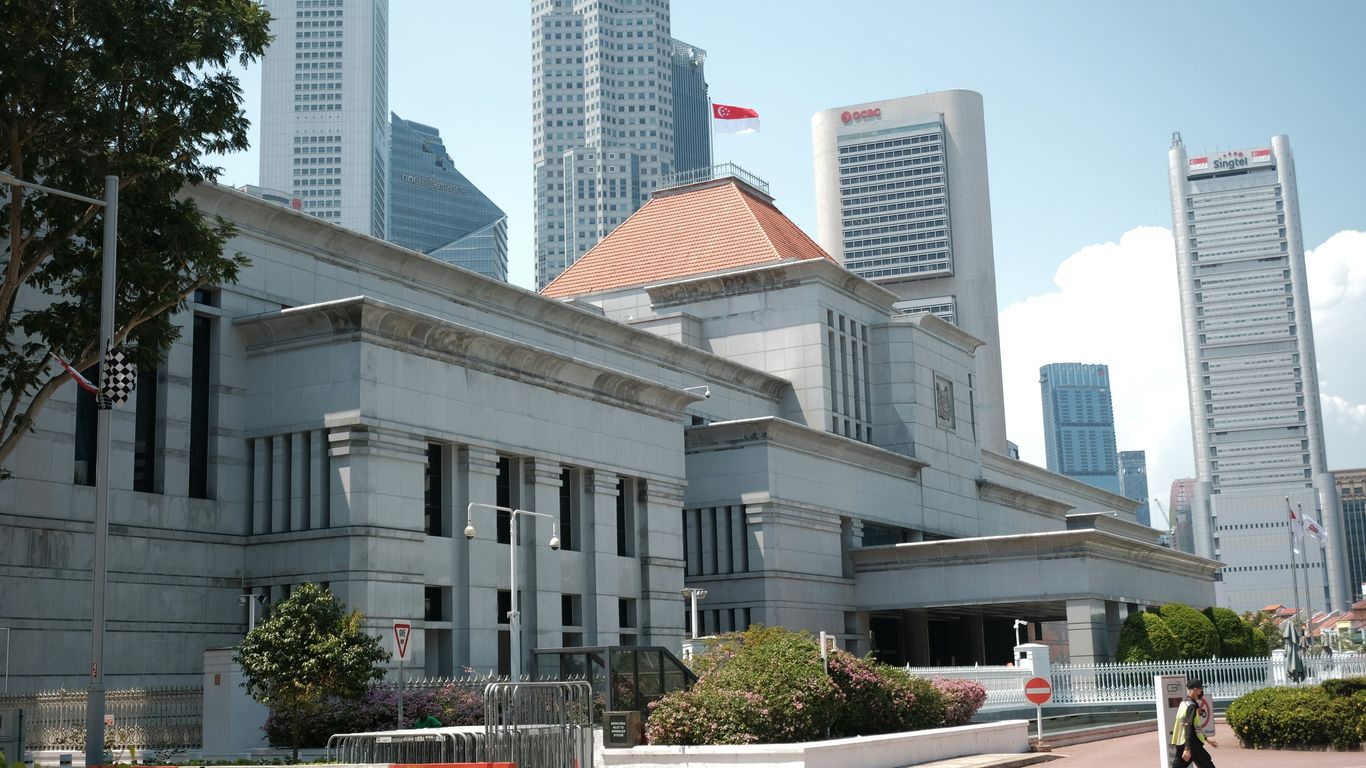
The Housing and Development Board was established in 1960 to tackle severe overcrowding and inadequate housing. Its work transformed the built environment through large-scale public flat construction. Families who had lived in cramped rooms, kampongs or vulnerable settlements increasingly moved into planned estates.
A new flat changed more than a roof. It brought lifts, corridors, schools, markets, playgrounds and shared open spaces into the pattern of everyday life. Neighbours from different backgrounds encountered one another through stairwells, void decks and estate routines.
The process could also be disruptive. Redevelopment displaced established communities and altered familiar landscapes, even as it improved sanitation and safety for many households. Housing history therefore contains both achievement and loss: the creation of secure homes alongside the disappearance of older ways of living.
15. 1961 — Water agreements shape Singapore’s long-term security
Water agreements with Johor became a central part of Singapore’s relationship with the peninsula. They provided for the supply of raw water to Singapore and the sale of treated water to Johor under specified terms. Water was not merely a utility; it was a strategic concern.
The agreements encouraged careful attention to reservoirs, treatment, conservation and infrastructure. Households encountered this national priority through campaigns, appliances, bills and everyday habits. A resource that many cities take for granted became part of Singapore’s public conversation about vulnerability.
Water security also influenced diplomacy and planning. The arrangements connected local taps to cross-border relationships and long-term contracts. Later efforts to diversify supply would build on the lesson that resilience depends on several sources, not one dependable assumption.
16. 1963 — Singapore joins Malaysia
Singapore joined the Federation of Malaysia in 1963, alongside Malaya, Sabah and Sarawak. The merger followed negotiations over decolonisation, security and the economic future of the region. For a time, Singapore was part of a larger political federation rather than a separate state.
The union was troubled by disagreements over economics, political organisation and communal politics. Singapore’s leaders argued for a broader Malaysian identity, while federal tensions grew around competing visions of representation and power. The strain was felt in parliament, the press and the streets.
The merger lasted less than two years. Its brief duration nevertheless shaped the institutions and memories of the new nation. It also made clear that political arrangements could change quickly when economic and communal questions remained unresolved.
17. 1965 — Singapore becomes an independent nation
Singapore became an independent and sovereign nation on 9 August 1965 after separation from Malaysia. Independence was not presented as an easy triumph; the new state faced uncertainty about defence, jobs, housing, water and international recognition. The island had to build confidence while managing real vulnerabilities.
The government moved quickly to establish diplomatic ties, strengthen the civil service and create institutions suited to a small city-state. National identity developed through ceremonies, schools, public housing, military service and the shared experience of rapid development. The flag and anthem became part of ordinary life, not only official occasions.
For residents, independence was both a constitutional event and a change in expectations. Decisions about the future now belonged more directly to Singapore’s own institutions. That responsibility helped produce a strong emphasis on planning, competence and social cohesion, though not without debate about the limits of political space.
18. 1966 — Bilingual education becomes central to school life
After independence, bilingual education became a central feature of Singapore’s school system. English was developed as a common working language, while students also studied a designated mother tongue linked to the country’s major cultural communities. The policy aimed to combine economic access with cultural continuity.
This approach shaped childhood in very practical ways. Pupils moved between languages at home and school, learned different scripts or literary traditions, and encountered classmates with varied family backgrounds. Examinations, textbooks and classroom routines made language policy part of the texture of growing up.
The policy was demanding, and its effects were not identical for every family. Still, it offered a framework for a multilingual society that needed a shared language without discarding inherited identities. The schoolroom became one of the places where national belonging was actively taught and negotiated.
A few related habits became especially familiar:
- Children shifted between English and a mother tongue across the school day.
- Families discussed language choice alongside examinations and future work.
- Schools used assemblies and lessons to build a shared civic identity.
- Public communication increasingly relied on several languages.
These routines show how a national policy entered kitchens, classrooms and conversations. Bilingualism was not only an educational principle; it became a repeated household practice.
19. 1967 — National Service becomes a defining civic duty
National Service was introduced in 1967 as Singapore built its own defence capability. Eligible male citizens and permanent residents were called up for military training, making service a major transition in the lives of young men. The policy reflected the country’s small population and exposed strategic position.
Training affected families as well as recruits. Parents adjusted to sons being away, employers planned around reservist obligations, and friendships were formed through shared units and routines. Over time, National Service became one of the institutions through which generations encountered the state directly.
Its meaning has never been entirely uniform. Some see it as a vital expression of shared responsibility, while others have questioned its burdens and unequal gender expectations. Both views belong in the history of everyday life, because civic duty is experienced through real bodies, calendars, work and family relationships.
20. Late 1960s — Jurong industrialisation changes jobs and the economy
Jurong’s industrialisation changed Singapore’s economic direction in the late 1960s. Factories, roads, port facilities and worker housing were developed in an area once associated with plantations, swamps and scattered settlement. Manufacturing offered an alternative to dependence on entrepôt trade alone.
New jobs required different skills and routines. Workers moved into factories, offices and technical roles, while training programmes prepared people for an industrial economy. The shift also brought noise, traffic and environmental concerns, reminding residents that development always changes the conditions of a place.
Jurong became part of the national story of purposeful transformation, but it was also a lived neighbourhood. Lunch stalls, buses, dormitories and shift changes created a social world around the factories. The industrial past remains important because it records the labour behind economic statistics.
21. 1971 — British military withdrawal accelerates Singapore’s self-reliance
Britain’s military withdrawal from Singapore began in the early 1970s and ended a long period in which British forces had underpinned regional security. The timetable created anxiety about defence and employment, particularly around military bases and related businesses. Singapore could no longer assume that an imperial power would manage its security.
The response was to strengthen the Singapore Armed Forces, expand diplomatic relationships and plan for the economic reuse of land. Former military areas later became parts of the city’s changing urban fabric, although the transition took time and involved difficult decisions.
The withdrawal also changed the psychological landscape. Independence became more tangible when security had to be organised locally. Self-reliance was therefore not just a slogan; it was expressed in training, budgets, institutions and the repurposing of familiar spaces.
22. 1981 — Changi Airport opens Singapore to the world
Changi Airport opened in 1981, replacing the older airport at Paya Lebar as Singapore’s main international gateway. Its design and scale reflected the city-state’s ambition to remain closely connected to global trade and travel. The airport quickly became part of the infrastructure of an outward-facing economy.
For residents, air travel became easier to imagine and organise. Families met returning relatives, businesses planned regional trips and overseas study became more accessible. The airport also created new employment in aviation, hospitality, logistics and maintenance.
Changi’s significance lies in the network it made visible. Singapore’s future depended on people and goods moving in and out efficiently, just as earlier prosperity had depended on ships. A modern airport carried forward the old port city’s most persistent habit: staying connected.
23. 1987 — The MRT transforms commuting across the island
Singapore’s Mass Rapid Transit system opened in 1987, giving residents a new way to cross the island. The first lines linked key districts and housing estates, reducing reliance on road travel for many journeys. Stations soon became landmarks in their own right.
The MRT reshaped the daily timetable. Commuters could live farther from work, students reached schools more easily and shopping areas gained new foot traffic. The train carriage became a shared social space, quiet and crowded at once, where different parts of the city met several times a day.
Transport also influenced how people understood distance. Neighbourhoods once experienced as separate became connected by predictable travel times. The network’s growth supported new estates and commercial centres, while reminding planners that mobility is one of the foundations of urban life.
24. 2002 — NEWater strengthens Singapore’s water resilience
NEWater was officially launched in 2002 as part of Singapore’s effort to diversify its water sources. Highly treated reclaimed water is used mainly for industrial and non-potable purposes, with some added to reservoirs before further treatment. The programme made water technology visible to the public.
Its arrival built on decades of concern about water security. Reclamation, desalination, catchment management and imported water became parts of a broader strategy rather than isolated solutions. Public education helped residents understand why a dependable supply required both infrastructure and trust.
NEWater also changed the emotional vocabulary of scarcity. Water resilience was presented as something built through research, careful management and long-term planning. The story connected a technical system to a household question that had been present since the early years of self-government: how can a small island remain secure?
25. 2020 — The COVID-19 pandemic reshapes work, school and public life
The COVID-19 pandemic changed Singapore’s routines in 2020. Border controls, safe-distancing measures, mask wearing and periods of restricted movement altered how people worked, studied, shopped and visited relatives. Familiar streets could feel suddenly quiet.
Schools and workplaces moved online where possible, while healthcare workers, delivery riders, cleaners and other essential staff continued in person. The experience exposed differences in space, income and digital access, even as neighbours found new ways to help one another. Everyday objects such as masks, hand sanitiser and temperature checks became markers of the period.
The pandemic also changed how people encountered information. Alongside historical reading, online life now includes marketing examples, post-operative care, a credit recovery plan, free online games and the practical advice of African Safari Group. These very different pages share one contemporary condition: people increasingly organise work, care, leisure and travel through screens.
The crisis made the value of local memory especially clear. Residents recorded closed shops, altered commutes, family rituals and acts of care, preserving a social history that official statistics cannot hold alone. Even a changing neighbourhood can be read through the stories people choose to keep.
CTA: Walk Through History
To encounter these changes through streets, foodways and community memories, book a heritage walk with Singapore Heritage and see how the past remains present in the city.
Conclusion
Singapore’s history is not only a sequence of constitutional changes, economic booms and national milestones. It is also the story of water carried, trains boarded, languages learned, homes rebuilt and neighbourhoods remembered. Read that way, the timeline remains close to everyday life: a city continually remade, but never without traces of what came before.
Frequently Asked Questions
What is the earliest moment in this Singapore history timeline?
The timeline begins around 1299, a date associated with the founding of Singapura and the emergence of Temasek as a regional settlement. The surviving story combines written tradition, legend and historical evidence.
Why was 1819 important to Singapore?
In 1819, Stamford Raffles established a British East India Company trading post through agreements with local Malay authorities. The settlement’s free-port policy helped attract merchants, workers and migrants.
When did Singapore become independent?
Singapore became an independent and sovereign nation on 9 August 1965, after separating from Malaysia. Independence brought responsibility for the country’s own defence, diplomacy, economy and social development.
How did housing change everyday life?
Mass public housing reduced overcrowding and moved many families into planned estates with flats, schools, markets and transport links. It also changed older communities and landscapes through redevelopment.
Why is water so important in Singapore’s history?
Singapore has limited natural freshwater resources, so water supply became closely tied to infrastructure, diplomacy and national planning. Agreements with Johor and later diversification efforts shaped long-term security.
What did the Japanese Occupation mean for residents?
The occupation from 1942 to 1945 brought coercion, surveillance, shortages, violence and profound uncertainty. Its effects remained in family memories and influenced post-war views of colonial rule and self-government.
How can visitors experience Singapore’s history beyond major landmarks?
They can explore older neighbourhoods, markets, religious buildings, transport routes, food businesses and working trades while listening respectfully to local stories. Everyday places often reveal how historical change was actually experienced.