Key Takeaways
Singapore’s hawker centres are more than convenient places to eat: they are everyday civic spaces shaped by migration, planning and habit.
- Hawker centres grew from older street-food traditions and organised relocation.
- Shared tables make room for different incomes, ages and backgrounds.
- The menu reflects Chinese, Malay, Indian, Peranakan and other influences.
- Hawker culture depends on skilled people, not only famous dishes.
- Diners can help sustain it through respectful, regular support.
From itinerant hawkers to purpose-built centres
Singapore’s hawker story began before the familiar covered centres and orderly rows of stalls. Food sellers moved through streets, markets and working districts, bringing hot meals to people who needed something filling and affordable. Over time, these practices became part of the city’s social memory, as much a feature of daily life as the shophouse, the bus stop or the wet market.
The street-food traditions that shaped Singapore’s early food scene
Early hawkers worked with portable equipment and ingredients that could be prepared quickly in crowded urban settings. Their food carried traces of migration and trade: recipes were adjusted to available produce, local preferences and the tastes of neighbouring communities. A dish might retain an older name while becoming distinctly Singaporean in flavour and method.
This adaptability is central to singapore hawker culture. It explains why the food feels both rooted and open-ended, with family knowledge sitting alongside practical improvisation. Hawkers were not simply selling meals; they were building a cuisine suited to a busy, multicultural port.
Why the government moved hawkers into organised centres
As Singapore urbanised, itinerant food selling brought practical challenges. Stalls operating beside roads and drains could make sanitation harder to manage, while the movement of people and cooking equipment created congestion. The government’s decision to move hawkers into organised centres was therefore tied to town planning as well as food.
Purpose-built centres gave vendors a more stable place to work and brought food into planned neighbourhoods. They also made it easier to provide shared utilities, regulate stalls and create a dependable supply of inexpensive meals. The change was a major reorganisation of working life, not merely a change of address.
How relocation improved hygiene, access and public health
Relocation created conditions in which washing facilities, refuse collection and food-safety oversight could be handled more consistently. It also made hawker food easier to find in housing estates, market complexes and transport-linked areas. The result was a food system woven into the ordinary geography of the city.
The story is best understood through both policy and lived experience. A history of ordinary Singaporeans helps place hawkers among the traders, labourers and shopkeepers whose work shaped the island. Their contribution was practical and continuous: feeding workers, families and passers-by at prices that made urban life more manageable.
The hawker centre as social architecture
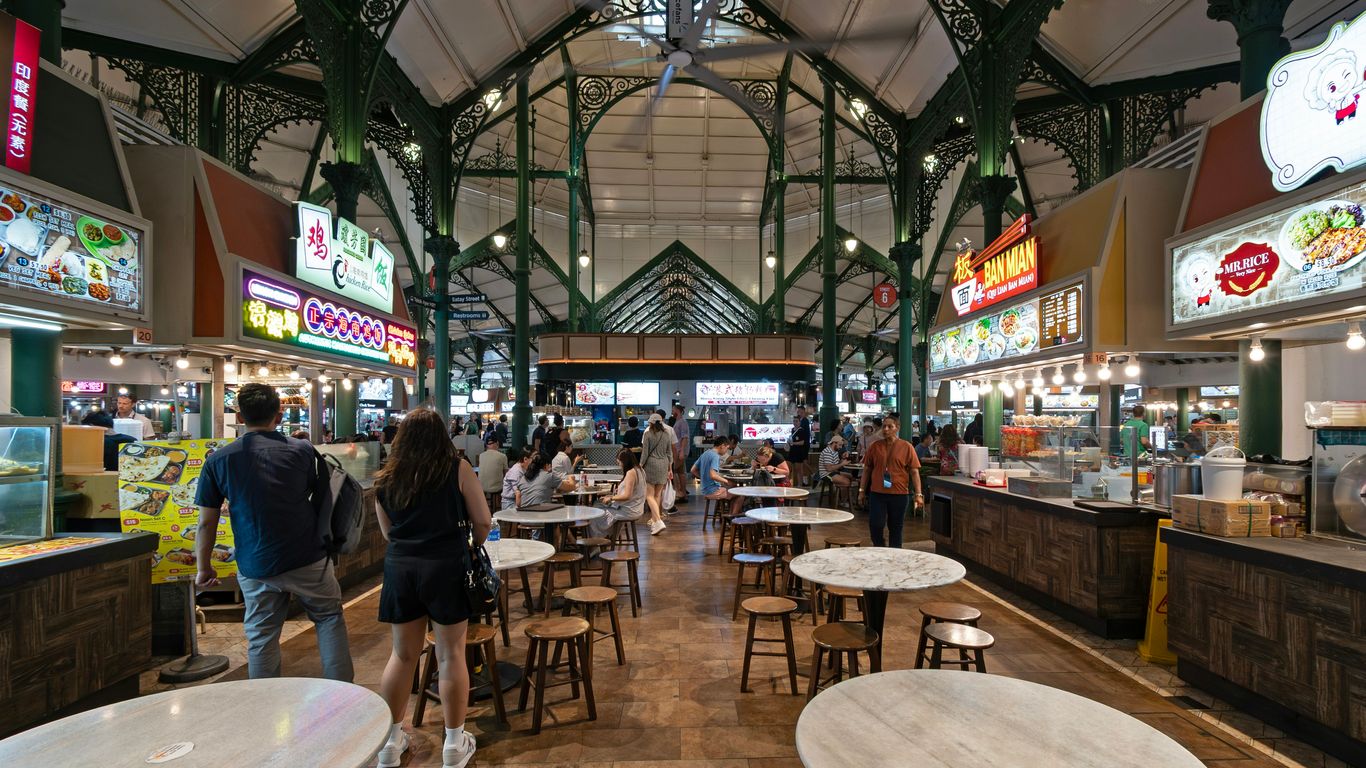
A hawker centre is designed to move people through it, but it is not designed to keep them separate. Stalls face a common dining area, and the open arrangement allows conversations, glances and small acts of accommodation to happen without planning. This is why the phrase “community dining room” feels accurate rather than decorative.
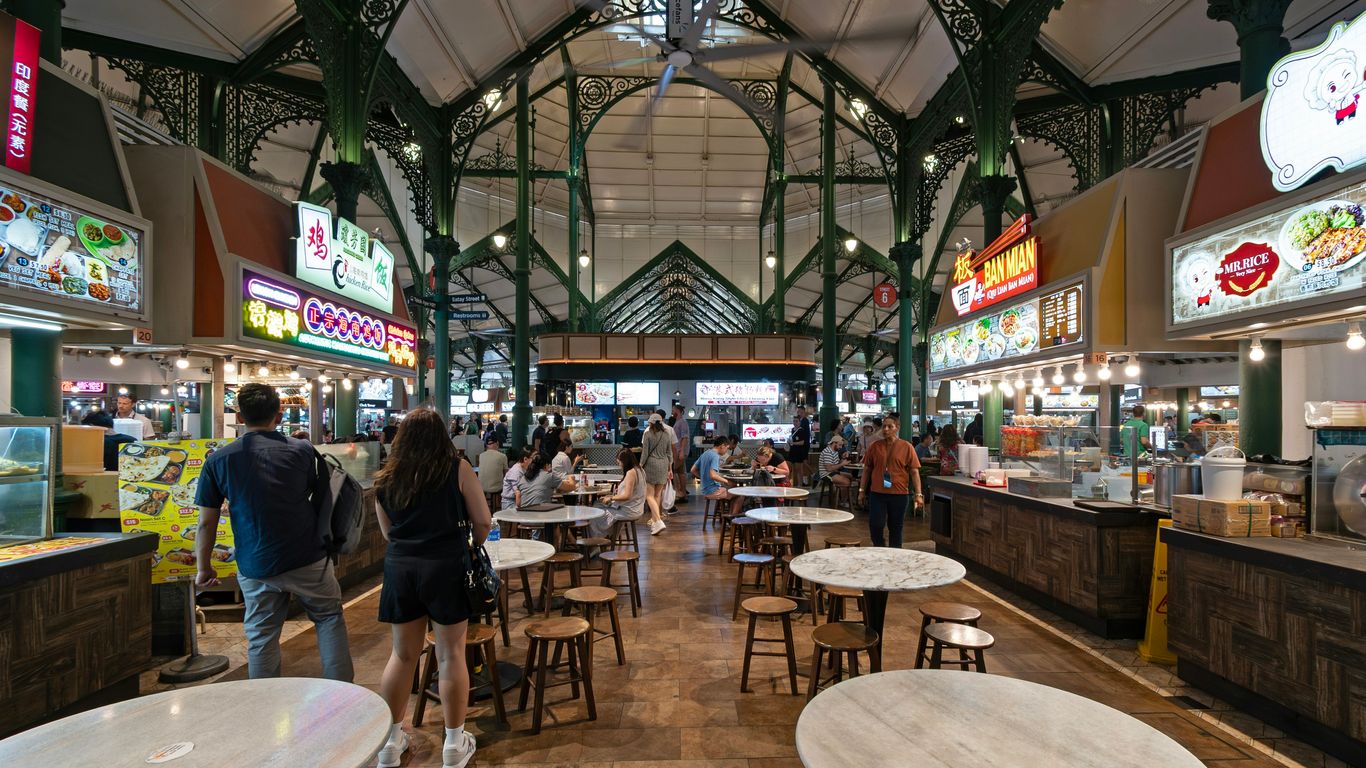
Its architecture is modest, even plain, yet its social purpose is unusually generous. A person can eat alone, meet a family member, sit beside a stranger or pause between errands. The room belongs to everyone for the duration of a meal.
Open seating and the idea of a table for everyone
Open seating removes many of the signals associated with formal dining. There is no expectation that a guest must order from one stall or reserve an entire table. A tray, a drink and a few minutes are enough to establish a temporary place in the room.
That arrangement supports a broad public: office workers, schoolchildren, older residents, delivery riders and visitors. The table is shared without requiring intimacy. It offers company at the edge of one’s attention, which can be a quiet form of belonging.
How location connects housing estates, markets and transport
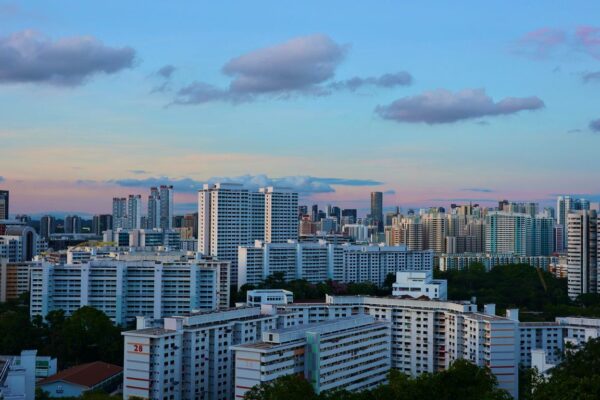
Many centres sit where daily routes overlap. They may be beside a market, below flats, near a bus interchange or along a well-used path between home and work. Their importance comes partly from this position: food is encountered as part of an errand, not separated from the rest of neighbourhood life.
Alexandra Village offers a particularly clear example of food, repair workshops and housing existing beside one another. A close look at its foodways and old trades shows how lunch can be connected to the working rhythms of mechanics, artisans and other skilled workers. The setting makes the centre feel less like a destination than a shared piece of infrastructure.
The everyday choreography of queues, trays and shared space
The centre has its own choreography. People read stall signs, join short queues, keep an eye on an available seat and negotiate narrow passages with a tray in hand. None of this is announced, yet regular diners learn the rhythm quickly.
A few habits keep the room moving: standing aside after ordering, leaving space for others and returning trays where required. The actions are small, but together they turn a crowded room into an accommodating one. They also reveal how public life is built from repeated, ordinary gestures.
A menu that maps Singapore’s multicultural identity
The menu of a hawker centre is a map made from taste. Dishes associated with different communities sit within the same roofline, sometimes beside one another and sometimes sharing ingredients, techniques or customers. The result is not a neat display of separate traditions, but an ongoing conversation between them.
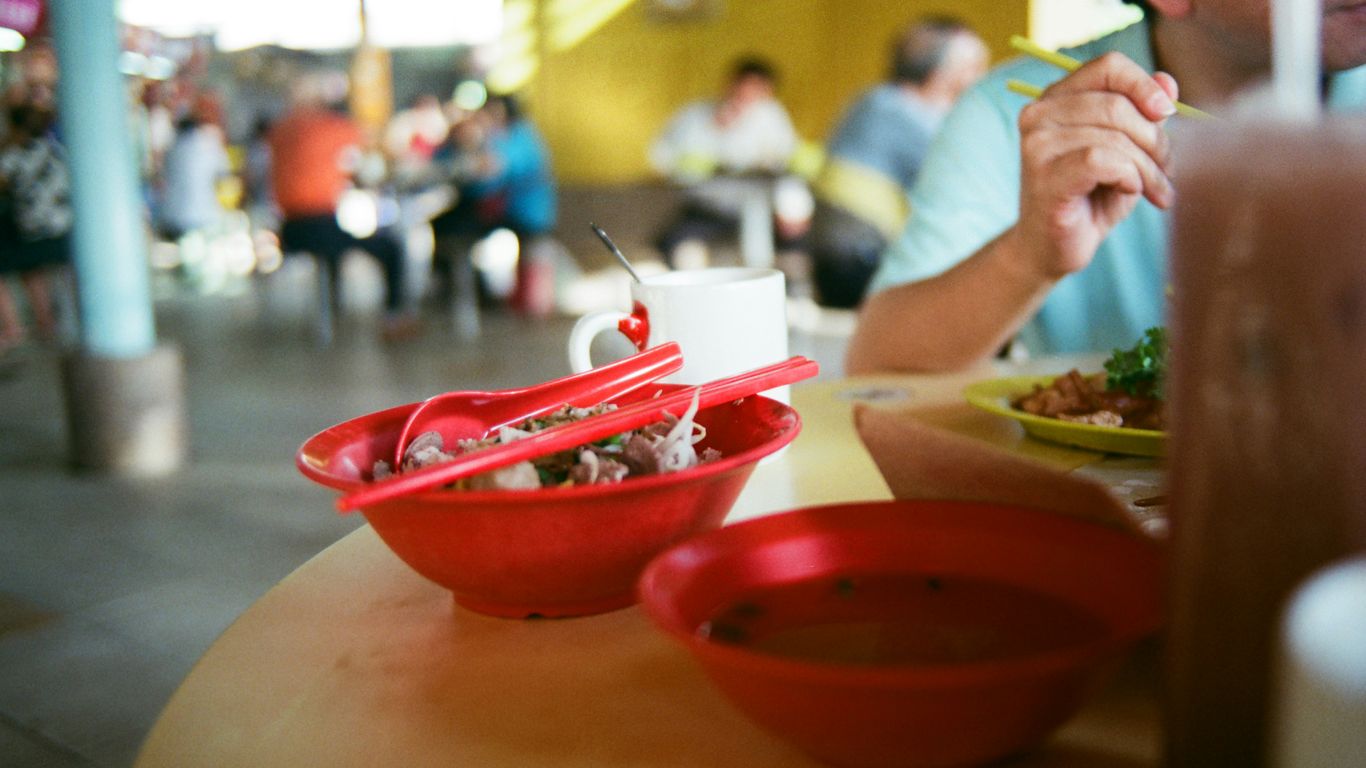
For a visitor, the range can feel dazzling. For residents, it may be more intimate: a breakfast remembered from childhood, a stall visited after work, or a dish chosen because it tastes like a particular neighbourhood. Food culture lives in those repetitions.
Chinese, Malay, Indian and Peranakan influences on one food court
Chinese, Malay, Indian and Peranakan influences are among the visible strands in Singapore’s hawker food, alongside other communities and histories. They appear in spice blends, noodles, rice preparations, breads, sweets and methods of cooking. Yet a stall’s identity is rarely contained by a single label.
Migration brought recipes and techniques; local cooks adapted them to new customers and circumstances. That layering helps explain why a single centre can hold such variety without feeling like a collection of unrelated cuisines. The shared room gives the differences a common setting.
Dishes shaped by migration, adaptation and local taste
Hawker dishes often carry evidence of adjustment. Ingredients may be substituted, sauces recalibrated and methods streamlined for a busy service. A recipe passed through several kitchens can become familiar in Singapore while retaining an echo of somewhere else.
The same principle appears in the Singapore street noodles recipe, where a dish associated with Singapore is interpreted for home cooking. It is a useful reminder that culinary identity is not frozen at the moment a recipe first arrives. It changes through use, memory and adaptation.
Why familiar classics matter alongside newer interpretations
Classics matter because they give communities a common vocabulary. They can mark a childhood, a workplace routine or a long relationship with one stall. Their value is not only nostalgic; repeated cooking preserves small decisions about texture, timing and balance.
Newer interpretations can sit alongside them without automatically weakening the tradition. A living food culture has room for experimentation, provided innovation does not erase the people, labour and histories that made the dishes meaningful. Familiarity and change are companions here, not opposites.
The rituals that turn a meal into community
Community is often easiest to see in a hawker centre before the main meal begins. Kopi orders arrive, shutters lift and regulars exchange brief greetings. Later, the same space may hold a family dinner, a solitary bowl of noodles or a group absorbed in conversation.
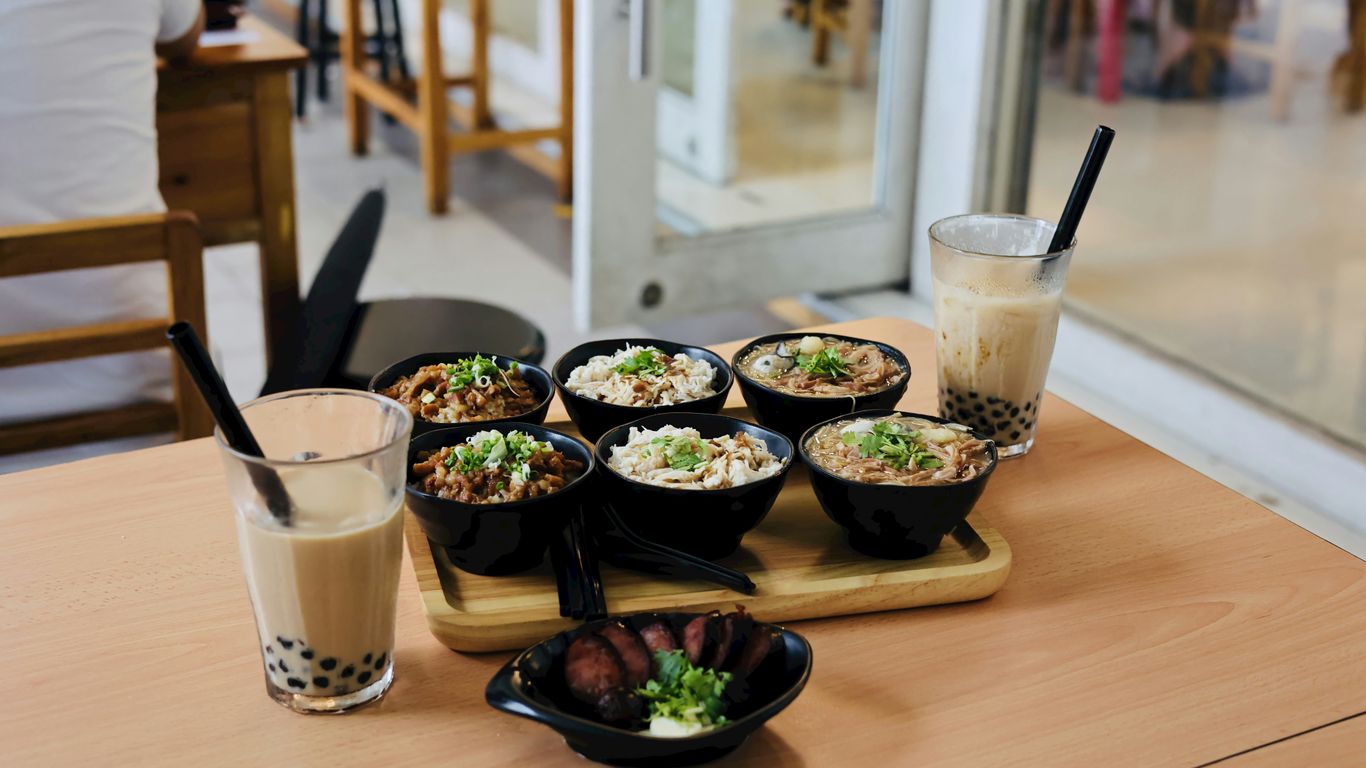
These routines are unremarkable precisely because they are repeated. They allow people to recognise a place and one another without requiring a formal community programme. The centre becomes familiar through sound, smell and timing.
Kopi, breakfast and the rhythms of daily life
Breakfast at a hawker centre can be quick or unhurried. Someone may carry a coffee back to a flat, while another person lingers over toast and conversation. The vocabulary of kopi, with its variations in milk, sugar and preparation, is part of the social texture as well as the beverage itself.
The objects matter too: cups, trays, order tabs and worn tables record countless mornings. A closer look at kopitiam objects and routines shows how material details can hold memories of migration, work and family life. They are humble archives, used until their meaning becomes almost invisible.
The unwritten etiquette of chope, tray returns and shared tables
A packet of tissues placed on a seat may signal that a table is taken, a practice widely known as chope. The gesture is simple but depends on shared understanding. So do the expectations around returning trays, clearing leftovers and making room when the centre is busy.
The etiquette is not identical everywhere, and visitors should watch before assuming. A useful set of habits is:
- Observe how nearby diners mark an occupied seat.
- Keep bags and elbows from spreading across shared tables.
- Return trays and waste according to the centre’s instructions.
- Give stall workers time during a crowded service.
These actions do not make a diner an expert, but they reduce friction. Respect is shown less through grand declarations than through attention to the room.
How strangers coexist without needing to dine together
Hawker centres allow proximity without demanding conversation. Two strangers can share a table while remaining absorbed in separate meals, newspapers or phones. That arrangement may seem minor, yet it creates a public space where difference does not have to be solved before people can sit together.
There are also livelier forms of connection: chess games, busking, children learning to choose food and neighbours exchanging news. The social life varies from centre to centre, but the underlying invitation remains broad. Everyone can enter as a customer and briefly participate in the same civic room.
The people behind the stalls
The centre’s atmosphere can make the work behind each meal easy to overlook. Customers see a plate arrive in minutes; they may not see the prep that began before dawn, the purchasing decisions, the cleaning or the years spent refining one dish. A stall is often a small business, a workplace and a family story at once.
Family recipes, apprenticeship and the passing down of skills
Knowledge travels through demonstration as much as through written recipes. A younger family member may learn how to judge heat by sound, knead by feel or season without measuring. Apprenticeship is similarly practical, built through repetition and correction during service.
This passing down keeps a dish recognisable while allowing it to respond to new conditions. It also shows why a recipe cannot be separated from the person who knows when it is ready. The skill is embodied, local and often difficult to summarise on a menu.
The long hours and physical demands of hawker work
Hawker work can involve early starts, prolonged standing, heat, lifting and relentless repetition. Service leaves little room for error, especially when a queue forms and several orders arrive together. Even a small stall requires purchasing, preparation, cooking, cleaning and administration.
The work has a physical rhythm that is easy to romanticise from the dining area. Looking at Singapore’s old trades and working skills encourages a fuller view of heritage: longevity depends on adaptation, but also on the bodies and attention that sustain a trade each day.
Why low prices do not always reflect the labour involved
Affordable food is one of the great strengths of the hawker centre, but a low price can conceal a narrow margin. Ingredients, utilities, rent, equipment and labour all press against the cost of a meal. The customer sees value; the operator must still make the numbers work.
That tension does not mean every stall should become expensive or exclusive. It does mean that diners can understand affordability as a social achievement requiring support. Patience, repeat custom and fair expectations all matter when a meal is priced for broad access.
Preserving a living culture in a changing city
Preservation becomes complicated when the culture being preserved is still working. A hawker centre cannot be treated like a display case, because its meaning depends on meals being cooked, sold and eaten. The challenge is to protect the conditions that allow ordinary practice to continue without turning it into a performance.
What UNESCO recognition can and cannot protect
UNESCO recognition has given international attention to Singapore’s hawker culture and its role in community dining. It can encourage documentation, public discussion and support for safeguarding efforts. It can also help people understand that the heritage lies in culinary practices and social relationships, not just in a list of famous dishes.
Recognition alone cannot guarantee that a stall remains viable or that younger workers will choose the trade. Heritage status is a framework for care, not a substitute for fair working conditions and thoughtful policy. The UNESCO hawker culture guide offers useful context for seeing the practice as both food heritage and urban community life.
Rising rents, ingredient costs and an ageing hawker workforce
The pressures are familiar but significant: operating costs rise, ingredients fluctuate and experienced hawkers grow older. Younger people may be reluctant to enter a demanding trade when other jobs offer different hours or clearer progression. A centre can be culturally treasured and still be economically difficult to run.
Support therefore needs to reach beyond publicity. Training, rental arrangements, succession planning and practical help with operations all affect whether a stall can continue. The future rests on making the work possible, not simply praising its results.
The tension between heritage, commercialisation and innovation
Commercial attention can bring visitors and income, but it can also simplify a living culture into a tidy image. A centre may be promoted as an experience while residents’ needs, stallholders’ knowledge and everyday affordability receive less attention. The most meaningful heritage work keeps those voices in view.
That is why SingaporeHeritage.sg treats heritage as lived through neighbourhoods, objects, food routes and community memory rather than only formal monuments. Its approach is a reminder that documentation should be ethical, credited and connected to the people who carry the knowledge.
How the shared dining room is finding its future
The future of hawker culture will not be secured by nostalgia alone. It will depend on whether the next generation can enter the trade, whether customers continue to value shared spaces and whether technology serves the centre without flattening its character. Change is already part of the tradition.
Training schemes and new routes into hawker careers
Training can make entry into hawker work less daunting by combining practical skills with business knowledge. New routes might include apprenticeships, supported incubation, partnerships with schools or gradual succession within family stalls. The aim should be to respect established expertise while giving newcomers a realistic way to learn.
Community organisations and educational institutions also have a role in recording techniques and stories. Singapore Heritage takes a related public-facing approach through story-led experiences and gifts rooted in neighbourhoods, foodways, objects and everyday practices. Such work can complement, rather than replace, the living work of hawkers.
Digital ordering, delivery platforms and changing customer habits
Digital ordering can make meals easier to access, particularly for people with limited time or mobility. Delivery also changes the relationship between stall and dining room: food travels away from the shared tables, while orders become more mediated by screens and systems.
The convenience is real, but it should not make the physical centre disappear from public life. Customers still need places to meet, eat and observe the work behind the meal. A balance between access and presence will shape how the shared dining room remains socially useful.
What diners can do to support Singapore’s hawker culture responsibly
Diners have influence through ordinary choices. They can return regularly to less celebrated stalls, allow workers time to prepare food and avoid treating the centre as a stage set. They can also learn a little about local etiquette before arriving.
A thoughtful visit might include:
- Choosing a stall because of its craft, not only its online visibility.
- Paying attention to the people and routines behind the food.
- Keeping shared seating available during busy periods.
- Supporting reasonable prices while recognising the labour involved.
These choices are modest, but culture is sustained through modest choices repeated over time. Visitors who want a more contextual experience can book a heritage walk that approaches neighbourhood stories with attention to place and community.
Walk the Foodways
For readers who want to encounter these stories on foot, Singapore heritage tours offer story-led routes through neighbourhoods, foodways and old trades, connecting a meal with the people and places around it.
Conclusion
Singapore’s hawker centre became a shared dining room because planning, migration, skilled work and everyday courtesy met in one accessible space. Its future will be strongest when preservation remains practical and human: supporting hawkers, respecting residents and allowing the culture to keep changing without losing its memory.
Frequently Asked Questions
What is Singapore hawker culture?
Singapore hawker culture is the living tradition of preparing and eating affordable food in shared hawker centres, shaped by multiple communities and embedded in everyday urban life.
Why are hawker centres important to Singapore?
They provide accessible meals while also functioning as social spaces where people from different backgrounds can share tables and routines.
How did hawker centres develop?
They developed from earlier street-food practices, with hawkers later moved into organised centres as Singapore’s population, infrastructure and public-health needs changed.
What kinds of food are found in hawker centres?
Menus commonly include dishes influenced by Chinese, Malay, Indian, Peranakan and other culinary traditions, often adapted to local ingredients and tastes.
What does chope mean?
Chope is an informal Singaporean term for reserving a seat, often by placing a small personal item such as a packet of tissues on the table.
Is hawker culture only about food?
No. It also includes craft knowledge, family and apprenticeship traditions, shared dining etiquette, neighbourhood relationships and the social life of the centres.
How can visitors support hawker culture?
Visitors can eat respectfully, follow local etiquette, return trays where required, support a range of stalls and recognise the labour involved in keeping affordable food available.