
Samsui Women: The Red-Headscarf Workers Who Helped Build Singapore
Key Takeaways
The Samsui women were migrant workers whose lives connected southern China, Singapore’s building sites and the families they supported from afar.
- Most came from Sanshui and nearby districts in southern China.
- Many arrived between the 1920s and 1940s seeking construction and industrial work.
- Their red headscarves were practical clothing as well as a lasting public symbol.
- Their labour contributed to Singapore’s changing streets, buildings and infrastructure.
- Their story is best remembered through both public history and personal memory.
Who the Samsui women were and where they came from
The name “Samsui women” usually brings to mind a red headscarf, a blue work outfit and a woman carrying materials through a busy building site. Yet the image is only the beginning of the story. These were Chinese women who migrated to Singapore as workers, often navigating unfamiliar streets and hard economic choices with little public recognition. Their history sits within the wider movement of people that made Singapore a port city and, later, a modern nation.
The meaning behind the name “Samsui”
“Samsui” is the Cantonese pronunciation of Sanshui, a district in Guangdong in southern China. The term therefore points to a place of origin rather than a single occupation or a completely uniform group. Women also came from nearby areas such as Shunde and Dongguan, as well as from other parts of southern China, so the label gathered together people with varied backgrounds.
The name became familiar in Singapore because the Sanshui migrants were particularly visible in manual work. Over time, place, clothing and occupation fused into one public identity. That shorthand is useful, but it can also hide the differences between individual women and their separate journeys.
Migration from southern China to Singapore
Between the 1920s and 1940s, women from Guangdong and neighbouring districts travelled to Malaya, including Singapore, in search of employment. Their home villages could offer little secure work, particularly where farmland was scarce and families were under financial pressure. Singapore’s expanding economy, by contrast, offered wages that could be sent back to relatives.
Migration was rarely a simple act of adventure. It relied on networks of recruiters, relatives, dialect groups and employers, all of which helped newcomers find a place to sleep and a first job. A useful account of Samsui women places their movement within this broader history of Chinese migration and labour in the region.
Why many women travelled alone
Many young women travelled without husbands or parents because the purpose of migration was work. They were expected to earn, save and remit money, sometimes supporting parents, siblings or children in China. Leaving alone could be painful, but it also gave them a degree of control over their wages and decisions.
The choice was shaped by necessity rather than romance. Families facing limited opportunities could see a daughter’s overseas employment as a practical strategy, while the woman herself had to bear the risks of distance, debt and unfamiliar labour. Her independence was real, but it existed alongside heavy obligations.
Their place in Singapore’s early working communities
Samsui women formed part of the dense working communities around construction sites, shophouses, lodging houses and markets. Dialect ties and shared routines helped them find food, accommodation and employment. They were also part of a much larger migrant world that included dockworkers, shopkeepers, domestic workers and seafarers.
That everyday geography matters when considering samsui women singapore history. Singapore Heritage’s stories of ordinary working people offer a natural companion to the subject, because they place migrant labour beside the shops, docks and homes that made the island function. The women were not isolated symbols; they belonged to neighbourhoods full of movement, trade and mutual dependence.
Why Samsui women became construction workers
Construction offered work that was physically demanding but accessible to women with limited formal education. As Singapore expanded and rebuilt, labour was needed for roads, buildings and other parts of the urban fabric. Samsui women entered that demand through established employment networks and became a familiar presence at worksites. Their work was often described simply as “manual labour”, though it required stamina, coordination and the ability to follow site routines.
Labour shortages during Singapore’s urban transformation
Singapore’s growth created a steady need for workers who could move materials and carry out repetitive tasks. Construction was not only about architects and engineers; it depended on many pairs of hands preparing, lifting, mixing and transporting. Women migrants filled part of this need during a period when the island’s built environment was changing quickly.
The wider development story can be seen through Singapore’s changing urban landscape, where infrastructure, migration and daily life meet. The Samsui women belong in that account because the city’s transformation was made through labour as well as plans and policies.
The jobs they took on at building sites
Their tasks could include carrying bricks, sand, timber and other materials, preparing mortar, clearing areas and supporting skilled trades. The exact duties varied with the site and the employer. They were not a single occupational category, and their work should not be reduced to the dramatic image of a woman balancing a heavy load.
A building site was a chain of small responsibilities. One worker’s carrying, sorting or mixing allowed another task to proceed, often under heat, noise and close time pressures. The work was visible in the moment, yet the names of the women doing it were seldom attached to the completed building.
Skills, strength and discipline on the worksite
Physical strength mattered, but so did rhythm and judgement. Workers had to carry loads safely, judge distances, respond to instructions and repeat demanding movements across long days. Familiarity with tools and materials would grow through experience, even when that expertise was not formally certified.
Their discipline also came from the social organisation of work. Turning up on time, keeping pace with others and protecting one another from avoidable danger were practical necessities. Skill lived in repetition, in the body’s memory of a task and in knowing how a site moved.
The realities of physically demanding labour
Construction work placed pressure on backs, knees, hands and shoulders. Sun, dust, rain and the possibility of injury were part of the environment, while low wages made rest difficult to afford. For women supporting families, stopping work could have consequences well beyond the worksite.
The public memory of resilience can sometimes make hardship look noble and uncomplicated. A fuller view allows both truths to stand: the women showed remarkable endurance, and they worked within conditions that could be exhausting, insecure and dangerous. Their courage should not be used to romanticise the labour itself.
The red headscarf and the identity it created
The red headscarf is the most recognisable feature associated with Samsui women. It appears in statues, illustrations, exhibitions and family recollections, often paired with a blue samfoo outfit. Its meaning developed from practical workwear into a public sign of migrant women’s contribution. The symbol is powerful, but it needs to be read alongside the less visible details of wages, housing and working relationships.

Practical protection from sun, dust and debris
A headscarf could cover the hair and help keep dust away from the face and neck. Wrapped and tied securely, it also made long hair less troublesome around materials and tools. Its bright colour may have helped workers remain visible among the movement of a busy site, although the precise way each woman wore it could differ.
Work clothing was shaped by usefulness rather than ceremony. Loose garments allowed movement, while sturdy footwear and simple carrying equipment suited the demands of the day. The headscarf’s practical function is easy to overlook once it becomes a familiar emblem.
How the headscarf became a recognisable symbol
The red cloth made the women easy to identify in photographs and public memory. That visibility helped later generations associate them with Singapore’s construction history, even when other migrant workers disappeared from the story. It also gave the women a collective identity that could be understood at a glance.
Symbols, however, simplify. Not every woman had the same life, personality or reason for migrating, and the headscarf cannot tell a viewer whether she worked at a particular site or supported a particular family. It is a doorway into the history, not the whole room.
Clothing, tools and the Samsui worker’s appearance
The familiar appearance usually includes a red head covering, blue work clothes and a basket or other load carried close to the body. These details convey movement and labour, but they should be understood as working equipment rather than costume. Clothing was chosen, repaired and reused within the limits of a worker’s earnings.
The visual language of the Samsui woman is now part of Singapore’s heritage culture. Good interpretation keeps the human figure in view: a person who needed food, shelter, rest and wages, not merely an attractive image of the past.
Separating historical fact from popular imagery
Popular representations often present Samsui women as a single, timeless group. Historical accounts are more uneven. The women came from different places, worked in different settings and experienced migration in different ways; some later left the workforce, while others remained connected to Singapore through old age or family ties.
That complexity is not a weakness in the story. It is what makes it credible. Remembering the headscarf alongside uncertainty, variation and missing records prevents a symbol from replacing the people it is meant to honour.
Daily life beyond the construction site
A worksite occupied only part of each day. Samsui women also had to find a bed, prepare or buy food, wash clothes, manage money and maintain relationships across the sea. Their lives were shaped by thrift and routine, but also by friendship, loneliness and the small decisions that make an unfamiliar place livable. These quieter details are essential to understanding their working lives.
Housing, food and frugal routines
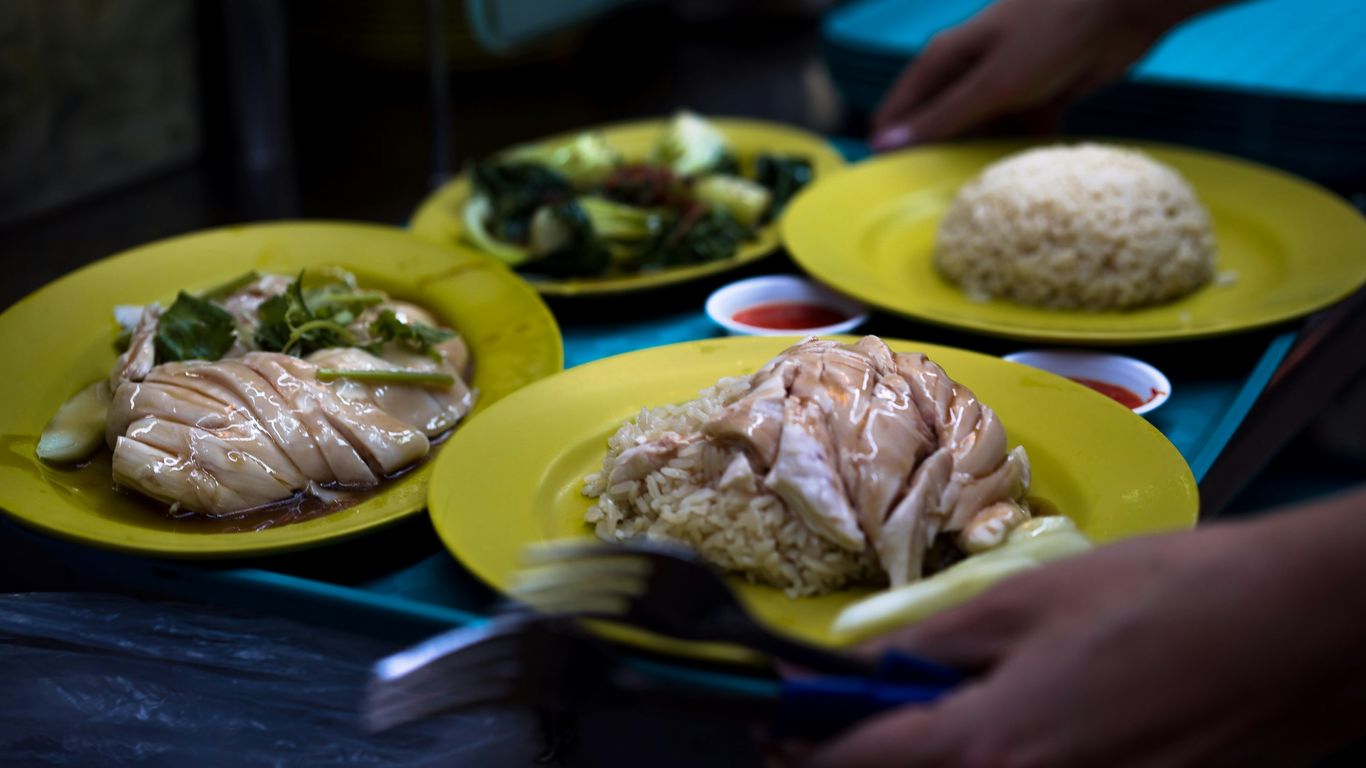
Many migrant workers lived in simple, crowded accommodation close to employment. Shared rooms or lodging houses reduced costs and made it easier to reach work, though privacy was limited. Meals had to be filling and affordable, with little room for waste after rent and remittances were paid.
A kopitiam, market stall or shared kitchen could become part of this practical world. Singapore Heritage’s account of kopitiam everyday life helps show how ordinary food spaces carried social meaning as well as nourishment. For workers, a familiar drink or shared table could offer a brief sense of steadiness.
Mutual support among female migrant workers
Women relied on one another for information, company and practical help. A newcomer might learn where to find work, how to navigate a neighbourhood or whom to approach when money was short. Such support did not erase conflict or inequality, but it made solitary migration less isolating.
The forms of support were often modest and immediate:
- sharing information about employers and available work;
- keeping an eye on belongings or personal safety;
- lending small sums during illness or unemployment;
- preparing food and maintaining familiar social habits.
These acts created a working community. They also show why the women’s history cannot be told only through buildings: it was sustained in rooms, streets, meals and conversations.
Family responsibilities and remittances
Sending money home was one of the central reasons many women worked in Singapore. Remittances could pay for food, schooling, medical care or household needs, and they tied the worker’s daily effort to family life in another country. A woman might be physically alone while remaining deeply involved in decisions at home.
This arrangement brought pride as well as pressure. Earnings had to be divided between immediate needs and promises made before departure. The amount sent home, the frequency of letters and the timing of visits all carried emotional weight.
The social costs of an independent working life
Independent work could give women more control than a life confined to a poor rural household, but it could also attract judgement. They lived away from customary family structures, performed work associated with physical toughness and managed money in public. Loneliness, fatigue and concern about ageing without close family were part of the cost.
A respectful account avoids turning independence into a simple success story. The women made choices within narrow economic limits, and those choices could bring both dignity and vulnerability. Their resilience was social and practical, not an absence of hardship.
Samsui women and Singapore’s development
Singapore’s changing landscape was built through many kinds of labour, much of it ordinary and poorly documented. Samsui women carried materials, supported construction processes and helped make expansion possible at ground level. Their contribution sits alongside the work of men, other migrant groups, skilled tradespeople and domestic workers. It also sits within the daily life of a port whose buildings depended on the people around them.
Their contribution to the city’s changing landscape
The women’s labour belonged to the physical making of streets, homes and workplaces. A completed building can appear permanent and self-contained, yet its construction involved temporary teams whose members moved on once the job was done. Their effort became part of the city without always becoming part of its visible authorship.
The Singapore River’s working history offers another way to understand this connection between urban growth and labour. Coolies, lightermen, warehouse workers and construction labourers all helped turn a trading settlement into a functioning city. The Samsui women were one important part of that larger human infrastructure.
Work that often went unrecorded
Official histories tend to preserve dates, plans, institutions and prominent names more easily than repetitive manual work. A worker who carried materials left few documents behind, especially if she had limited literacy and moved between employers. Even photographs may identify the clothing without identifying the individual.
This absence should not be mistaken for insignificance. The records are incomplete because of how history was collected, not because the labour lacked value. Family stories, oral testimony and careful local research can restore texture where formal archives are quiet.
How gender and migrant status shaped their history
The women occupied a complicated position. They were valued for their labour but could remain socially marginal as migrants and as women in a male-dominated construction industry. Their wages and working conditions were shaped by employers, recruiters, immigration controls and the wider economy.
Gender also influenced how they were remembered. Their toughness could be celebrated as an exceptional quality, while the ordinary rights and protections owed to workers received less attention. A balanced history recognises agency without pretending that the surrounding power structures were equal.
Connecting individual stories to Singapore’s national narrative
National development is often told through impressive milestones: new roads, housing estates, industries and institutions. Those milestones matter, but they can feel abstract unless connected to people who carried, mixed, cleaned, cooked and repaired. Samsui women bring a human scale to the story of modern Singapore.
A timeline of Singapore’s pivotal moments becomes richer when read beside such lives. Infrastructure and policy changed the island, but those changes were experienced through tired feet, remitted wages, shared rooms and the gradual remaking of familiar neighbourhoods.
Remembering the Samsui women in Singapore today
The Samsui women remain present in Singapore through statues, museum displays, photographs, books and family memories. Their red headscarves make them visually memorable, while the circumstances of their lives invite more searching questions. Who was named, who was forgotten and whose version of the past became public? Remembering them well means allowing admiration, uncertainty and human detail to exist together.
Museums, monuments and public remembrance
Public representations give visitors a first point of contact with the women’s history. A sculpture or exhibition can make an overlooked group visible to people who might otherwise pass through a neighbourhood without knowing its working past. It can also encourage conversations about migration, labour and the changing city.
Singapore Heritage’s heritage tours take a story-led approach to neighbourhood history, connecting places with the people and practices that shaped them. In this context, remembrance works best when it leads beyond a single statue and back into the streets where ordinary lives unfolded.
Oral histories and family memories
Oral history can preserve things that official records rarely capture: a woman’s preferred meal, the sound of a dialect, a remembered employer or the way money was sent home. These recollections may be partial and sometimes conflict with one another, but that is part of their value. Memory reveals how the past was lived, not only how it was later classified.
Families may hold photographs, letters, tools or stories that have never entered an archive. Sharing them should involve consent, proper credit and care for personal details. The act of listening can be as important as the final display.
How artists and writers preserve their legacy
Artists and writers keep the story moving between evidence and imagination. They may focus on the red cloth, the weight of a basket, the crowded lodging house or the distance between Singapore and Guangdong. The strongest work does not flatten the women into heroic figures; it makes room for contradiction and individual voice.
Research also matters. Books and essays that examine migration, public memory and self-defined identity help readers question why some images endure. Creative work can then build on that foundation without treating symbolism as a substitute for historical care.
What their story means for modern Singapore**
For modern Singapore, the Samsui women offer a reminder that development has always depended on people whose names may not appear on plaques. Their story also asks present-day readers to consider how migrant labour is valued, recorded and remembered. The red headscarf is therefore not only a symbol of the past; it is an invitation to look more closely at the people behind every familiar street.
Singapore Heritage’s researched gifts are designed to help people carry local stories home through thoughtfully made objects, while its storytelling experiences keep attention on neighbourhoods and community memory. Readers who want to continue that encounter can book a heritage walk and meet Singapore’s layered history through place and conversation.
Conclusion
The Samsui women helped build Singapore in ways both visible and easy to overlook. Their migration, labour, friendships and family responsibilities formed part of the practical foundations of a changing city, while the red headscarf became a lasting sign of their presence. To remember them fully is to look past the familiar image and recognise the individual lives, difficult choices and everyday skills behind it.
Frequently Asked Questions
Who were the Samsui women?
They were Chinese female migrants, many from Sanshui in Guangdong and nearby districts, who came to Malaya, including Singapore, mainly between the 1920s and 1940s for employment.
Why are they associated with construction work?
Construction provided accessible manual employment during periods when Singapore needed labour for its expanding built environment. Their jobs involved carrying materials and supporting work at building sites.
What does “Samsui” mean?
“Samsui” is the Cantonese pronunciation of Sanshui, a district in Guangdong. The term describes a place-based migrant identity rather than one completely uniform group.
Why did they wear red headscarves?
The headscarves helped protect the head and hair from sun and dust and became a recognisable feature of their workwear. They later developed into a powerful symbol of the women’s contribution.
Did all Samsui women come from the same place?
No. Many came from Sanshui, but others came from nearby areas such as Shunde and Dongguan, as well as from other parts of southern China.
How did they support families in China?
Many sent remittances from their Singapore wages. The money could help with household expenses, education, medical care and other family responsibilities.
How are Samsui women remembered today?
They are remembered through monuments, museums, photographs, oral histories, family stories, writing and artistic representations that connect their lives to Singapore’s wider development.
Walk Through Singapore’s Stories
Readers can explore Singapore Heritage’s small-group heritage walks and storytelling experiences to encounter neighbourhood history through local places, people and memories.
Key Takeaways
Singapore’s traditional coffee shops are more than places to buy breakfast: they are living records of migration, work and neighbourhood life.
- Hainanese coffee-shop workers helped shape Singapore’s early kopitiam trade.
- The word “kopi” reflects the region’s layered linguistic and cultural history.
- Familiar orders, cups and breakfast foods form a shared social ritual.
- Redevelopment, rents and changing tastes have altered the traditional coffee shop.
- Kopitiams survive when skills, stories and everyday relationships are carried forward.
Where Singapore’s kopitiams began
The story of Singapore’s kopitiams begins with movement: migrants arriving at a busy port, workers seeking affordable meals and small businesses taking root along crowded streets. These coffee shops were practical enterprises, but they also became places where languages, recipes and habits met. To understand kopitiam history singapore, it helps to look beyond the drink itself and towards the people who made the trade part of ordinary life.
The Hainanese origins of the coffee-shop trade
Hainanese migrants became closely associated with Singapore’s coffee-shop trade, particularly through their work as coffee brewers, cooks and service workers. Many had experience in domestic service or hotel kitchens, where they encountered European-style bread, butter and preserves alongside Chinese cooking methods. The resulting coffee shop was neither wholly imported nor wholly traditional; it was a useful, improvised meeting point between different food cultures.
The trade depended on close practical knowledge. Brewing, preparing kaya, grilling bread and remembering regular customers were skills learnt through observation and repetition rather than formal instruction. In this way, the Hainanese contribution became part of a wider Singaporean breakfast culture.
Chinese migration and the making of a new food culture
Chinese migration brought dialect groups, cooking traditions and systems of mutual support into the growing port city. Coffee shops often served food that reflected this mixture, with familiar rice, noodle and snack dishes appearing alongside toast and hot drinks. Their menus changed according to neighbourhood, available ingredients and the preferences of the people who gathered there.
This was food culture made in close quarters. A stallholder might adapt a recipe for local tastes, while a customer carried a habit from one district to another. The kopitiam therefore recorded migration not through grand declarations, but through small adjustments in flavour, language and service.
How the Malay word “kopi” shaped everyday language
“Kopi” is the Malay and Indonesian word for coffee, while “tiam” comes from Hokkien and means shop. Together, the word describes a coffee shop, but it also captures the region’s habit of borrowing and reshaping language through daily contact. Kopitiam orders developed in a practical mixture of Malay, Chinese dialects and English, allowing customers and servers to communicate quickly across linguistic boundaries.
The vocabulary remains one of the most distinctive parts of the experience. A short order can specify the coffee’s milk, sugar and strength, turning a drink into a compact piece of local knowledge. It is language used not for display, but to get breakfast right.
From home brewing to neighbourhood businesses
As Singapore’s population grew, coffee shops became dependable neighbourhood businesses rather than occasional household conveniences. Their open fronts, shared tables and steady morning hours suited a city where workers, families and small traders lived close together. A kopitiam could be modest in appearance and still hold an important place in the local economy.
Its value lay partly in repetition. The same brewer might recognise a customer’s order, a stall might open before the first shift began, and a table might host different groups over the course of one day. That dependable rhythm helped turn a commercial space into a familiar part of home territory.
The kopitiam during Singapore’s colonial and early post-war years
During the colonial period and the difficult years after the Second World War, coffee shops offered inexpensive food, shade and company in a city changing quickly. They stood near workplaces, markets, transport routes and housing, making them accessible to people with little time or money to spare. Their history sits alongside the wider story of Singapore’s port, including the labour and trade described in accounts of the Singapore River’s working life.
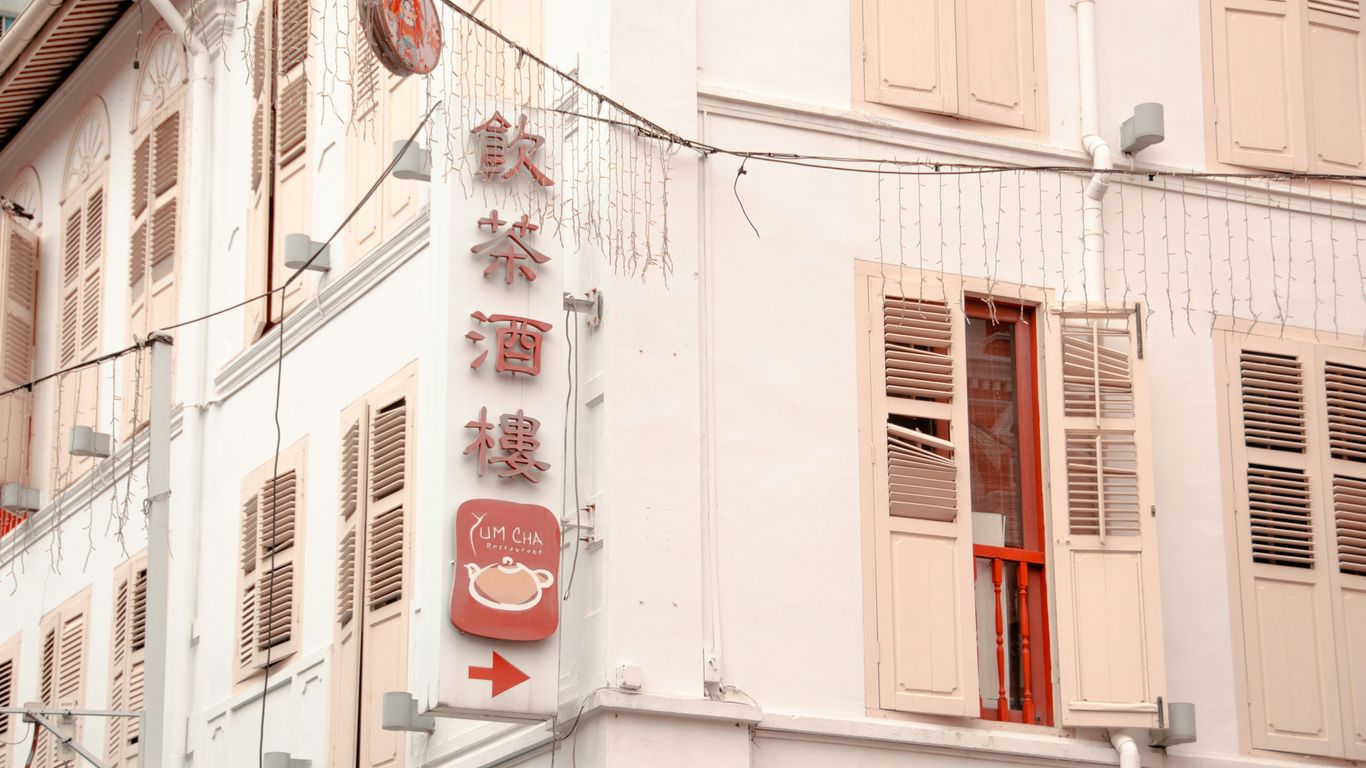
Coffee shops as gathering places for workers and residents
For dockworkers, clerks, artisans and residents, the coffee shop was often the first public room of the day. It offered a place to pause before work, exchange news or wait for someone without needing to spend much. The sounds were ordinary but memorable: cups touching saucers, ceiling fans turning, orders called across a busy counter.
These spaces were especially useful because they did not demand a formal invitation. A person could arrive alone, share a table when necessary and still feel part of the surrounding life. The kopitiam’s openness made it a natural social institution.
Affordable meals in a rapidly changing city
Low-cost meals mattered in a city where many households were managing uncertain wages, crowded housing and long working hours. Coffee shops provided simple breakfasts and filling dishes that could be eaten quickly or stretched into a longer conversation. The food was shaped by thrift as much as taste, making use of familiar ingredients and efficient cooking methods.
Affordability also widened the social reach of the kopitiam. Students, labourers, shop assistants and older residents might occupy the same room, even if their lives outside it were very different. Shared tables created a modest form of equality: everyone had to make space for the next customer.
The role of hawkers, provision shops and adjoining trades
Traditional coffee shops were rarely isolated businesses. Around them, provision shops, market sellers, repairers and hawkers formed an everyday network of goods and services. Customers could drink coffee, buy household essentials, collect a parcel or speak with a neighbour within the same short walk.
This relationship between food and work remains visible in places where a food centre sits beside workshops and small enterprises. A study of Alexandra Village’s foodways shows how eating places can function as practical community dining rooms for workers and residents, rather than as destinations separated from local working life.
How social class and community life met around shared tables
A kopitiam did not erase differences in income, occupation or status, but it brought people into physical proximity. The shared table was both a convenience and a social arrangement, particularly during busy hours. Conversations could remain within a family group, yet the room itself was collective.
That mixture of privacy and openness helped coffee shops become trusted places for informal exchange. Someone might hear about a job, a landlord, a shipment or a family matter simply by being present. Community knowledge travelled through these small, busy rooms.
The rituals and language of traditional kopi
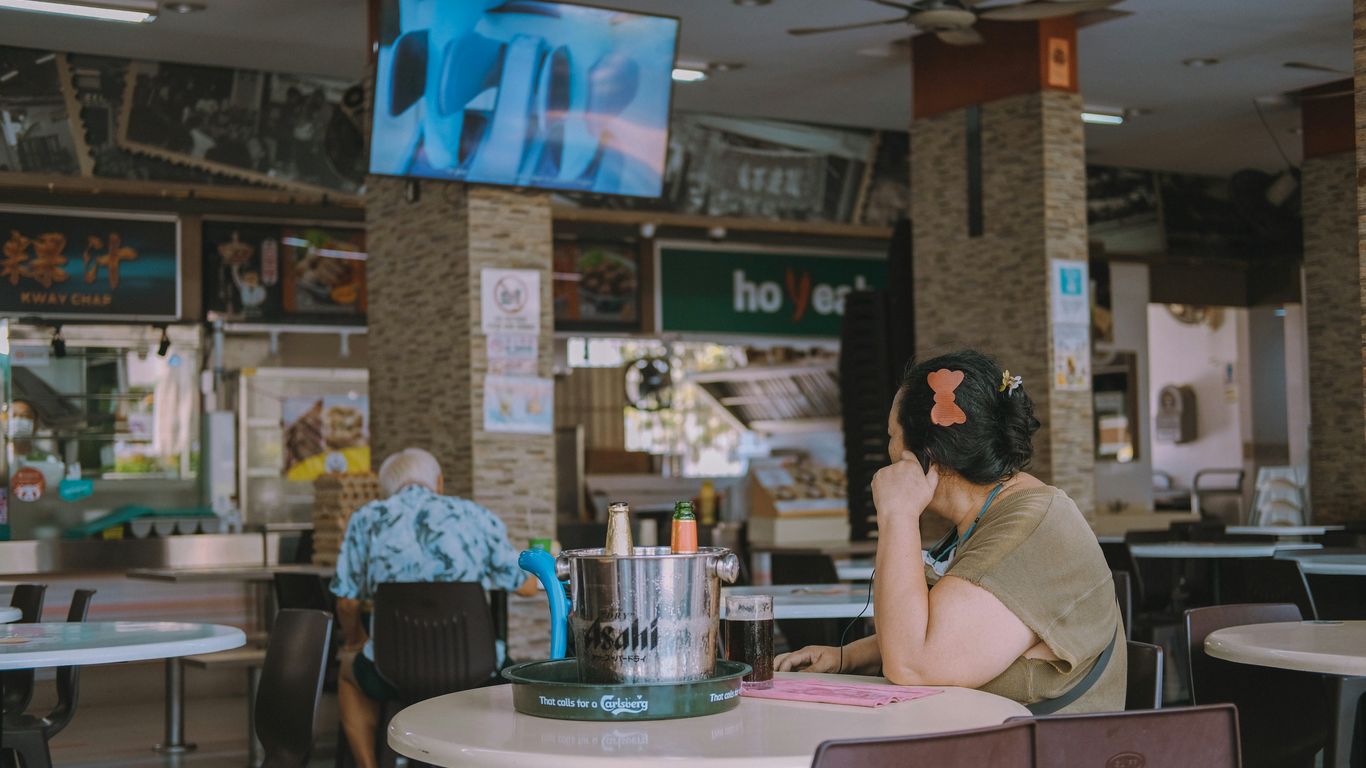
Traditional kopi is a system of small choices, remembered by servers and learnt by customers through use. Milk, sugar, strength and preparation are expressed in familiar terms, while breakfast arrives as a set of textures: strong coffee, crisp toast, cool butter and soft eggs. The ritual is simple enough for a hurried worker and rich enough to reward attention.
The material details matter too. A cup, saucer, metal kettle or coffee sock can carry years of handling, making the ordinary feel unusually personal. Singapore Heritage’s kopitiam objects archive explores how such things preserve evidence of daily routines, migration and shared use.
Kopi, kopi-o and kopi-c: understanding the classic orders
A classic kopi is commonly understood as coffee served with condensed milk and sugar. Kopi-o is black coffee with sugar, while kopi-c is coffee with evaporated milk and sugar. The vocabulary can include further changes in sweetness, strength or temperature, so an order often functions as a brief set of instructions.
The terms are not merely culinary shorthand. They show how a multilingual society made a practical language of food, using words that were clear at the counter even when customers came from different backgrounds. A newcomer may need help at first, but the pattern becomes intuitive with time.
Kaya toast, soft-boiled eggs and the enduring breakfast set
Kaya toast pairs grilled bread with coconut-and-egg jam, usually with butter melting into the warm centre. Soft-boiled eggs add a savoury, delicate contrast, and the coffee completes a breakfast designed around speed without feeling hurried. The set has endured because it is inexpensive, recognisable and satisfying.
Its colonial-era influences do not make it foreign to Singapore. Local cooks and customers adapted bread, preserves and coffee to their own tastes, turning borrowed ingredients into a firmly rooted habit. The breakfast table is therefore a record of exchange rather than a single origin story.
The significance of the enamel cup and saucer
The enamel or ceramic cup and saucer are small objects, but their appearance and use help define the traditional coffee-shop atmosphere. They are durable, easy to replace and shaped for a drink that is served hot and consumed in company. Some customers cool their coffee in the saucer, a familiar gesture that also reveals how people make the setting their own.
Objects become meaningful through repeated handling. The everyday heritage archive places cups, kettles and tables alongside food traditions, showing how material evidence can illuminate the people and practices behind a neighbourhood.
To see why the details remain useful, it helps to distinguish the object from the habit attached to it:
| Object or practice | What it makes possible | What it can reveal |
|---|---|---|
| Cup and saucer | Quick, durable service | Shared ideas of comfort and routine |
| Coffee sock | Filtered brewing in batches | Practical knowledge passed between workers |
| Tiled or marble table | Easy cleaning and shared seating | The communal design of the coffee shop |
| Handwritten tab | Informal payment and trust | Relationships between regulars and stallholders |
These details are not decorations added after the fact. They explain how a kopitiam worked, and why its atmosphere cannot be recreated by appearance alone.
Unwritten etiquette at the kopitiam table
Kopitiam etiquette is mostly learned by watching others. Customers make room, keep belongings close during busy periods and understand that a table may serve several groups in one morning. They also learn to listen for their order and to treat stallholders as part of the social fabric rather than as invisible service providers.
The rules are flexible, but they protect the shared nature of the space. A person can linger over coffee, yet the table remains available to others. That balance between welcome and consideration is one of the reasons the traditional coffee shop feels communal without being ceremonious.
How kopitiams became anchors of neighbourhood life
The kopitiam became a neighbourhood anchor through repetition rather than formal planning. It was where residents began the day, where workers returned between tasks and where people encountered news that had not yet travelled through official channels. Over time, the coffee shop gathered memories in layers.
Its role also changed with the city. Older establishments served one generation, then another, while newer customers brought different languages, schedules and expectations. The result was not a frozen tradition, but a public habit capable of absorbing change.
Morning routines and multigenerational regulars
Morning regulars gave the coffee shop its strongest sense of continuity. Grandparents might arrive early, parents stop by before work and younger family members learn the familiar orders at the same table. The routine offered an everyday form of inheritance, passed through gestures rather than instruction.
A regular customer’s presence could also reassure others. Stallholders noticed absences, neighbours exchanged brief updates and a person living alone had somewhere recognisable to go. Such small acts made the kopitiam part of the social infrastructure of a district.
News, debate and informal community networks
Coffee shops have long been places for conversation, from practical matters such as rent and employment to arguments about sport, politics and local change. The talk could be serious, playful or simply repetitive, but it helped residents interpret what was happening around them.
This informal network mattered before digital communication became so immediate, and it still matters where trust is built face to face. A notice, recommendation or warning carried through familiar voices can have a different weight from a message encountered alone on a screen.
Coffee shops as spaces for migrant workers and local families
As Singapore changed, kopitiams continued to bring together people with different origins and working lives. Migrant workers, local families, older residents and students could use the same place for different purposes, whether for a meal, a rest or a conversation. The room’s meaning was shaped by whoever needed it that day.
That layered use reflects the wider movement of people through Singapore’s neighbourhoods. It also complicates nostalgia: the traditional coffee shop belongs not only to memories of the past, but to the people who continue to make use of it now.
Why the kopitiam offered more than food and drink
A kopitiam offered familiarity at a modest price. It could be a waiting room, a meeting place, a source of local information and a brief refuge from heat or work. Its social value was ordinary—and precisely because it was ordinary, it was easy to overlook.
The coffee shop also gave residents a sense of belonging without requiring membership. Someone could be known by a usual order, a preferred seat or the time they arrived. Those repeated recognitions turned a business into a local relationship.
The pressures that changed Singapore’s traditional coffee shops
Traditional coffee shops have never been static, but the pressures around them have intensified. Land values, redevelopment, labour costs and changing consumer habits all affect whether a small operator can continue. The atmosphere of a kopitiam may look timeless while the economics beneath it are changing quickly.
Some changes have improved comfort or widened access. Others have made it harder for family businesses and independent stallholders to preserve the pace, price and informal character that customers associate with the form.
Rising rents and redevelopment
Redevelopment can remove the physical setting in which a coffee shop’s relationships were built. When shophouses, markets or older estates are altered, regulars may be dispersed and operators may face higher rents or new lease conditions. Even when a business reopens elsewhere, its old network may not travel with it.
The loss is therefore more than architectural. A kopitiam’s value lies in the combination of place, people and routine, and that combination is difficult to relocate intact. Neighbourhood change must be understood through those everyday connections as well as through buildings.
Competition from fast-food chains and speciality cafés
Fast-food outlets and speciality cafés have changed what customers expect from speed, comfort, branding and choice. They may offer air-conditioning, consistent menus or a setting designed for work and leisure. Traditional coffee shops, by contrast, often rely on narrower menus, shared seating and the personal knowledge of long-serving staff.
Neither model fully replaces the other. A café can provide a different experience, while the kopitiam continues to offer quick, affordable food with a strong sense of local continuity. The pressure arises when the latter is judged only by the standards of the former.
Changing tastes, health concerns and younger customers
Younger customers may seek less sugar, different drinks, clearer information about ingredients or more comfortable places to sit. Health concerns can also alter how people think about condensed milk, butter and sweetened beverages. Traditional operators therefore face the delicate task of responding without making the old menu unrecognisable.
Adaptation can be gradual. Smaller portions, revised recipes, new payment methods or clearer explanations may help a shop welcome new customers while retaining its established character. What matters is whether change grows from the business’s own knowledge rather than being imposed as a costume.
The impact of franchising and commercial standardisation
Franchising can make a familiar name available in more locations, but scale may also change the relationship between a coffee shop and its neighbourhood. Standardised menus, interiors and procedures offer predictability, while reducing the small variations that once reflected local staff and regular customers.
The distinction is not simply between old and new. A larger operation may preserve recipes and create work, while a small shop may still lose its character if skills are not passed on. The central question is whether the practice remains connected to people who understand its meaning.
Operators often adapt through a handful of practical decisions:
- Keeping a few established drinks and dishes at the centre of the menu.
- Training younger staff in brewing, service and ingredient preparation.
- Introducing modern payment or ordering methods without removing conversation.
- Explaining the origins of recipes instead of relying only on nostalgic decoration.
These choices do not guarantee survival, but they show that continuity can involve sensible change. A living tradition needs room to respond to the people who use it.
Preserving the kopitiam in modern Singapore
Preservation is most useful when it supports working businesses and the people who hold their knowledge. A recipe written down is valuable, but so is the hand movement that controls a pour, the judgement used to toast bread or the memory of which customers prefer less sugar. Heritage exists in these relationships as much as in the shopfront.
Singapore Heritage approaches local history through neighbourhoods, foodways, objects and community memory. Its work includes story-led walks and researched gifts, offering ways for residents and visitors to encounter everyday heritage rather than treating it as a display detached from daily life.
Family-run stalls and recipes passed between generations
Family-run stalls often preserve knowledge through long apprenticeships within the household. A younger relative learns not only a recipe, but also how to judge heat, manage a rush and speak with regulars. Such learning can be difficult to record because much of it is embodied and situational.
Passing skills on also depends on whether the next generation can make a viable living. Respect for tradition must therefore include attention to working conditions, fair recognition and the practical future of the people who keep the stall open.
Hawker centres, food courts and the evolution of the coffee shop
The kopitiam form has evolved alongside hawker centres and food courts. Shared seating and multiple stalls remain, but the architecture, management and customer expectations may differ. These spaces continue the idea of a common dining room while adapting it to high-density housing, transport links and contemporary schedules.
Singapore’s hawker culture shows how food traditions can survive through movement and adjustment. Its story is also one of multicultural exchange, with Chinese, Malay, Indian and Peranakan influences appearing across menus and neighbourhoods. A useful account of Singapore’s food heritage places individual dishes within those wider histories.
Heritage branding and the question of authenticity
Nostalgic signs, old-style cups and tiled interiors can make a new venue resemble a traditional kopitiam, but visual resemblance alone is not authenticity. The deeper questions concern who prepares the food, whose knowledge is credited, how workers are treated and whether the place serves a real community.
That does not mean a newer business cannot be meaningful. Authenticity can include careful adaptation, provided the story is researched honestly and not reduced to a decorative mood. Context gives nostalgia its weight.
How traditional operators are adapting without losing their identity
Operators are finding ways to accommodate digital payments, delivery, changing diets and younger customers while keeping familiar brewing methods and service habits. Some update seating or menus; others make their history more visible through conversation and explanation. The strongest adaptations tend to feel like extensions of the business rather than a replacement for it.
Visitors can support this continuity by ordering thoughtfully, allowing staff time to work, asking respectful questions and returning to places that rely on regular custom. Singapore Heritage’s local heritage walks similarly invite people to encounter neighbourhood stories through guided, place-based experiences rather than through landmarks alone.
Why kopitiam history still matters today
Kopitiam history matters because it gives scale to the story of Singapore. National change can be seen in ports, housing estates and infrastructure, but it can also be tasted in a breakfast set and heard in an order called across a counter. The coffee shop brings large histories down to the level of ordinary decisions.
It also reminds people that heritage is not limited to monuments. It can be a table shared with strangers, a recipe adjusted over decades or a shopkeeper who remembers how a street once worked. Those details make the past recognisable without making it simple.
Coffee shops as living records of Singapore’s past
A traditional coffee shop records layers of migration, labour and urban change. Its menu may reveal movement between regions, its language may show everyday multilingualism and its objects may preserve habits no longer visible elsewhere. The evidence is modest, but it is remarkably close to lived experience.
Such records need care because memory is selective. A responsible history listens to stallholders, workers, residents and customers, acknowledging both affection and difficulty. The result is richer than a polished story of unbroken continuity.
The value of affordable, accessible communal spaces
An affordable coffee shop gives people access to public life without the cost of a formal venue. It welcomes a person who comes for ten minutes, a family sharing breakfast and an older resident who wants familiar company. In a dense city, that openness is a meaningful civic resource.
When such places disappear, residents lose more than a cheap meal. They lose one of the settings in which casual trust is built. Protecting communal spaces therefore involves social and economic questions, not only questions of taste.
What younger Singaporeans are rediscovering
Younger Singaporeans are returning to traditional coffee shops with curiosity, sometimes bringing cameras, family members or questions about words they have heard since childhood. Many are discovering that kopi is not simply an old-fashioned drink but a compact way of understanding work, migration and belonging.
The renewed interest can be thoughtful when it leaves room for the people who use these places every day. A visitor who listens, pays fairly and notices the working rhythm sees more than a nostalgic backdrop. They encounter a culture still in use.
From everyday necessity to cultural heritage
The kopitiam’s journey from ordinary necessity to recognised cultural heritage is not a change from unimportant to important. It is a reminder that ordinary things were always carrying meaning. Their significance became clearer only when rapid development made their survival uncertain.
Singapore Heritage’s community stories and heritage experiences reflect this wider principle: lived heritage is gathered through people, places, objects and practices, then shared with care. The future of the kopitiam will depend on whether that care remains connected to everyday use.
Experience Singapore’s Living Heritage
A heritage walk can turn a familiar street, food stall or coffee shop into a richer conversation about the people who shaped it. Explore Singapore Heritage’s story-led routes to meet neighbourhood histories through local storytellers and place-based memories, then book a heritage walk for a closer look at the city beyond its most photographed landmarks.
Conclusion
Singapore’s traditional coffee shops endure because they hold several kinds of life at once: food and work, language and migration, habit and friendship. Their future will not be secured by preserving appearances alone, but by supporting the people, skills and affordable communal routines that make a kopitiam meaningful.
Frequently Asked Questions
What does “kopitiam” mean?
“Kopitiam” combines “kopi”, the Malay and Indonesian word for coffee, with “tiam”, a Hokkien word meaning shop. It commonly refers to a traditional coffee shop in Singapore and parts of Southeast Asia.
What is the difference between kopi, kopi-o and kopi-c?
Kopi is generally coffee with condensed milk and sugar, kopi-o is black coffee with sugar, and kopi-c is coffee with evaporated milk and sugar. Customers can also request changes to sweetness, strength or temperature.
Why are Hainanese communities associated with Singapore’s coffee shops?
Hainanese migrants became strongly associated with the trade through work as coffee brewers, cooks and service workers. Their knowledge helped shape the combination of coffee, toast, kaya and other dishes now linked with the traditional kopitiam.
What is usually included in a traditional kopitiam breakfast?
A familiar breakfast set may include kopi, kaya toast and soft-boiled eggs. The combination is popular because it is quick, affordable and built around contrasting textures and flavours.
Why are kopitiams important to neighbourhood life?
Kopitiams provide accessible places for eating, conversation and informal exchange. Their shared tables allow residents, workers, families and visitors to occupy the same everyday public space.
Are modern coffee shops still kopitiams?
Some modern coffee shops retain the communal layout, local drinks and food traditions associated with kopitiams, while others mainly borrow the name or visual style. Whether they carry the tradition forward depends on their practices, people and relationship with the surrounding community.
How can people help preserve traditional coffee shops?
People can support independent operators, learn about the labour behind familiar dishes, treat staff respectfully and return regularly when possible. Listening to local memories and documenting recipes and objects with permission can also help keep the history connected to its communities.
Key Takeaways
The Singapore River was never only a stretch of water. It was a working landscape shaped by sailors, merchants, labourers, families and the buildings that held their goods.
- The river’s sheltered mouth helped make Singapore a regional meeting point before 1819.
- British free-trade policies turned the waterfront into the centre of an expanding entrepôt.
- Coolies, lightermen and boat owners performed the physical work behind the port’s growth.
- Godowns and quays organised an intense flow of cargo, money and people.
- The clean-up relocated river trade but preserved a layered waterfront for later generations.
Why the Singapore River mattered before the modern port
Long before container terminals and deep-water berths, the river mouth offered a practical place to arrive, wait, exchange goods and find fresh water. Its importance grew from geography, but geography alone does not explain its story. People gave the waterway meaning through movement and use. The surviving shape of the banks still hints at a much older relationship between island, sea and settlement.
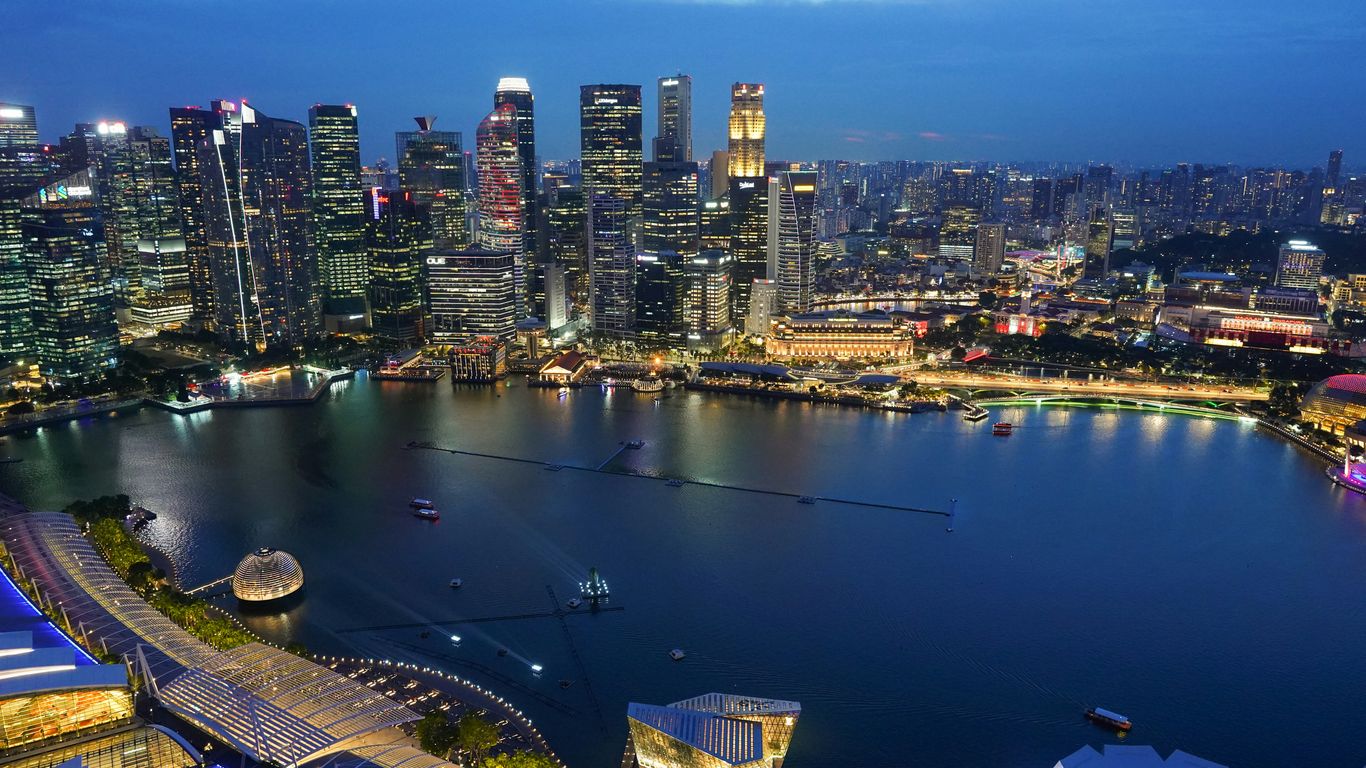
Temasek, early trade and the river’s strategic setting
Singapore was known in earlier periods as Temasek, a name associated with a trading settlement at the southern end of the Malay Peninsula. Its position near the routes linking the South China Sea and the Straits of Malacca made it useful to vessels moving between regional markets. The river was modest in length, yet its mouth opened towards a busy maritime world. That combination of inland shelter and access to open water mattered more than size.
The river mouth as a natural harbour and meeting point
A river mouth could offer calmer water than the exposed coast, giving small craft a place to anchor, repair, trade and wait for favourable conditions. Boats arriving from nearby islands did not need the facilities of a modern port to take part in exchange. They needed shore access, local knowledge and people able to handle cargo. The river therefore worked as a meeting point between maritime journeys and land-based trade.
Regional connections across the Malay world
The river belonged to a network rather than an isolated settlement. Orang Laut seafarers, Malay traders and merchants from across the region moved through the waters around Singapore, carrying food, forest products, textiles and news. Connections also reached towards China, South Asia and the islands of the archipelago. A useful account of this wider human movement can be found in ordinary lives, which places dockworkers, migrants and seafarers alongside official history.
What the landscape reveals about Singapore’s precolonial past
The modern skyline can make the earlier landscape difficult to imagine, but the river’s bends, mouth and adjoining shore still provide clues. Precolonial Singapore was not an empty stage awaiting a British arrival; it was part of established patterns of settlement, seafaring and exchange. Archaeology, place names and regional records add depth to the fragmentary written evidence. The landscape is best read as evidence of continuing contact, not as a simple before-and-after story.
1819 and the making of a British trading port
The arrival of Stamford Raffles in 1819 altered the scale and direction of the river’s commercial life. A British trading outpost developed beside an older maritime setting, bringing new legal arrangements, merchants and cargoes. The river became the practical centre of the settlement because it connected ships offshore with land, labour and storage. Its history after 1819 is therefore a history of acceleration as much as foundation.
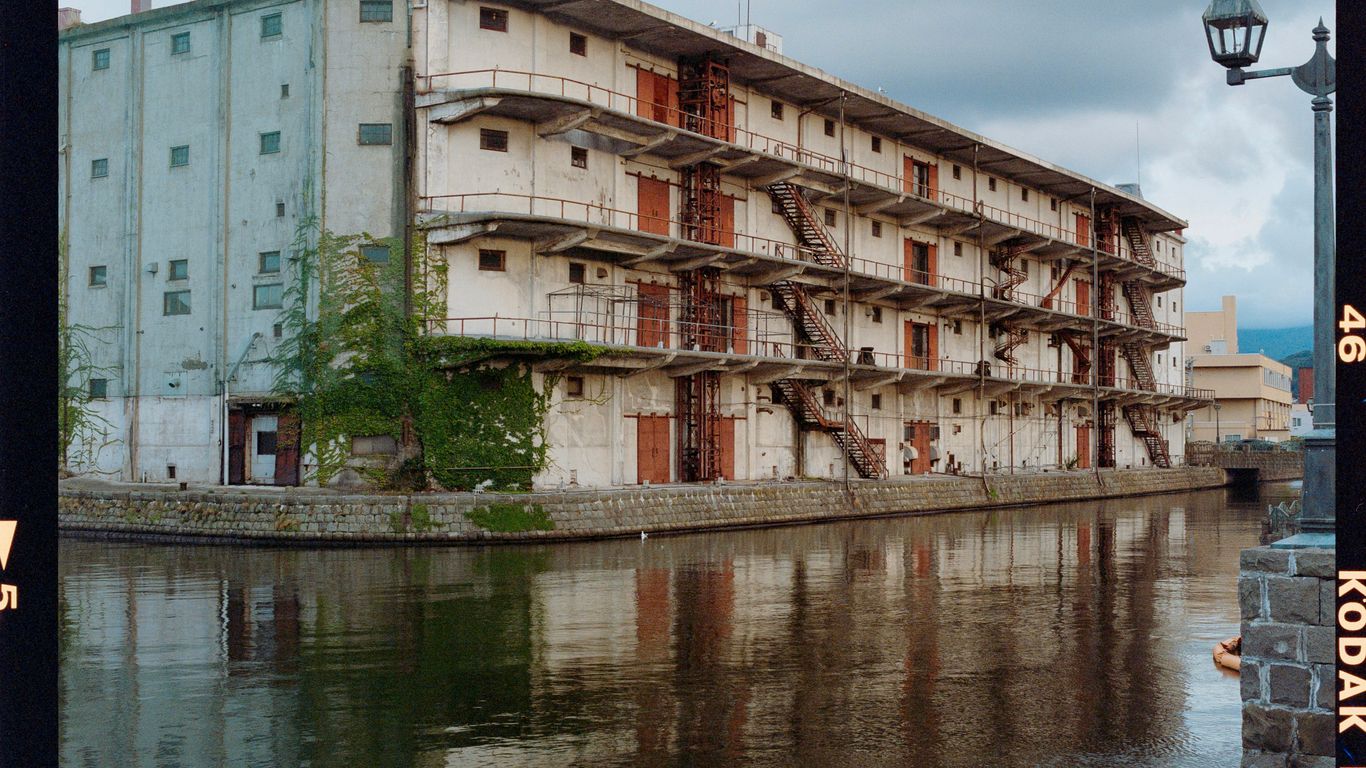
Stamford Raffles and the selection of Singapore
Raffles recognised Singapore’s strategic position near the main shipping route through the straits. The British East India Company sought a station that could support trade and challenge other regional ports, and Singapore’s location made it attractive. The agreement established in 1819 created the basis for a British presence, although the island’s existing communities and political connections remained part of the setting. The familiar founding narrative becomes fuller when those earlier layers are kept in view.
The river’s role in the new port settlement
The river gave the new settlement a working edge. Boats could approach the banks, goods could be carried inland, and commercial houses could establish themselves close to the water. As traffic increased, the river became an artery for rice, spices, textiles, timber and other commodities. It was not merely a scenic feature beside the town; it was the town’s principal logistical space.
Early quays, landing places and commercial districts
The banks gradually filled with landing places, storage buildings, shops and offices. Boat Quay developed close to the river mouth, while activity extended upstream towards Clarke Quay and Robertson Quay. These names now suggest dining and leisure, but they first described working edges crowded with boats and cargo. A walk through the Civic District helps place the river within the wider network of institutions, streets and public spaces that grew around it.
How free-trade policies drew merchants and cargo
Singapore’s free-port policy encouraged merchants to bring goods without the heavy restrictions found elsewhere. Ships called, cargo changed hands and trading communities formed around the opportunities. The river became a place where commercial decisions were made quickly, often through personal relationships and credit as much as formal contracts. Its prosperity depended on a constant exchange between regional knowledge and imperial infrastructure.
The coolies who powered the river economy
The port’s statistics can obscure the bodies that made its movement possible. Coolies carried, stacked, hauled and balanced loads in heat, rain and cramped spaces. Their labour linked ship to lighter, lighter to quay and quay to godown. Without that work, the river’s commercial machinery would have stopped almost immediately.
Who the river coolies were and where they came from
Many coolies were migrants from southern China, India and other parts of Asia, arriving in search of work and a way to support families at home or in Singapore. The word covered varied occupations and communities rather than one uniform workforce. Some were recruited through labour intermediaries; others relied on kinship, dialect or village connections. Their journeys are part of the wider migration history that shaped the port city.
Loading, unloading and carrying goods by hand
A working day might involve lifting sacks from a boat, carrying them across a narrow plank and stacking them in a godown. The work required timing and coordination, particularly when tides, weather or crowded quays left little room for error. Loads were heavy, surfaces slippery and breaks limited. Physical labour built prosperity long before mechanised handling changed the waterfront.
Kongsi networks, labour conditions and everyday risks
Kongsi networks could provide accommodation, introductions to employers and mutual support, but they did not remove the insecurity of casual labour. Pay, recruitment debts, illness and injury affected workers whose bargaining power was often weak. Accidents on gangplanks or in overloaded boats were an ordinary danger. Histories of the river are strongest when they describe these conditions without turning hardship into romantic spectacle.
The communities that grew around the waterfront
Workers did not simply disappear after their shifts. They lived near the quays, shared rooms, ate at inexpensive stalls and formed associations that offered practical help. Temples, clan organisations and lodging houses helped migrants create a sense of belonging in an unfamiliar city. The old shophouses of Chinatown offer a related view of how work, shared accommodation and mutual aid shaped neighbourhood life.
Lighters, tongkangs and the movement of cargo
The river was a transfer system as much as a destination. Larger ships often remained offshore, while smaller craft moved goods between anchorage and quay. Lighters and tongkangs made this arrangement workable, carrying cargo through waters where a deep-draught vessel could not safely approach. Their crews knew the river by tide, sound and habit.
Why goods had to be transferred offshore
The river was too shallow and confined for many ocean-going ships, especially as vessels grew larger. Cargo therefore had to be broken down into manageable loads before it reached the bank. This extra step added time and risk, but it also created employment for boatmen, coolies, tally clerks and warehouse workers. The inconvenience became part of the port’s economic rhythm.
The boats that connected ships to the quays
Lighters were practical cargo boats used for short transfers, while tongkangs were larger, sturdier craft associated with the movement of goods along the waterfront and nearby waters. Their broad forms suited heavy loads and crowded conditions. Crews worked with poles, ropes, hooks and hand signals, adjusting to the tide and to the movement of other boats. The river’s traffic was a choreography learned through repetition.
Rice, spices, cotton and other cargoes on the river
Cargoes changed with markets and seasons. Rice was essential to feeding a growing population, while spices, cotton goods, timber, rubber and other commodities connected Singapore to regional and global trade. Different materials demanded different handling: sacks had to stay dry, fragile goods needed care, and heavy bales required coordinated lifting. A simple cargo list therefore reveals a great deal about the port’s dependencies.
The work could be understood through a few linked stages rather than one dramatic arrival:
- A ship anchored beyond the shallow river approach.
- A lighter or tongkang came alongside to receive the cargo.
- Boatmen and coolies balanced the load through the tidal channel.
- Quay workers transferred it into a godown or onward vehicle.
That sequence explains why so many occupations clustered around a narrow strip of water. Each stage depended on the others, and a delay in one place quickly affected the whole chain.
The skills and dangers of lighter work
Lighter work demanded judgement as well as strength. Crews had to read weather, tide, draught and the shifting weight of cargo, often while navigating close to other boats. A mistake could damage goods, injure a worker or destabilise the craft. The skill was practical and largely embodied, passed between experienced workers rather than recorded in formal manuals.
Warehouses, godowns and the architecture of commerce
The buildings beside the river were designed around movement. A godown needed doors wide enough for cargo, floors strong enough for stacked goods and access close to the water. Merchants required offices, storage and communication within a few steps of one another. The resulting architecture was plain in purpose but rich in clues about how trade actually worked.
How riverside godowns were designed for trade
Riverside godowns often had high ceilings, deep plans and large openings facing the quay. Shutters could be opened for ventilation and closed against weather or theft. Upper floors provided additional storage, while ground-level access made loading more direct. Their proportions reflected the size, weight and turnover of the commodities inside.
Boat Quay, Clarke Quay and Robertson Quay
The three quays developed different relationships with the river. Boat Quay’s dense curve sat close to the historic commercial core, Clarke Quay became associated with warehouses and later nightlife, and Robertson Quay extended further upstream. Their present uses can make them appear separate, but they were once parts of one working system. The buildings are easier to understand when the river is imagined full of cargo boats rather than leisure craft.
Merchants, agents and the businesses behind the warehouses
Behind every stack of goods stood a web of merchants, shipping agents, insurers, brokers, tally clerks and shopkeepers. Some firms traded directly; others arranged storage, finance or onward transport. Information was a valuable part of the business, as prices and arrivals could change quickly. The waterfront was therefore an office, marketplace and transport hub at once.
A few broad relationships help explain the buildings’ practical logic:
| Waterfront element | Immediate purpose | Wider commercial role |
|---|---|---|
| Quay edge | Receive boats and cargo | Connect water transport with land routes |
| Godown | Store and protect goods | Hold stock until sale or onward shipment |
| Merchant office | Arrange trade and credit | Link suppliers, buyers and shipping agents |
| Lodging house | Accommodate workers and travellers | Sustain the labour force near the port |
The table shows why the riverfront could not be reduced to warehouses alone. Commerce required storage, administration, labour and shelter in close proximity. The built environment was a record of those dependencies.
Fires, floods and the practical limits of the waterfront
Dense construction brought obvious risks. Fire could spread rapidly through timber, packing materials and closely packed buildings, while flooding and heavy rain disrupted storage and transport. The river also carried waste and silt, narrowing the margin between useful infrastructure and unhealthy congestion. Repairs and alterations were continuous because the waterfront was exposed to both commercial pressure and tropical weather.
A crowded river and the social life of the waterfront
A busy port created a busy neighbourhood. The quays were places of work, but also of eating, drinking, sleeping, worship and negotiation. People met there because the river concentrated opportunity, information and movement. Its social life was not separate from commerce; it grew directly from the demands of commerce.
Taverns, markets and lodging houses along the quays
Taverns and food stalls served workers at irregular hours, while markets supplied the everyday needs of residents and crews. Lodging houses offered inexpensive rooms, often shared by people from the same region or occupation. Such places could be noisy and crowded, yet they provided familiarity and access to work. The waterfront’s informal economy filled the gaps left by official port arrangements.
Chinese secret societies and waterfront power
Secret societies and clan-based organisations played complex roles in migrant life. They could offer protection, mediation and mutual aid, while also becoming involved in disputes, recruitment and control over parts of the waterfront economy. Their influence reflected the vulnerability of newcomers who lacked secure support elsewhere. A careful history avoids both glorifying and flattening these organisations.
Families, workers and life in riverside communities
The waterfront was not populated only by single male labourers. Families lived in nearby streets, children grew up among shops and workshops, and women’s work sustained households and small businesses. Cooking, cleaning, selling, mending and keeping accounts were all part of the port’s daily economy. Everyday heritage stories can help readers notice these quieter forms of labour alongside the better-known merchant narratives.
The contrasts between commercial wealth and waterfront poverty
Trade created fortunes, but prosperity was unevenly shared. Fine offices and substantial godowns stood close to crowded lodging houses, precarious work and poor sanitation. A merchant might see the river as an engine of opportunity while a coolie experienced it as a source of exhausting uncertainty. These contrasting viewpoints belong in the same account of the Singapore River.
From polluted working river to heritage landscape
By the twentieth century, the river carried the costs of its own success. Heavy traffic, waste, overcrowding and industrial activity placed pressure on a waterway never designed for the volume of a modern city. The later clean-up changed not only the water but also the people, jobs and buildings connected to it. Today’s attractive quays are the result of a major social and environmental transformation.
Why congestion and pollution became a national problem
As Singapore grew, the river became increasingly congested and polluted. Waste from boats, workshops, markets and nearby settlements accumulated in a confined channel. Larger ships also required facilities beyond the old riverfront, reducing the practicality of the traditional system. The problem was environmental, but it was also about housing, transport, public health and the limits of inherited infrastructure.
The Singapore River clean-up and relocation of river trade
A major clean-up began in 1977, involving dredging, river-wall works and the relocation of activities that had long depended on the quays. By the early 1980s, the river environment had improved considerably, and planning turned towards a new waterfront role. Trade moved away, while promenades, conserved buildings, housing, restaurants and cultural uses took its place. The change was necessary, but it also meant the dispersal of communities and working knowledge.
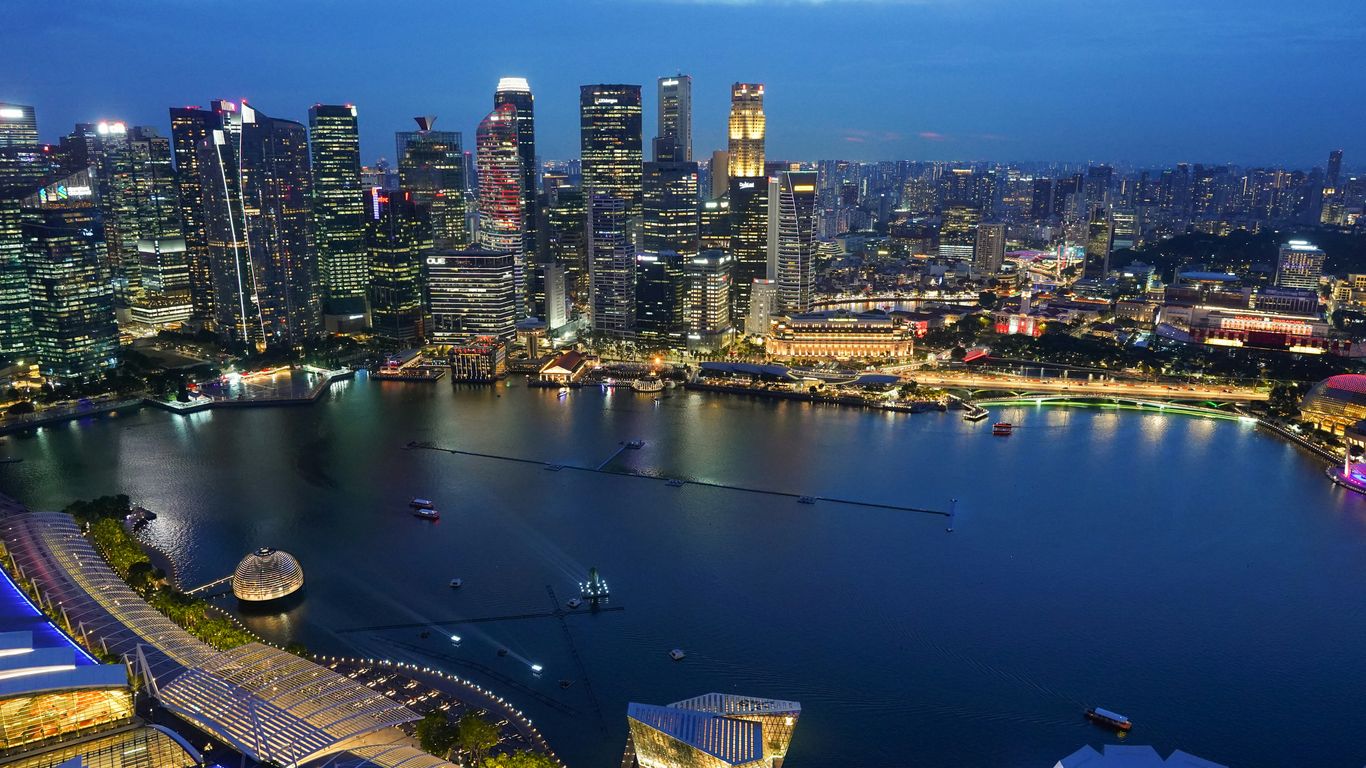
What survived from the working waterfront
Conserved godowns, quay alignments, bridges and surviving street patterns still carry traces of the old port. They cannot reproduce the noise or smell of cargo work, yet they can anchor stories about the people who used the river. Objects and memories add another layer, especially when they are connected to named makers and communities. Singapore Heritage creates researched gifts that help people carry such stories home, alongside its storytelling experiences.
How to read Singapore River history in today’s quays and landmarks
A visitor can read the river by looking for relationships rather than isolated monuments. The distance between bank and channel, the depth of a godown and the width of a quay all suggest how goods once moved. The Singapore River account offers a useful starting point for tracing its shift from commercial lifeline to heritage waterfront. For a more grounded visit, Singapore Heritage creates small-group heritage walks led by storytellers familiar with the streets, connecting the visible buildings with community memory.

The river is also a reminder that heritage changes when a working system disappears. A conserved façade may survive while the job, household or association that gave it meaning moves elsewhere. That is why walking slowly, listening to local accounts and asking what once happened at each landing place can reveal more than a polished view from the promenade.
Conclusion
Singapore River history is a story of connection: between sea and shore, cargo and labour, migration and neighbourhood, prosperity and environmental cost. Coolies, lightermen, merchants, families and boat owners made the port work, while godowns and quays gave their efforts a durable physical form. The clean-up created a new waterfront, but the older river remains legible whenever its buildings are read through the lives that once animated them.
Frequently Asked Questions
Why was the Singapore River important before 1819?
Its mouth offered access to sheltered water and regional sea routes, making it a useful meeting point for small craft, traders and communities connected to the Malay world.
What changed in 1819?
The establishment of a British trading outpost brought new political and commercial arrangements, accelerating the river’s growth as the centre of an expanding free port.
Who were the river coolies?
Coolie was a broad term for migrant labourers who performed demanding tasks such as carrying, loading and unloading goods. Many came from China, India and other parts of Asia.
What did lighters and tongkangs do?
They transferred cargo between larger ships offshore and the river quays. Their smaller size allowed them to work in shallow, crowded waters.
What was a godown?
A godown was a warehouse used to store imported or exported goods. Riverside godowns were built with features that made loading, ventilation and protection from weather easier.
Why was the river cleaned up?
By the 1970s, pollution, congestion and overcrowding had become serious urban problems. The clean-up improved the waterway while river trade was relocated to more suitable port facilities.
What can visitors see today?
Visitors can see conserved warehouses, bridges, quay lines, promenades and landmarks around Boat Quay, Clarke Quay and Robertson Quay. These places are most revealing when considered alongside the workers and communities who used them.
Walk the River’s Layers
To experience the waterfront through streets, stories and the people behind its changing landscape, readers can explore Singapore Heritage’s small-group heritage walks and book a walk.
Key Takeaways
Kampong Glam is best understood as a living neighbourhood, shaped by royal power, maritime trade, faith and ordinary routines.
- The name Kampong Glam is associated with the gelam tree and an older coastal settlement.
- Malay, Bugis and Orang Laut communities connected the area to regional sea routes.
- Sultan Hussein Shah’s settlement with the British helped establish Kampong Glam as a Malay royal seat.
- Arab Street grew through merchant, textile, food and pilgrimage networks.
- The district’s conserved buildings and active businesses keep its history visible, though not unchanged.
Kampong Glam before the colonial era
Long before the British trading post, the area around present-day Kampong Glam was a coastal place of movement. Boats, river mouths, mangrove edges and small settlements linked it to the wider Malay world. Its history therefore begins less with grand buildings than with water, work and people who knew how to read the tides.
The story is layered, and some details remain matters of interpretation. Even so, the district’s older identity is clear: Kampong Glam was connected to maritime life before it became associated with royal residences, mosques and shophouses. This Kampong Glam history offers a useful reminder that the neighbourhood’s past did not begin in 1819.
The meaning and origins of the name Kampong Glam
“Kampong” means village, while “gelam” is the Malay name associated with a melaleuca tree found in the region. The name is commonly understood as “gelam village”, tying the settlement to its natural surroundings as well as to its residents. Gelam had practical uses, including timber, bark and leaves, so the name evokes a working landscape rather than a decorative label.
Names, however, rarely preserve a single complete story. Kampong Glam also refers to the people, occupations and routes that gathered around the place. The word carries a sense of settlement: a village shaped by use, exchange and belonging.
The coastal landscape around the Rochor River
The Rochor River and nearby shoreline gave the settlement access to boats and goods moving along Singapore’s north-eastern coast. Before extensive reclamation and modern roads, the edge between land and water was less fixed. Small craft could carry people, food and materials between settlements, while larger regional networks brought traders closer to the island.
That watery geography helps explain why Kampong Glam developed as a place of arrival. Its later streets may feel firmly urban, but the older landscape was open, tidal and practical. River access made the district part of a much wider pattern of movement.
Malay, Bugis and Orang Laut connections
Malay communities, Bugis seafarers and Orang Laut groups all formed part of the region’s overlapping maritime world. Their roles were varied: some sailed, some traded, some worked as boatmen, and others supported the movement of goods between shore and ship. It would be misleading to imagine these communities as isolated categories; family, language, work and allegiance often crossed neat boundaries.
The Orang Laut, or “sea people”, are especially important to the early story because their knowledge was grounded in water. Their presence points to a settlement that depended on skilled coastal labour. It also places Kampong Glam within the history of Singapore’s ordinary seafarers, not only its later institutions.
Trade routes linking the settlement to the wider region
Kampong Glam’s early connections reached across the Malay Archipelago, linking Singapore with ports in the Riau Islands, the Malay Peninsula, Sumatra and beyond. These routes carried people and perishable goods as well as textiles, spices and news. Trade was social as much as economic, relying on kinship, trust and repeated journeys.
That regional outlook survived into the nineteenth century. The settlement’s importance came from its position within a network, and its later Arab Street businesses continued that habit of looking outward. The district was never simply a local village cut off from the sea.
Royalty and the making of a Malay seat
The nineteenth century brought a decisive political change. British plans for a trading post intersected with a succession dispute within the Johor Sultanate, giving Kampong Glam a new role as a royal and administrative centre. The settlement was not created from nothing, but its land use and symbolic importance were reshaped.
Royal authority brought households, followers, religious institutions and commercial activity into closer relationship. The resulting district held several kinds of power at once: dynastic, spiritual, social and economic.
Sultan Hussein Shah and the 1819 political settlement
In 1819, Sultan Hussein Shah of Johor and Temenggong Abdul Rahman entered an agreement with the British East India Company, allowing the company to establish a trading post in Singapore. The agreement emerged from a contested succession and a calculated political settlement. For Sultan Hussein, the arrangement also provided recognition and a place for his household and followers.
The settlement altered Singapore’s future, but it should not be read only as a British beginning. Malay political authority and existing regional connections were central to the negotiations. Kampong Glam became one visible expression of that entangled history.
The land grant that shaped Kampong Glam
Land granted to Sultan Hussein and his family gave Kampong Glam a defined royal centre. It also supported the arrival and settlement of Malay, Arab and other Muslim communities in the surrounding area. The grant shaped where residences, religious buildings and commercial streets would develop.
A land grant can sound abstract on paper. On the ground, it affected who could live nearby, where visitors gathered and how authority was displayed. The district’s later character grew from these practical consequences as much as from the agreement itself.
The Istana Kampong Glam as a royal residence
The Istana Kampong Glam became the royal residence associated with Sultan Hussein’s family. Its presence gave the neighbourhood a courtly focus, while the surrounding streets remained active with trade, worship and domestic life. The residence was therefore part of a wider urban setting, not a detached palace landscape.
Today, the istana helps visitors see how royal history occupied ordinary space. Its value lies not only in its architecture, but in the questions it raises about household life, inheritance and the changing place of Malay royalty in colonial Singapore.
Royal authority, community life and changing influence
Royal influence did not remain fixed. As British administration expanded and commercial power shifted, the sultan’s practical authority changed, even while the symbolic importance of the royal household endured. Community life around the istana continued through families, merchants, religious teachers and workers whose daily activity gave the district its texture.
This balance between formal authority and lived experience is central to Kampong Glam. The neighbourhood’s history cannot be reduced to a royal story, but neither can royalty be treated as a picturesque footnote. Both shaped the streets together.
Traders, pilgrims and the commercial life of Arab Street
Arab Street grew from the movement of merchants, goods and travellers through Kampong Glam. Its name reflects one strand of that history, but the commercial life of the area was never limited to a single community. Bugis, Arab, Indian Muslim and Malay networks overlapped in shops, warehouses, homes and places of worship.
The district’s shops served both local residents and regional visitors. A roll of cloth, a spice, a cup of coffee or a travel arrangement could connect a small street to a much larger world.
Why Arab Street became a centre for regional trade
Arab Street occupied a useful position near the royal settlement, the harbour and routes leading into the growing town. Merchants could meet customers, store goods and arrange onward journeys within a compact area. As Singapore’s port expanded, the neighbourhood benefited from the circulation of people who already had commercial and family connections across the region.
Its reputation was built through repetition. Traders returned because relationships mattered, and customers returned because particular shops carried trusted goods. The street’s commercial identity was therefore made over time, through many modest transactions.
Bugis, Arab, Indian Muslim and Malay merchant networks
Merchant communities brought different languages, religious traditions and business practices into close contact. Bugis traders connected the area to island networks, while Arab and Indian Muslim merchants helped sustain trade across the Indian Ocean and the Malay world. Malay families, shopkeepers and workers were equally central to the neighbourhood’s daily operation.
The result was not a simple mosaic of separate enclaves. It was a shared commercial environment in which people borrowed styles, exchanged information and built relationships across community lines. That layered quality remains one of the most compelling parts of the district.
Textiles, spices and other goods sold in the neighbourhood
Textiles became one of Arab Street’s most recognisable trades, alongside spices, perfumes, foodstuffs and goods associated with religious and family occasions. Cloth shops served people choosing materials for everyday clothing as well as weddings and festivals. The goods were practical, but they also carried colour, status and memory.
A visitor might find it useful to think of the shops by the needs they answered:
- Fabric for clothing, ceremony and household use.
- Spices and ingredients moving between kitchen and market.
- Travel-related goods for regional visitors and pilgrims.
- Food and drink that made trading streets places to linger.
These categories overlap, as they did in the past. The commercial life of Arab Street was never only about buying objects; it was also about advice, familiarity and the social rhythm around a shopfront.
The importance of pilgrimage connections to Mecca and Medina
For Muslim travellers from the region, Singapore could be part of a longer journey towards Mecca and Medina. Merchants and agents helped arrange passages, supplies and information, while neighbourhood institutions offered social and religious support. Pilgrimage connections strengthened the district’s links beyond Southeast Asia.
Those journeys also brought stories home. News from distant ports, changes in prices and encounters with other Muslim communities entered local conversation. In this way, Arab Street’s commercial history was closely tied to faith and travel rather than separate from them.
Sultan Mosque and the district’s religious identity
Sultan Mosque is the most recognisable religious landmark in Kampong Glam, but its meaning extends beyond the building itself. The mosque grew with the Malay royal settlement and became a place for prayer, teaching, charity and community life. Its presence helped anchor a neighbourhood in which faith was woven into work and family routines.
The mosque also gives the district a strong visual centre. Yet its significance is not simply architectural. It remains an active institution within a living community.
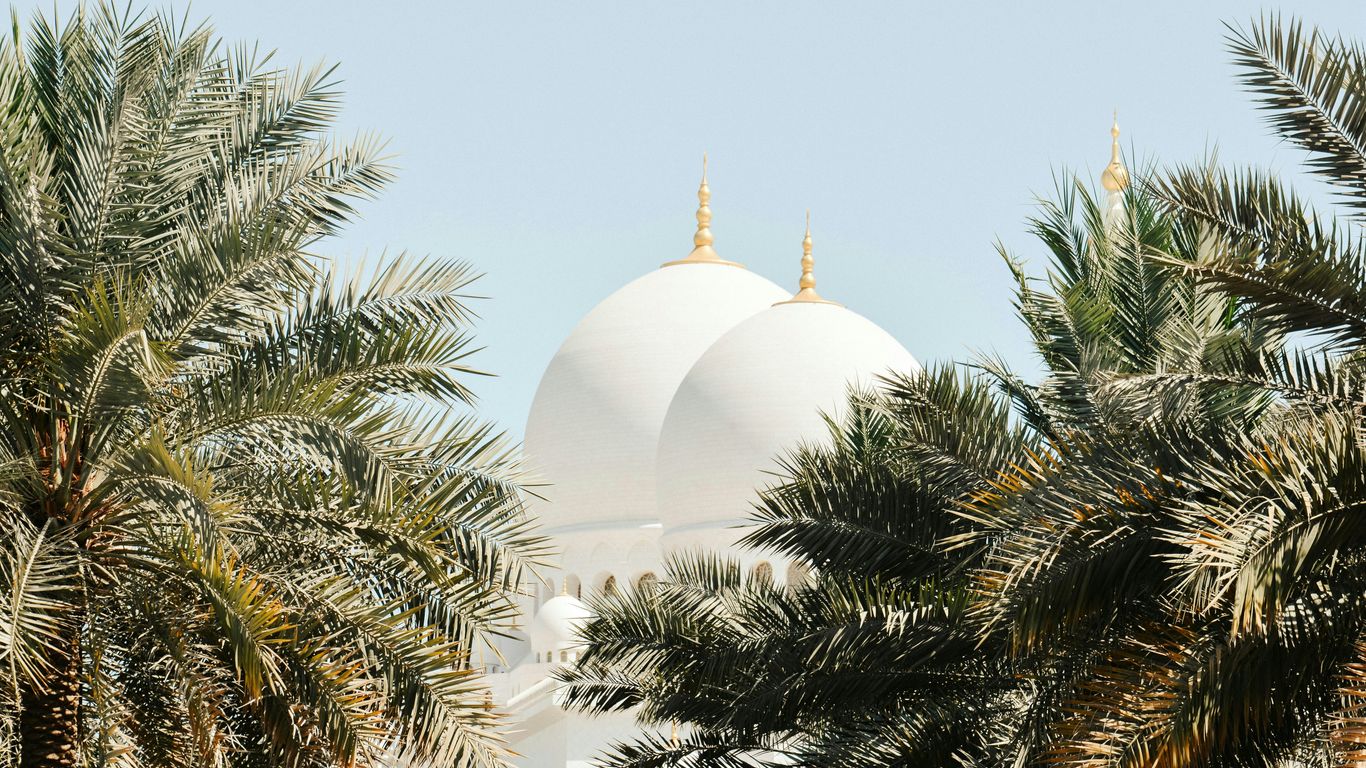
The first mosque and the transition to the present building
An earlier mosque served the growing settlement before the present Sultan Mosque was built in the nineteenth century. As Kampong Glam expanded, the need for a larger and more enduring place of worship became clear. The transition reflected both population growth and the continuing importance of the royal foundation.
The mosque’s development followed the changing neighbourhood around it. New buildings, businesses and families gathered nearby, making the institution part of an urban community rather than an isolated monument.
Sultan Mosque’s architecture and distinctive golden domes
The mosque is known for its large golden domes, broad prayer hall and strong visual presence along North Bridge Road. Its architecture reflects the international connections of Islam in Singapore, while its setting remains unmistakably tied to Kampong Glam’s streets. Light on the domes changes through the day, giving the building a different character from each approach.
A careful look also reveals how architecture guides movement. The mosque draws visitors towards it, but the surrounding lanes lead them back into shops, homes, eateries and other places where the district’s history continues.
Religious schools, charitable work and community gathering
Mosques in historic neighbourhoods often provide more than a prayer space. They can support teaching, family events, charitable work and practical forms of mutual aid. Around Sultan Mosque, religious life helped connect households that were also linked through trade, schooling and shared celebrations.
Such activity is less immediately visible than a dome or façade. It is nevertheless part of the building’s heritage, because institutions endure through what people do inside and around them.
How the mosque anchors Kampong Glam today
Sultan Mosque remains a reference point for worshippers, residents and visitors. It gives the neighbourhood a centre without making the surrounding streets feel frozen in time. Restaurants, textile shops and creative businesses continue to operate around it, creating a conversation between inherited uses and newer ones.
For anyone tracing living heritage stories, the mosque offers a useful starting point. It shows how a landmark can be both historic and present-tense, held in place by people who still use it.
Everyday life in the historic neighbourhood
Kampong Glam’s history is also found at eye level: a narrow staircase, a shop sign, a family recipe, a tailor’s worktable or the sound of conversation behind a doorway. Historic districts are often described through famous buildings, but their character depends on less celebrated routines. The neighbourhood was made by people working, raising children, worshipping and meeting one another.
Those routines changed with time, yet they left traces in the arrangement of shophouses and lanes. A history of Kampong Glam becomes fuller when it includes the practical lives that unfolded beside royal and commercial stories.
Shophouses, family homes and back-lane activity
Shophouses combined work and residence, often placing a business at street level and family life above or behind it. Back lanes supported deliveries, cooking, repairs and informal encounters. Space was used carefully, with several generations or kinds of activity sharing one building.
This arrangement made the street feel inhabited beyond shop hours. The line between public and private life was close, and neighbours could know one another through repeated daily contact. The everyday life of Singapore is often clearest in precisely these practical spaces.
Tailors, textile sellers, food vendors and coffee shops
Tailors and textile sellers gave Arab Street its material character, while food vendors and coffee shops provided places to pause. A customer might come for cloth and stay for conversation, or a worker might begin the day with a familiar drink before opening the shutters. These small exchanges helped turn commerce into community.
The objects of such places matter too: measuring tapes, enamel cups, handwritten orders and worn tables. They are modest evidence, but they reveal how labour and sociability shared the same rooms. Similar attention to old trades and skilled hands can illuminate heritage that official plaques tend to overlook.
Weddings, festivals and other community traditions
Weddings brought colour, preparation and extended family into the neighbourhood. Religious festivals altered the pace of the streets, with food, clothing and visits carrying meaning beyond the immediate household. Such occasions made commercial shops especially important because families needed materials, gifts and services at particular times.
Traditions also changed as families moved, businesses adapted and new generations made their own choices. Continuity does not require every detail to remain identical. It can reside in the reasons people gather and in the care given to familiar practices.
The experiences of women, children and working families
Women’s work was often spread across home, shop and community, making it easy to miss in formal accounts. Children grew up around business routines, learning by observation and helping when needed. Working families negotiated crowded space, long hours and the demands of school, worship and kinship.
Their experiences complicate any romantic picture of the old kampong. Heritage included affection and belonging, but also fatigue, limited space and economic pressure. Remembering both sides gives the district a more honest human scale.
Kampong Glam through colonial rule and post-war change
Colonial rule reorganised Singapore’s land, administration and economy, and Kampong Glam was drawn into those changes. Roads, port facilities, property arrangements and population movements affected how the district functioned. The neighbourhood remained recognisable, but its relationship with the wider city kept shifting.
After the Second World War, housing pressure and changing retail patterns placed older ways of life under strain. Some trades declined, while others adapted or moved. Conservation later gave the district renewed visibility, though not without difficult questions about whose history is being preserved.
British administration and the reshaping of the district
British administration introduced new systems of planning and control. The early division of the town into areas associated with different communities influenced how Kampong Glam was described and managed. Such categories simplified a more mixed reality, even as they shaped land use and public perception.
Colonial infrastructure brought opportunity for some and constraint for others. The district’s position near the expanding town made it commercially valuable, while official decisions could also alter access, movement and ownership.
Port expansion, migration and changing commercial patterns
As Singapore became a major port, new migrants and businesses entered the city. Goods moved faster and in greater volume, while established merchant networks adjusted to new forms of competition and regulation. Kampong Glam remained connected to trade, but its commercial role was no longer determined only by local relationships.
The port’s growth also changed the meaning of distance. Routes that once depended on personal contacts increasingly operated through companies, schedules and larger infrastructures. Behind those systems, however, families and small businesses still managed the daily work of exchange.
Post-war housing pressures and the decline of older trades
Post-war Singapore faced urgent housing needs, and older urban quarters were often judged through the lens of overcrowding and redevelopment. Families moved into new estates, and some traditional businesses lost customers or affordable premises. A quieter decline could be as significant as a dramatic demolition: when a familiar shop closes, a whole chain of knowledge may weaken.
The neighbourhood’s older trades also faced changing tastes and cheaper mass-produced goods. Some survived by specialising, while others disappeared. This was not simply a story of progress replacing the past; it was a negotiation between livelihood, space and memory.
From a lived-in quarter to a recognised heritage area
Conservation helped protect important buildings and brought public attention to Kampong Glam’s history. It also changed how the area was visited and valued. A lived-in quarter became a recognised heritage destination, with benefits for visibility and investment alongside new pressures on residents and long-standing businesses.
The strongest interpretation keeps both realities in view. Buildings matter, but so do leases, working hours, family histories and the right to use a neighbourhood without performing it for visitors.
Reading Kampong Glam in the modern city
Modern Kampong Glam holds several times at once. Restored façades stand beside contemporary signs, and a mosque, a textile shop, a café and a family home may all occupy the same short walk. The area rewards visitors who slow down enough to notice how preservation and change meet at the pavement.
A good visit is not a hunt for a perfect old Singapore. It is an exercise in reading layers: what remains, what has been adapted and what has quietly disappeared.
Conservation of shophouses and royal landmarks
Conserved shophouses preserve streetscapes, proportions and decorative details that would otherwise be difficult to recover. Royal landmarks such as the Istana Kampong Glam give the district a visible connection to its nineteenth-century political history. Together, they provide a framework for understanding change.
Conservation, though, is more than repainting façades. The meaning of a building depends on the uses and relationships around it. A shopfront becomes heritage in a deeper sense when its work, memory and community context are also acknowledged.
Haji Lane, cafés and the arrival of creative businesses
Haji Lane has become known for independent shops, cafés, bold murals and creative businesses operating within older buildings. Its popularity shows how heritage districts can attract new forms of enterprise. The visual energy is real, but it sits within a street shaped by earlier homes, trades and movement.
Visitors can enjoy the newer businesses while remembering that adaptation has always been part of urban life. The challenge is not to keep every shop unchanged, but to ensure that new activity does not erase the people and practices that made the place meaningful.
Tensions between tourism, gentrification and local identity
Tourism can support conservation and bring attention to local businesses, yet popularity may also raise rents, alter opening hours and make residents feel like spectators in their own neighbourhood. Gentrification is experienced unevenly: one business may welcome new customers while another struggles with the cost of staying.
A respectful visitor looks beyond the most photographed wall. They notice working shops, avoid blocking doorways and remember that the district is still someone’s home. That simple conduct cannot solve structural pressures, but it changes the quality of an encounter.
A walking route for understanding Kampong Glam history around Arab Street
A thoughtful walk can begin at Sultan Mosque, continue along Bussorah Street and Arab Street, and then move towards the Istana Kampong Glam before ending around Haji Lane. The route works best when it follows relationships rather than landmarks: mosque to market, royal residence to shopfront, textile trade to contemporary reuse.
For a deeper visit, book a heritage walk led by a storyteller familiar with the streets. Otherwise, the route can still be taken slowly, with attention to signs, thresholds, materials and the people using the area now. The aim is not to collect sights, but to understand how the district has carried several lives across time.
Conclusion
Kampong Glam’s history is held in the meeting of royalty, trade, faith and everyday work. Around Arab Street, the past survives not as a sealed display but as a changing neighbourhood where old buildings, active institutions and new businesses share the same ground. To walk there well is to notice both the grandeur and the ordinary care that have sustained the place.
Frequently Asked Questions
What does the name Kampong Glam mean?
“Kampong” means village, while “gelam” refers to a melaleuca tree associated with the area. The name is commonly understood as “gelam village”.
What was Kampong Glam like before 1819?
It was a coastal settlement connected to Malay maritime networks, with links to Malay, Bugis and Orang Laut communities and the wider regional trade routes.
Why is Sultan Hussein Shah important to Kampong Glam?
Sultan Hussein Shah was involved in the 1819 political settlement that allowed the British East India Company to establish a trading post. Land granted to him and his family helped establish Kampong Glam as a Malay royal seat.
Why did Arab Street become commercially important?
Its position near the royal settlement, harbour and growing town supported trade. Merchant networks dealt in textiles, spices, foodstuffs and other goods, while also supporting regional travel and pilgrimage.
What is the significance of Sultan Mosque?
Sultan Mosque developed alongside the royal settlement and became a centre for prayer, teaching, charity and community gathering. Its golden domes make it one of Kampong Glam’s most recognisable landmarks.
Is Kampong Glam still a residential neighbourhood?
Yes. Although it is also a popular heritage and dining district, homes, religious institutions, working businesses and community activities remain part of its present-day character.
How can visitors explore Kampong Glam respectfully?
Visitors can walk at an unhurried pace, respect places of worship and residential spaces, support local businesses and avoid treating the neighbourhood as a backdrop alone. Paying attention to ongoing work and community life makes the visit more meaningful.
Key Takeaways
Little India is best understood at walking pace, with its museum, temples, shops, kitchens and residents read as parts of one living neighbourhood.
- The Indian Heritage Centre offers a useful starting point for understanding Indian migration and settlement in Singapore.
- Serangoon Road and its side streets preserve memories of trade, craft, worship and family enterprise.
- Temples and food businesses remain active places of faith, gathering and cultural expression.
- Community stories add the everyday detail that formal landmarks cannot provide on their own.
- Respectful, unhurried visits help support the neighbourhood as a lived heritage district.
Start with the Indian Heritage Centre Singapore
The Indian Heritage Centre Singapore makes a thoughtful first stop before a walk through Little India. Its galleries place migration, settlement and community life within a wider South Asian story, giving visitors a frame for what they will later notice outdoors. From there, the streets become less a collection of colourful façades and more a connected record of work, belief and belonging.
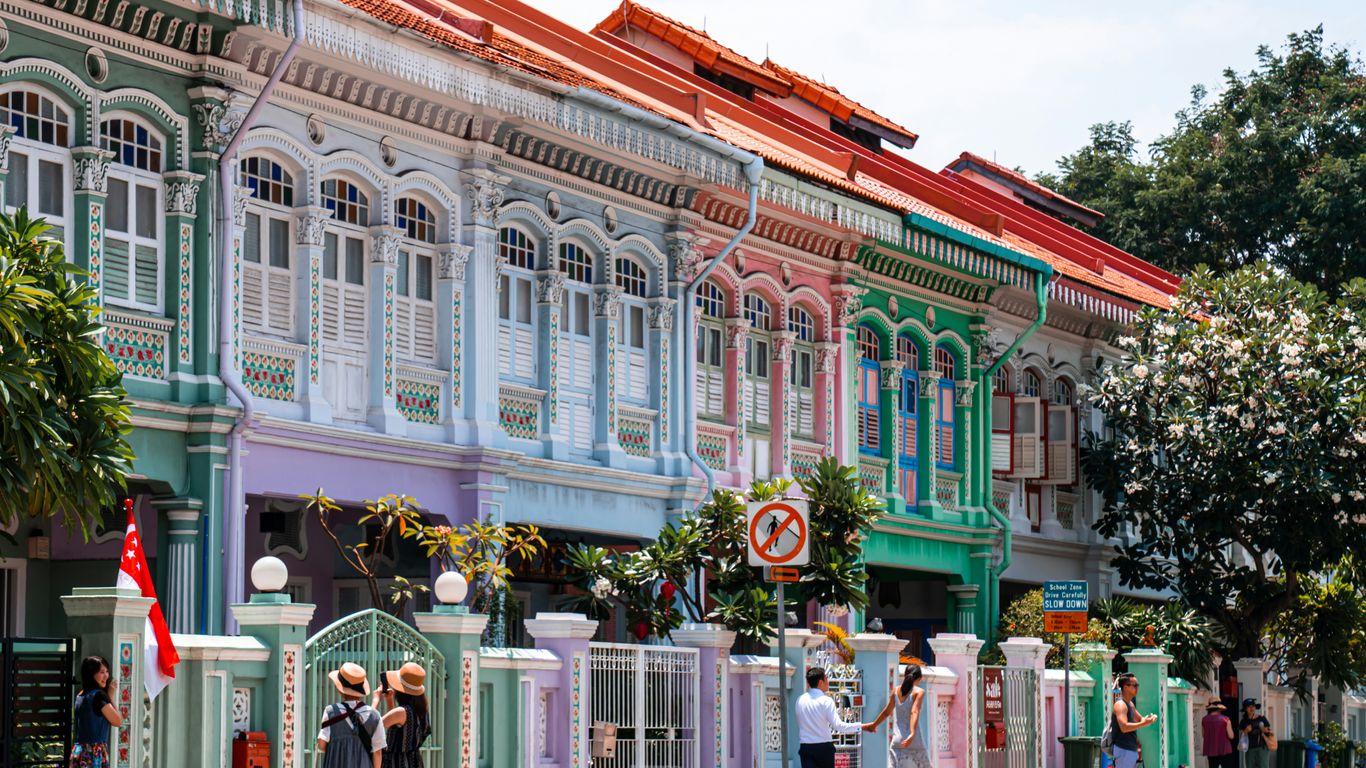
How the galleries frame Indian migration and settlement
The galleries trace the history of Indian and South Asian communities in Southeast Asia, including the movement of people and ideas across the region. The permanent exhibition, Indians in Singapore: Past & Present, helps visitors consider how early arrivals built lives through commerce, labour, religion and social organisation. That context matters in Little India, where the past is still visible in ordinary shopfronts and daily routines.
The communities and regions represented in the collections
The collections present Indian heritage as diverse rather than singular. Regional identities, languages, faiths, clothing, adornment and domestic objects all point to the variety within Indian and South Asian communities. Visitors may find it useful to carry that sense of plurality into the streets, where different traditions sit close together without becoming interchangeable.
What to look for in photographs, objects and oral histories
Photographs can reveal people at work, in family groups or in changing urban settings, while objects give a more tactile sense of movement and memory. Oral histories add voices and small details that a timeline alone might miss. A visitor interested in how ordinary people shaped the city can also browse these everyday Singapore stories, which offer a wider lens on workers, families and community networks.
Planning a visit around exhibitions, programmes and nearby sites
The centre is at 5 Campbell Lane and is open from 10am to 6pm, closing on Mondays; Singapore citizens and permanent residents receive free admission. Checking current exhibition and programme information before setting out leaves more time for the surrounding temples and shophouses. Readers following different research threads may also find a Longmont SEO guide, a solar orientation guide, a pain relief guide, a Histamine intolerance guide and Singapore Street Noodles among the wider site material, though they sit outside this heritage itinerary.
Trace Little India’s historic trades and working life
Little India’s commercial character grew from work as much as from architecture. Cattle, spices, textiles, jewellery, food and religious goods each brought skills, suppliers and customers into the district. The result is a neighbourhood where a walk can move quickly from a polished retail frontage to a shop still organised around practical knowledge.
From cattle trade and spice businesses to modern retail
The area’s earlier cattle trade and spice businesses shaped its working identity, even as the original activities have changed or disappeared. Modern retail has not erased that history; it has layered new uses over old routes of supply, service and exchange. The most revealing details are often modest ones: sacks, scales, handwritten signs, or a counter arranged for repeat customers.
The role of Serangoon Road and its side streets
Serangoon Road is the district’s familiar spine, but its side streets often provide the quieter clues. Campbell Lane, Kerbau Road and the lanes around the temples show how worship, food, residence and commerce overlap. A slower route, rather than a straight march between landmarks, gives the neighbourhood’s working rhythm time to appear.
Traditional crafts, textiles, goldsmiths and religious goods
Textiles and gold jewellery speak to ceremony, family milestones and the continuing importance of skilled retail. Religious goods connect shops to active forms of worship, while tailoring and repair work reveal the knowledge involved in adapting things for particular people. The wider old trades archive is useful for thinking about such work as living practice, sustained through community use rather than age alone.
How family-run businesses preserve commercial memories
A family business may preserve memory through a recipe, a display case, a familiar supplier or the way a younger generation has updated the shop. These places are not museum sets: they are workplaces, and their owners decide what can be shared. A courteous question, a purchase and attention to the answer can be more meaningful than treating the premises as a backdrop.
Read the neighbourhood through its temples and sacred spaces
Little India’s temples are active religious places, not simply architectural stops. Their towers, courtyards, shrines and ritual objects carry histories of migration while continuing to serve worshippers today. Together with Buddhist and other sacred spaces nearby, they show how the neighbourhood’s identity has always been broader than one community or one tradition.
Sri Veeramakaliamman Temple and the heart of Serangoon Road
Sri Veeramakaliamman Temple stands prominently along Serangoon Road and is closely associated with the district’s Tamil Hindu presence. Its ornament and ritual life draw attention, but the deeper story lies in its continuing use by devotees and families. Visitors should watch quietly from appropriate areas and allow worshippers to set the pace of the space.
Sri Srinivasa Perumal Temple and Singapore’s Vaishnavite heritage
Sri Srinivasa Perumal Temple offers another perspective on Hindu practice in Little India, with its Vaishnavite traditions and distinctive visual language. It reminds visitors that Indian heritage includes different theological lineages and ceremonial forms. The temple is best approached with patience, especially during prayer times or festival preparations.
Sakya Muni Buddha Gaya Temple and Little India’s wider faith landscape
Sakya Muni Buddha Gaya Temple adds a Buddhist presence to the neighbourhood’s religious geography. Its large Buddha image and devotional atmosphere sit within the same urban fabric as the Hindu temples, shops and eateries. This proximity is one of Little India’s most telling features: different forms of faith share streets shaped by everyday movement.
Customs, festivals and respectful temple etiquette
Temple etiquette is simple but deserves care. Visitors can dress modestly, remove shoes where required, avoid blocking entrances and ask before photographing people or ceremonies. During festivals, crowds may change the usual flow, so the considerate visitor follows instructions rather than assuming that a striking ritual is available for observation.
Explore Little India through its food heritage
Food gives Little India an especially immediate way into history. A banana-leaf meal, a sweet bought for a festival or the scent of toasted spices can connect the visitor to regional traditions and migration routes. Eating here is not merely a pause between sights; it is one way the neighbourhood remembers itself.

Banana-leaf meals, South Indian staples and regional traditions
Banana-leaf meals and South Indian staples reflect culinary traditions that have travelled, adapted and settled in Singapore. Rice, vegetables, breads, lentils and spice blends may look familiar while differing from one kitchen to another. The unhurried format of the meal encourages attention to texture, sequence and the social ease of eating together.
North Indian, Muslim Indian and migrant food influences
Little India’s food heritage is not confined to one region. North Indian cooking, Muslim Indian traditions and later migrant influences sit alongside South Indian fare, creating a varied food map within a compact district. Menus, languages and cooking methods reveal connections that are sometimes easier to taste than to explain.
Spices, sweets and ingredients that tell a story
Spice shops and sweet counters make culinary history visible through colour, scent and arrangement. Ingredients may point towards home cooking, religious observance, hospitality or seasonal celebration. Taste is a form of listening here, provided the visitor remains curious about the people and labour behind what is being served.
How eateries, markets and hawker stalls carry culinary memory
Restaurants, markets and hawker stalls hold memory through repeated practice: a dish prepared in much the same way, a regular customer greeted by name, or a counter that has become part of someone’s weekly route. Singapore Heritage’s food heritage walks take this kind of story-led approach across the island, connecting food with the people and places around it. In Little India, the best meal is often the one that leaves a visitor more attentive to the street outside.
Listen to the community stories behind the streets
The strongest account of Little India includes the people who have lived, worked, studied and worshipped there. Official histories can establish dates and names, but memories supply the texture: where children waited, which shop stayed open late, or how a family made a room serve several purposes. These details keep heritage from becoming purely decorative.
Early migrants, families and changing ideas of home
Early migrants often built belonging through associations, places of worship, food and mutual support. For families, home could mean a rented room, a shop above a business or a network spread across several streets. Those changing arrangements help explain why Little India feels both rooted and mobile.
Women’s work, domestic life and informal community networks
Women’s work was central to domestic life, family businesses and informal networks of care, even when it was less visible in public accounts. Shopping, cooking, sewing, childcare and religious participation all helped maintain connections across households. Listening for these histories broadens the story beyond prominent men, institutions and shop signs.
Workers, students and newer generations in the neighbourhood
Workers, students and younger residents continue to reshape the meaning of the district. Some arrive temporarily, while others inherit businesses, memories or family obligations tied to the area. Their presence shows that living heritage is continually made, not simply carried forward unchanged.
Oral histories, street names and memories of everyday Little India
Street names can suggest old trades or communities, but personal recollections show how those places actually felt and functioned. Singapore Heritage’s community work includes oral histories, neighbourhood story calls and programmes that invite people to share photographs, recipes and shop memories. The community archive reflects that principle: heritage grows when residents are credited as knowledge holders.
Follow a heritage walk through Little India
A walk through Little India works best as a sequence of connected observations rather than a race to collect landmarks. Starting indoors at the Indian Heritage Centre gives the route historical depth, while Serangoon Road supplies the movement, colour and sound of present-day life. Singapore Heritage’s walking routes similarly centre local storytellers and the names behind shopfronts.
A practical route from the Indian Heritage Centre to Serangoon Road
A practical route can begin at the centre on Campbell Lane, continue towards the nearby temples, and then open onto Serangoon Road. From there, a visitor can turn into side streets before returning to the main road for food or further browsing. The route should remain flexible, since temple activity, shop hours and weather may alter the day’s rhythm.
Historic landmarks to notice between temples and shophouses
Between the major stops, attention can settle on shophouse proportions, tiled façades, sign lettering, covered walkways and the relationship between upper-floor homes and ground-floor businesses. These features are not isolated details; they show how commerce and domestic life shared a narrow urban footprint. Plaques help, but the continuity of use often tells the richer story.
Where to pause for food, photographs and local context
A pause is most useful when it allows the visitor to eat, observe and reflect without obstructing work or worship. Food streets, temple edges and quieter corners can each offer a different view of the district. A short rest also creates room for a conversation, which may reveal more than another hurried photograph.
Adapting the walk for heat, crowds and accessibility
Singapore’s heat and sudden rain make shade, water and sensible footwear part of the heritage plan. Visitors with mobility needs can choose shorter stretches, check step-free access in advance and use public transport links to break the route into manageable sections. For a broader approach to planning routes around weather, access and opening hours, this heritage walking guide offers useful general advice.
Understand how Little India’s heritage is changing
Change is visible in every living neighbourhood, and Little India is no exception. Conservation can protect façades and streetscapes, but heritage also depends on affordable space, active businesses, residents and the freedom to practise faith and culture. The question is not whether the district should change, but how its changing life is understood and respected.
Conservation of shophouses and the pressures of redevelopment
Conserved shophouses retain valuable architectural character, yet a façade alone cannot preserve the work and relationships once held inside it. Redevelopment pressures can affect rents, business continuity and the mix of residents. A meaningful approach therefore considers buildings together with the people and practices that give them purpose.
Festivals, tourism and the balance between living culture and display
Festivals can bring attention and energy, while tourism can help businesses remain viable. At the same time, crowded rituals or staged-looking encounters can flatten a living culture into a performance for outsiders. Visitors can help maintain balance by following restrictions, avoiding intrusive photography and remembering that worshippers and workers are not attractions.
How businesses and residents shape the area’s future
Shopkeepers, tenants, religious institutions, community groups and residents all influence what remains possible. Their decisions may involve changing a menu, modernising a shop, teaching a craft or making space for a new generation. Singapore Heritage’s story-led approach treats heritage as lived rather than locked away, a useful reminder that continuity can include adaptation.
Ways visitors can support respectful, community-minded heritage tourism
Visitors can support the area through ordinary, considerate choices:
- Buy from local businesses when the purchase is welcome and practical.
- Follow temple rules and ask before recording people or ceremonies.
- Choose guides and stories that credit residents, makers and practitioners.
- Share observations without revealing private details or treating workplaces as exhibits.
These actions keep curiosity connected to responsibility. Readers who want a guided experience can book a local walk built around story and place, rather than simply moving between photo stops.
Plan a More Meaningful Visit
Little India rewards visitors who leave room for conversation, appetite and quiet observation. A small-group walk can help connect the museum, temples, businesses and memories without asking the neighbourhood to perform. Singapore Heritage creates heritage walks and storytelling experiences rooted in Singapore’s neighbourhoods, foodways, objects, places and everyday practices; its gifts are designed to help people carry those stories home.
Conclusion
Little India is a place where migration, work, worship, food and family memory remain close to the surface, and a thoughtful visit allows those layers to be felt without reducing them to a display.
Frequently Asked Questions
What is the Indian Heritage Centre Singapore?
It is a museum in Little India that traces the history of Indian and South Asian communities in Southeast Asia, including the permanent exhibition Indians in Singapore: Past & Present.
How long should visitors spend in Little India?
Around half a day allows time for the heritage centre, one or two temples, a meal and a slower look at the surrounding streets. A full day suits visitors who want to browse shops and spend longer with exhibitions or food.
Which temples can visitors see in Little India?
Notable places include Sri Veeramakaliamman Temple, Sri Srinivasa Perumal Temple and Sakya Muni Buddha Gaya Temple. Each represents a different part of the neighbourhood’s religious landscape.
Is Little India suitable for a self-guided walk?
Yes. The district is compact and walkable, though visitors should check opening hours, plan for heat and allow flexibility around worship and festivals.
What food is Little India known for?
Visitors can find South Indian staples, banana-leaf meals, North Indian cooking, Muslim Indian dishes, sweets and a wide range of spices and ingredients.
How should visitors behave in temples?
They should dress modestly, remove shoes where required, follow signs, avoid blocking entrances and ask before taking photographs. Ritual spaces should be treated as active places of worship.
How can visitors support Little India’s heritage?
They can buy thoughtfully from local businesses, choose respectful guides, listen to community voices and avoid intrusive photography or behaviour that disrupts work and worship.
Key Takeaways
Singapore heritage food is a record of migration, adaptation and everyday ingenuity. Each dish carries the imprint of a community, while hawker centres and kopitiams keep those stories in motion.
- Hainanese, Teochew, Hokkien, Malay, Indian Muslim and Peranakan traditions all shape Singapore’s food culture.
- Familiar dishes often reflect exchange rather than a single point of origin.
- Hawker stalls, kopitiams and neighbourhood eateries are living heritage spaces.
- Food is best understood alongside the streets, trades and communities that sustain it.
- Eating thoughtfully can become a way of listening to Singapore’s layered history.
1. Hainanese chicken rice and Singapore’s Hainanese community
Hainanese chicken rice is one of Singapore’s most recognisable dishes, but its story is less about a fixed recipe than about migration and adaptation. Hainanese migrants arrived as cooks, stewards and domestic workers, bringing culinary habits from southern China and developing new versions in Singapore’s kitchens. The poached chicken, fragrant rice, chilli sauce and ginger paste are now familiar far beyond the community that helped establish the dish.
The rice is often treated as the quiet star. It is cooked with stock, aromatics and rendered chicken fat, so every spoonful carries more flavour than its plain appearance suggests. The chicken itself may be poached until tender, then cooled and sliced, while the sauces provide heat, sharpness and lift. Texture is part of the memory: soft meat, glossy rice and a clean broth create a meal that feels both carefully made and wonderfully ordinary.
At a hawker centre, the dish also reveals how a migrant trade became part of a shared national food vocabulary. Families debate the best stall, regulars notice small changes in seasoning, and younger cooks inherit technique through work rather than formal instruction. That continuity is central to understanding singapore heritage food: its meaning sits not only in ingredients, but in the people who repeat, adjust and pass on a practice.
2. Katong laksa and Peranakan culinary traditions
Katong laksa belongs to the richly spiced world of Peranakan cooking, shaped by the long meeting of Chinese and Malay worlds in the archipelago. Its broth is creamy, aromatic and warm with dried chillies, coconut milk, belacan and herbs. The noodles are traditionally cut into shorter lengths, making the dish easy to eat with a spoon rather than chopsticks.
The flavour is layered rather than simply hot. Lemongrass, galangal, turmeric and shrimp paste give the broth depth, while cockles, fish cake and prawns add different kinds of savouriness. Peranakan food often asks for patience: spice pastes are pounded, fried and balanced until their raw edges soften. That labour is part of the dish’s cultural meaning, especially in households where recipes were taught by watching and helping.
Katong and Joo Chiat offer a useful setting for reading this history because food sits beside colourful tiles, shophouses, churches and family businesses. A Joo Chiat-Katong heritage guide helps place culinary traditions within that wider neighbourhood story, including trade, architecture and adaptation. The bowl is not a museum piece; it changes with cooks and customers, while still carrying a recognisable Peranakan sensibility.
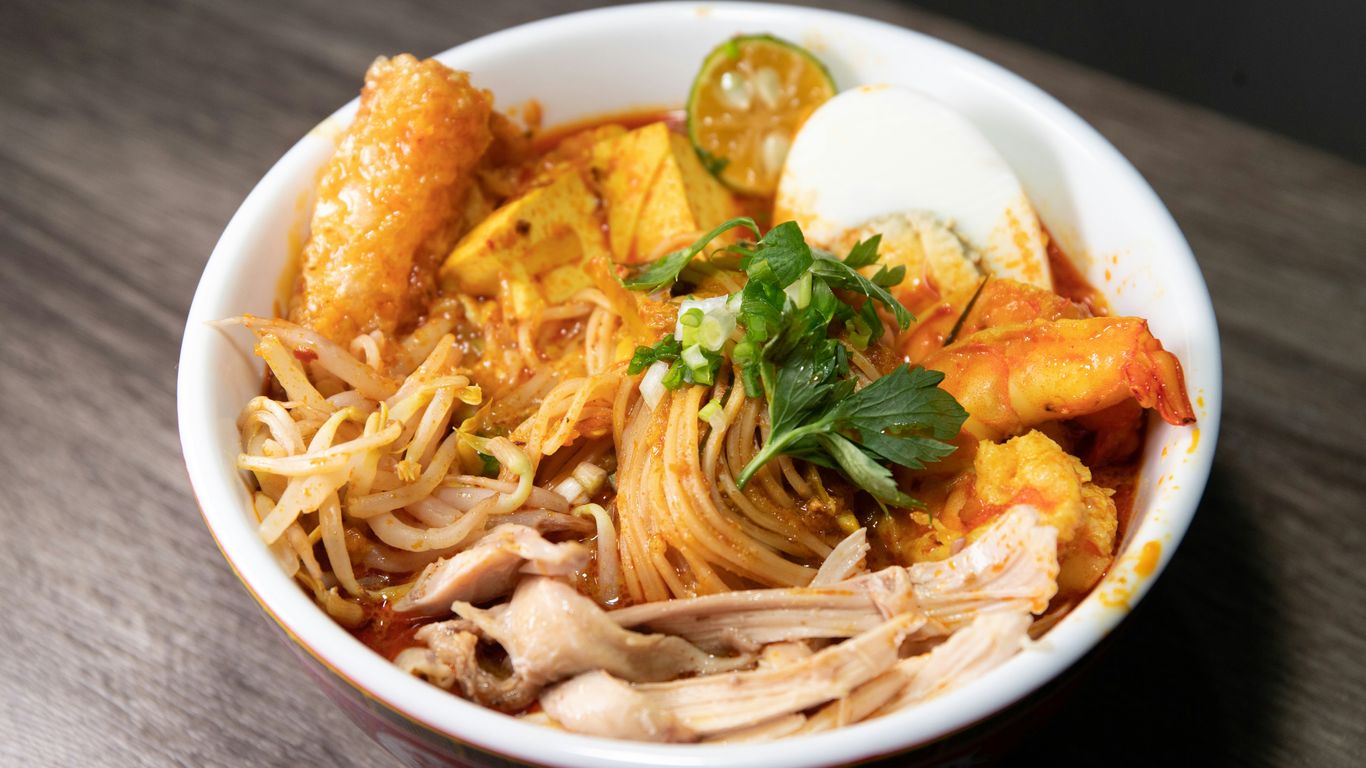
3. Nasi lemak and Malay heritage
Nasi lemak is built around coconut rice, but its character comes from the company it keeps. Sambal, fried anchovies, peanuts, cucumber and egg create a balance of heat, salt, crunch and freshness. It may appear as breakfast, a wrapped takeaway meal or a more elaborate plate, and that flexibility reflects its place in everyday Malay foodways.
The dish’s roots extend across the Malay Peninsula and the wider archipelago, where coconut, rice and sambal form an enduring culinary grammar. In Singapore, nasi lemak has travelled across neighbourhoods and into many kinds of eateries. Additions such as fried chicken, fish or otah may vary, but the coconut rice and sambal usually anchor the meal.
Its heritage is also social. A banana-leaf parcel eaten before school, a family breakfast prepared at home, or a plate shared after evening prayers can hold as much cultural weight as a formal celebration. The dish shows how Malay heritage remains present through routine, and how a food becomes widely loved without losing the histories that shaped it.
4. Roti prata and Singapore’s Indian Muslim community
Roti prata is a flaky, pan-fried flatbread associated with Singapore’s Indian Muslim community and with the broader South Asian food traditions that travelled through the port. Dough is stretched, folded and cooked on a hot griddle until the outside is crisp while the inside stays tender. It is commonly served with dhal or curry, though sweet and filled versions have become part of the local repertoire too.
The preparation is a small performance of skill. A prata maker works quickly, turning a ball of dough into a thin sheet before folding it into layers. The result is rich without needing an elaborate presentation. It is food for late nights, quick breakfasts and animated tables, often eaten with the hands and accompanied by teh tarik or a cooling drink.
The dish also belongs to a living network of eateries, mosques, markets and family businesses. Singapore Heritage approaches such places through immersive tours and story gifts, connecting neighbourhood experiences with researched objects and community histories. That perspective matters because prata is not merely a popular flatbread; it is part of the working life and social fabric of the streets where it is made.
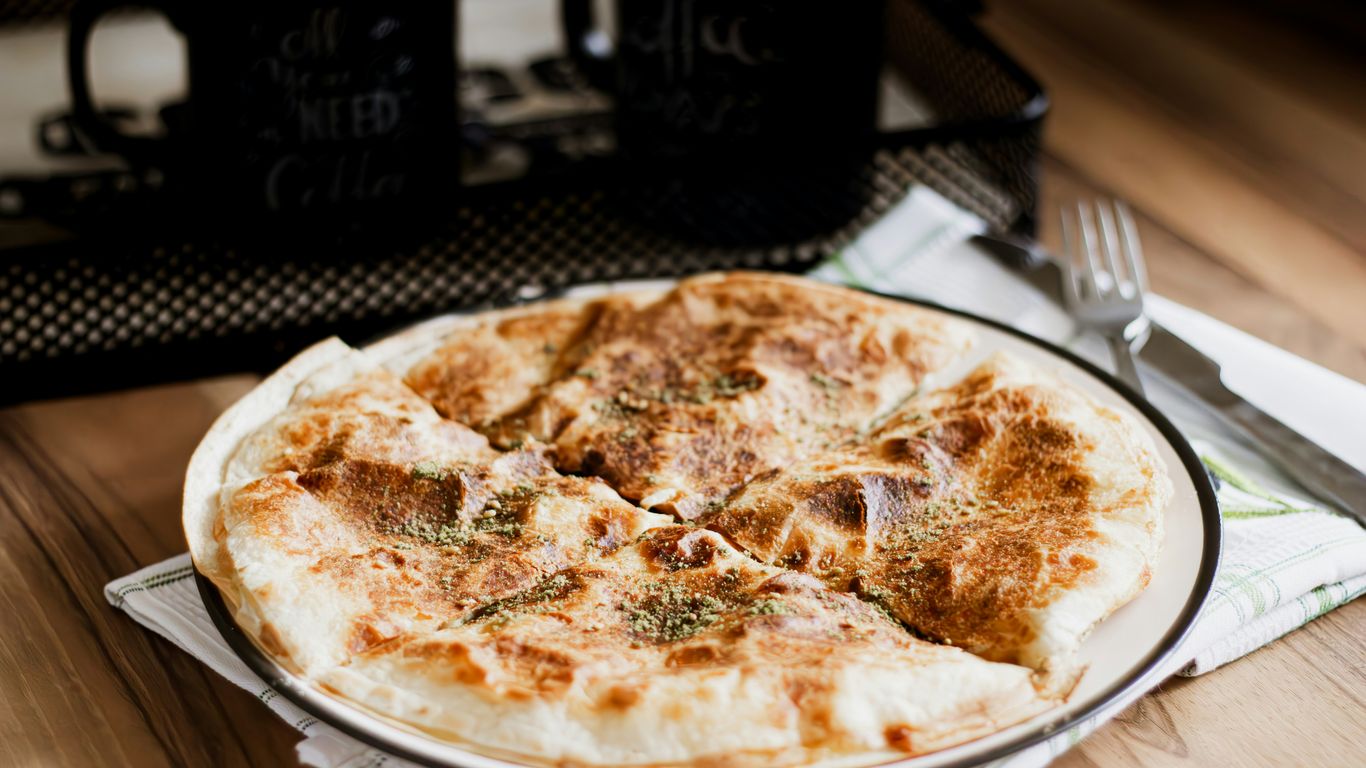
5. Satay and Malay, Javanese and Arab influences
Satay is instantly recognisable: skewers of marinated meat grilled over charcoal and served with peanut sauce, cucumber and onion. Yet its history is made from several currents. Malay and Javanese cooking traditions, Muslim foodways and the movement of traders through the region all helped shape the dish as it is known in Singapore.
Charcoal gives satay its particular fragrance, creating a lightly smoky edge around the sweet, savoury marinade. The peanut sauce brings roasted richness, while the raw accompaniments keep the plate from becoming heavy. Beef, chicken and mutton may appear in different settings, with choices sometimes reflecting religious practice as well as personal preference.
Satay is especially revealing when eaten in a group. Skewers arrive in batches, hands reach across the table, and the meal encourages conversation rather than ceremony. At historic food halls and neighbourhood stalls, the dish connects present-day dining with the port’s older patterns of movement. Hawker culture has become recognised as intangible heritage, but its life still depends on cooks, suppliers, regulars and the shared spaces around them.
6. Char kway teow and the Teochew community
Char kway teow is a dish of flat rice noodles and yellow wheat noodles stir-fried with dark soy sauce, bean sprouts, egg, seafood and sometimes Chinese sausage. Its name refers to fried rice cake strips, while its technique belongs to the fast, intense rhythm of the wok. The cook must control heat, timing and moisture so the noodles gain wok hei without turning greasy or broken.
Teochew migrants and other Chinese communities contributed to the dish’s development in Singapore, where ingredients and cooking methods shifted with availability. Cockles may bring a briny sweetness, while lard or oil gives the noodles their familiar depth. Different stalls protect different balances of sweetness, smoke and savouriness, and regular customers often have strong views about each one.
A simple comparison helps show how the dish changes without losing its core identity. These elements are not a fixed rulebook, but common points of attention when a diner watches a plate being made.
| Element | What it contributes | What to notice |
|---|---|---|
| Flat rice noodles | Softness and body | Whether they remain intact |
| Dark soy sauce | Colour and savoury sweetness | How evenly it coats the noodles |
| Bean sprouts | Freshness and crunch | Whether they retain some bite |
| Wok heat | Toasted, smoky fragrance | A dry, lively finish rather than wetness |
The table also explains why char kway teow is difficult to reduce to a list of ingredients. Much of its character comes from sequence: what enters the wok first, how quickly it is tossed and when the sauce is added. That practical knowledge, learned over years, is one reason hawker food belongs to the history of work as much as to the history of taste.
7. Bak kut teh and Singapore’s Teochew heritage
Bak kut teh is a peppery pork rib soup closely associated with Teochew foodways in Singapore. The name is often translated as “meat bone tea”, although the bowl is a broth rather than a tea in the usual sense. Pork ribs simmer with garlic, white pepper and other seasonings until the soup is fragrant and the meat loosens from the bone.
Singapore’s version is commonly lighter and more pepper-forward than some darker herbal styles found elsewhere. That clarity makes the pepper especially noticeable, warming the throat without overwhelming the pork. The meal is often accompanied by rice, dough fritters and Chinese tea, which cuts through the richness and turns the soup into a complete, unhurried ritual.
The dish carries the memory of labour and migration. It has long suited workers who needed a sustaining meal, and its communal presentation makes it natural for family tables as well. A bowl of bak kut teh can therefore point towards Teochew identity while also showing how food crosses class, generation and neighbourhood.
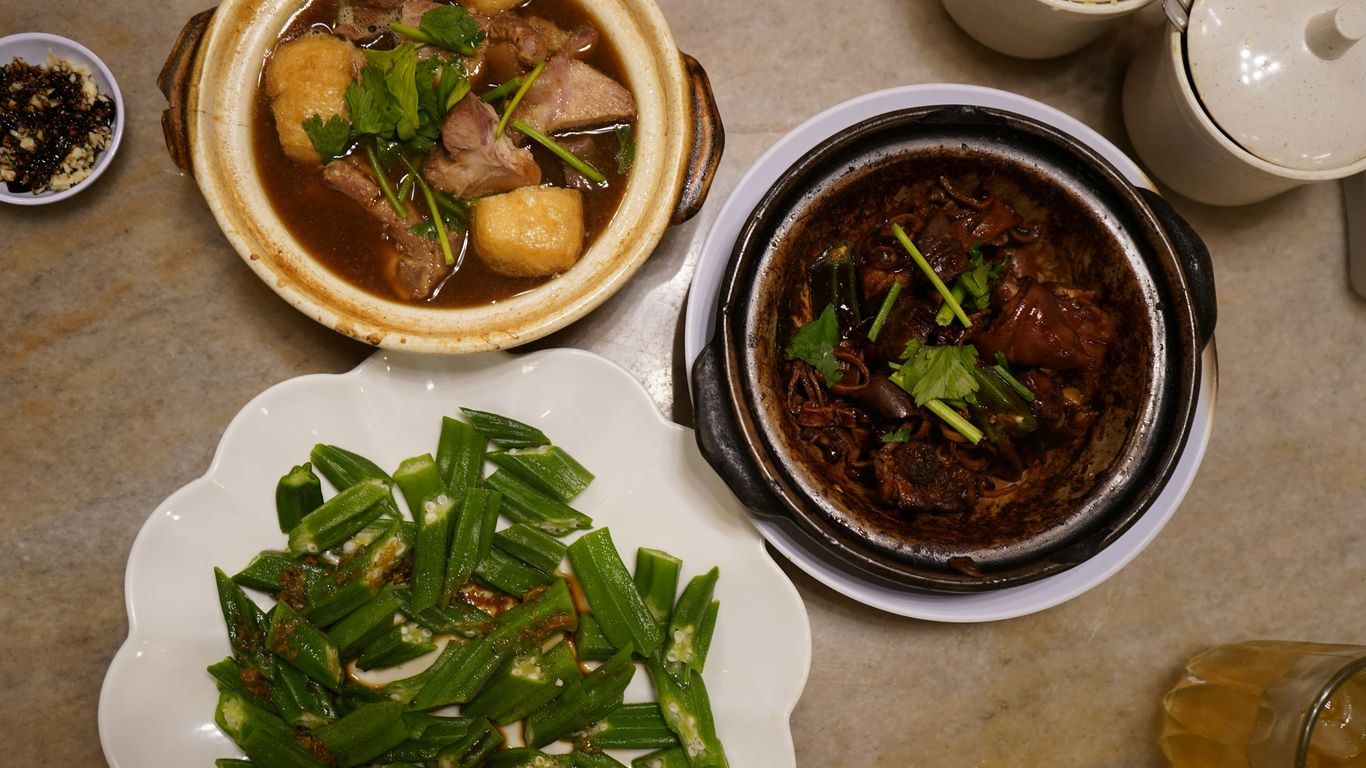
8. Kaya toast and Hainanese kopitiam culture
Kaya toast is a modest combination of toasted bread, coconut-and-egg kaya, butter and often soft-boiled eggs with dark soy sauce and pepper. Its setting is as important as its ingredients. In a kopitiam, coffee is brewed to order, cups move across tiled counters and breakfast becomes a daily exchange between stallholders and regulars.
Hainanese cooks played a significant role in shaping Singapore’s early coffee-shop culture, adapting their skills to the needs of a growing urban population. Kopitiam food is economical, quick and precise. The toast should crackle lightly, the butter should soften against the warm kaya, and the coffee should have the roasted bitterness that makes the sweet spread feel balanced.
The objects around the meal matter too: enamel cups, metal spoons, old order slips and familiar tables. A kopitiam objects archive explores how such ordinary things record migration, work and routine. Kopitiams are not identical to hawker centres, but both provide spaces where food heritage stays active through repeated use rather than occasional display.
9. Popiah and Hokkien and Peranakan traditions
Popiah is a fresh spring roll made with a thin wheat wrapper and a filling of cooked turnip, bean sprouts, tofu, egg, peanuts, lettuce and sauces. The ingredients are layered rather than fried, so the roll feels soft, juicy and textural. Each bite can be slightly different depending on where the sweet sauce, chilli and crushed peanuts sit.
The dish is linked with Hokkien traditions and has also become part of Peranakan food culture in Singapore. Preparing it for a gathering is often collaborative: one person spreads the wrapper, another adds the filling, and diners may customise their own rolls. The act of assembly creates a gentle social rhythm, with conversation happening around the open ingredients.
Popiah also shows that heritage can be seasonal and domestic. It appears at celebrations, family visits and communal occasions, where the work of preparation is shared rather than hidden. The recipe may look simple on paper, yet the judgement involved in cooking the turnip, balancing sauces and rolling without tearing is learned through practice.
10. Fish head curry and Singapore’s Indian community
Fish head curry is a Singapore dish born from culinary exchange. Indian cooks adapted the use of fish head to local tastes and ingredients, combining a spice-rich curry with vegetables such as okra and aubergine. The result is generous and communal, usually served in a large vessel from which diners help themselves.
The fish head brings gelatinous texture and a depth that differs from fillets, while tamarind or other souring ingredients keep the curry lively. Its flavour may range from fiery to gently tangy depending on the kitchen. What matters is the conversation between Indian spice techniques and ingredients familiar across Chinese, Malay and wider Southeast Asian cooking.
That exchange makes fish head curry a useful reminder that Singaporean food does not always fit neat ethnic categories. Dishes can be made by one community, enjoyed by many and altered by each generation. Singapore’s food culture offers wider context for this kind of culinary tapestry, in which trade and migration are tasted through everyday meals.
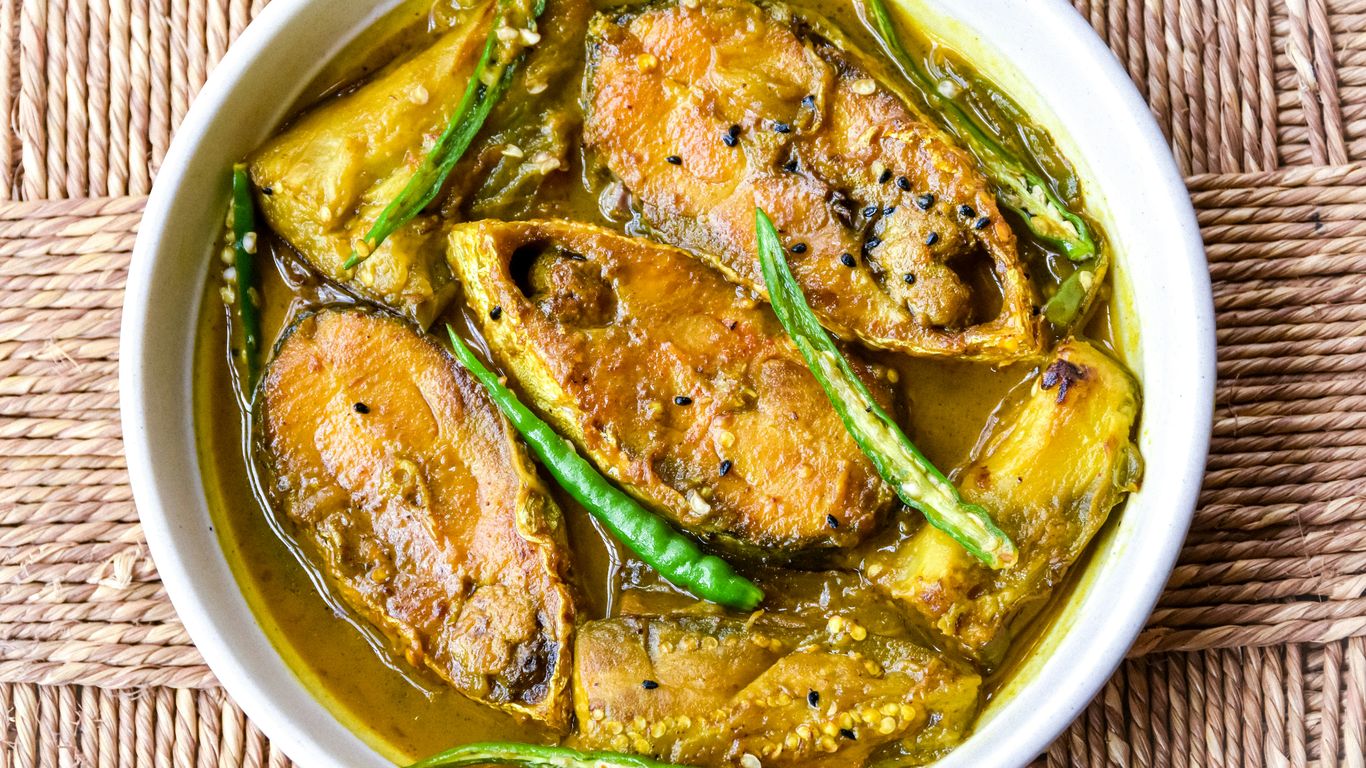
11. Nasi biryani and the city’s Indian Muslim heritage
Nasi biryani is a rice dish of South Asian origin that became deeply rooted in Singapore’s Indian Muslim food culture. Long-grained rice is cooked with spices, stock and meat or vegetables, producing a fragrant dish in which each grain should remain distinct. It is often served with curry, achar and a cooling side, creating a plate of contrasts.
Different biryani traditions can be found across the city, shaped by family histories, regional preferences and the ingredients available to each kitchen. Some versions are richly coloured, while others are pale and aromatic. The meal is closely tied to festive gatherings, religious occasions and the commercial life of eateries around areas such as Kampong Gelam and Little India.
When visitors or residents want to explore the foodways around such dishes, a route through historic neighbourhoods can offer useful context. A small group might notice these details along the way:
- The relationship between eateries, markets and places of worship.
- The spices and ingredients displayed in shops and stalls.
- The languages, signs and family names that mark a street’s history.
- The ways recipes change while remaining recognisable to regulars.
Those observations turn a meal into a wider act of attention. Singapore Heritage creates small-group heritage walks across the island, including routes focused on neighbourhoods, food and local history. The value lies in connecting a plate of biryani with the people and places that give its fragrance a setting.
12. Chwee kueh and Singapore’s Teochew foodways
Chwee kueh consists of steamed rice cakes topped with preserved radish, usually called chai poh, and served with chilli. The cakes are soft and slightly springy, while the topping is salty, savoury and finely chopped. It is a breakfast or snack that rewards attention to proportion: too much topping overwhelms the rice, while too little leaves the dish flat.
The food is associated with Teochew communities and with the wider tradition of inexpensive steamed snacks sold in markets and hawker centres. Its ingredients are humble, but its preparation depends on repetition. The batter must steam evenly, and the preserved radish must be fried until aromatic without becoming bitter.
Chwee kueh makes a fitting final dish because it shows heritage at its most everyday. It does not need a grand setting to carry memory; a familiar stall, a paper packet and the first warm bite can be enough. For those who want to keep following these connections, foodways and old trades offers a way to see how meals sit alongside work, tools and neighbourhood routines. That is the enduring lesson of singapore heritage food: it is made visible through ordinary acts, repeated by people who know why they matter.
Walk Singapore’s Stories
Readers who want to encounter these histories beyond the plate can join Singapore Heritage for a story-led walk through the island’s neighbourhoods, food routes and everyday places. Its researched gifts also offer a considered way to carry a local story home, with objects connected to makers and community memory. Plan a heritage walk when a slower, more attentive view of Singapore would add meaning to the meal.
Conclusion
Singapore’s heritage dishes are living records of movement, ingenuity and belonging. From chicken rice and kaya toast to laksa, biryani and chwee kueh, each one links flavour with a community’s work and memory, while hawker centres, kopitiams and family kitchens keep the stories changing in useful, human ways.
Frequently Asked Questions
What is Singapore heritage food?
Singapore heritage food refers to dishes, cooking methods and eating practices shaped by the island’s communities, migration histories and shared public spaces. It includes both widely recognised dishes and everyday foods whose stories are carried through families, stalls and neighbourhood routines.
Which communities have influenced Singaporean cuisine?
Malay, Chinese, Indian, Indian Muslim, Peranakan and Eurasian communities have all contributed to Singapore’s food culture, alongside influences from the wider Malay Archipelago and global trading networks. Many dishes reflect exchange between several traditions rather than a single origin.
What is the difference between a hawker centre and a kopitiam?
A hawker centre is generally a larger shared food complex with many independent stalls, while a kopitiam is a coffee shop traditionally centred on drinks and a smaller range of meals. The two may overlap in function, but their histories, layouts and daily rituals are distinct.
Why is chicken rice associated with the Hainanese community?
Hainanese migrants became well known for cooking and service work in Singapore, and they helped establish local versions of chicken rice. The dish has since travelled widely and belongs to Singapore’s shared food culture, even as its Hainanese associations remain important.
What makes Peranakan food distinctive?
Peranakan food often combines Chinese culinary influences with Malay and Southeast Asian ingredients, techniques and flavour profiles. Spice pastes, coconut, seafood and careful preparation are common features, although recipes vary greatly between families and regions.
Where can visitors learn more about Singapore’s food heritage?
Visitors can begin at hawker centres, markets, kopitiams and historic neighbourhoods, taking time to observe the people and routines around the food. Guided walks, community archives and conversations with stallholders can add context that a dish alone cannot provide.
How should diners approach traditional food respectfully?
Diners can support small businesses, follow the customs of each venue, avoid treating working neighbourhoods as backdrops and ask before photographing people or stalls. Curiosity is welcome when it is paired with patience, credit and respect for residents and makers.
A field guide to people whose hands remember the city: repairmen, bakers, craftsmen, stallholders, and shopkeepers.
Key summary
- Singapore’s old trades are working systems built from judgement, tools, suppliers, customers, repetition and adaptation—not displays frozen in time.
- A repairer diagnoses, a baker reads dough and heat, a craftsperson joins technique to ritual meaning, and a shopkeeper maps thousands of small things.
- Named places make this history legible: Alexandra Village Industrial Estate, Loong Fatt at 639 Balestier Road, Say Tian Hng at 35 Neil Road, and Sin Hin Chuan Kee at 200 Jalan Sultan.
- Workshops are workplaces. Ask before entering, photographing or recording.
- Avoid calling anyone “the last” or describing a trade as “dying” without current evidence and the practitioner’s agreement.
- Support the work through ordinary commerce: repair, buy, book or commission.
Image description: Spanners, parts trays and a grease-marked notebook surround a carburettor under repair while motorcycles wait near the open shopfront.
At the workbench, damage becomes a question
At 35 Neil Road, a wooden deity may arrive with a split seam or colour lost through years of handling. To an untrained visitor, the problem is “damage”. To a craftsperson at Say Tian Hng Buddha Shop, it begins harder questions: What wood is beneath the paint? Which layer came later? What can be stabilised, and which religious details cannot be treated as decoration?
That difference—between seeing a broken object and reading its history—is where an old trade begins.
Say Tian Hng makes and restores hand-carved Taoist and Buddhist statues. Its website traces the family craft to the nineteenth century, while the National Heritage Board describes a century-spanning practice. The shop also runs small-group cultural tours. Continuity here includes repair, family transmission, education and new ways of meeting an audience.
Elsewhere, an Alexandra Village mechanic listens before reaching for a tool; a Balestier baker reads differences between batches; and a Kampong Gelam haberdasher carries crowded drawers as a map in memory. The city depends on people who notice small differences.
“Old trade” can sound quaint. The work rarely is.
What makes a trade old?
Age alone is not enough. A long-running business can change completely, while a newer one may practise an older technique. This guide looks for four qualities:
- Embodied knowledge. Decisions depend on trained senses: the drag of dough, an engine’s pitch or a thread’s colour.
- Continuity. Skills, tools, recipes, supplier relationships or customer habits connect present work to an earlier practice.
- Community use. People still repair, buy, order or seek advice.
- Adaptation. Delivery, payment, products, machinery or teaching change so the core work can continue.
For its SG Heritage Business Scheme, NHB requires at least 30 years of continuous operation plus traditional goods, services or trades, community ties and commitment to heritage. It is a useful framework, not a ranking; an unrecognised one-person bench may still carry important knowledge.
Repair workshops: diagnosis before replacement
In 2022, My Community Festival documented two Alexandra Village voices. Mdm Sum of Wai Leong Car Care Centre recalled motor workshops moving into the estate in the late 1970s. Jeffrey Tan of Hup Hin described growing up there and continuing his family’s motorcycle-repair business. These programme records—not interviews for this article—locate the working landscape around Bukit Merah Lanes 2 and 3.
From the public edge, the estate explains itself through sound: an engine restarts, tools answer across a lane, parts are washed and compared. Lunch travels from Alexandra Village Food Centre to the workshops. Food and repair share workers, early hours, repeat customers and everyday service.
Look beyond vintage tools to the order of operations: questions, inspection, testing and parts laid out for reassembly. A mechanic may compare wear across components before replacing anything. That sequence is the knowledge.
Repair extends an object’s useful life, keeping material, labour and memories in circulation. Do not romanticise it as effortless sustainability: parts disappear, products become sealed, rents rise, and customers compare repair with replacement. Practitioners work inside those constraints.
Field note prompt: ask, “What do you check first?” It invites an explanation of judgement. “How long have you been doing this?” often produces only a number.
Access note: Alexandra Village’s workshops are active workplaces with moving vehicles, hot components, oils and tools. Observe from public areas unless invited in. Contact a business before bringing a group, and never block a bay for a photograph.
Image description: Flour, a worn rolling pin, metal trays and oven heat show baking as a repeated sequence rather than a finished product in a display case.
Bakers: the city measured in batches
At 639 Balestier Road, Loong Fatt’s history runs through a rolling pin, old packaging and boxes of tau sar piah. Lee Wang Long opened a Western-style bakery and coffeeshop in 1948. In the 1970s, the family shifted towards the flaky mung-bean pastry now associated with the shop.
The pivot matters. Heritage is often framed as a recipe defended against time, but continuity can include strategic change. NHB records thousands of pastries made daily, while the business still emphasises handmade production. Dough temperature, filling, rolling pressure, oven load and cooling all affect the result.
At 10 Kim Keat Lane, Sweetlands represents another rhythm: loaves for kaya toast. NHB records kneading, greasing tins, loading a rotary oven and removing the hard crust. A kopitiam loaf contains an unseen chain of labour.
Visit as a customer first. Buy what the shop makes. Notice the sequence from bench to oven to rack to counter. If you want to document the production area, arrange it in advance; food safety, heat and delivery schedules take priority. A queue is not permission to photograph staff at close range.
Field note prompt: record verbs rather than adjectives. “Weighed, folded, rested, loaded, cooled and cut” preserves more knowledge than “traditional” or “authentic”.
Craftsmen: technique carries meaning
Craft work becomes especially sensitive when the object is sacred. At Say Tian Hng, carving and restoration are connected to religious iconography: posture, clothing, facial features, colour and accessories help identify a deity. A visitor who sees only ornament may miss why an apparently tiny repair requires consultation and care.
The shop’s booked “Where Gods Are Born” programme offers a respectful access model. Family-trained docents explain the objects and visitors may observe artisans, but it is not a hands-on session. Access need not mean touching.
Public sources count the shop’s founding date and generations differently: the business describes six generations dating to 1840, while NHB gives another count. Until the family explains how it distinguishes craft lineage, registration and generations of makers, use the accurate broader description: a family craft extending back to the nineteenth century.
Film only with explicit consent. Ask whether any stage, formula, prayer, customer object or unfinished work is private. Sacred objects may also involve an owner’s permission and religious protocols.
Image description: A craftsperson supports a carved figure while applying pigment at a bench of brushes, carving tools and colour dishes.
Shopkeepers and stallholders: knowing where the small things are
Sin Hin Chuan Kee began in 1965 when Ng Koon Teng opened a trading business on Clyde Street. Redevelopment moved the firm to Kampong Gelam in the 1970s. Its shelves of thread, lace, buttons, ribbon, zippers and garment accessories tell a larger history of Singapore as a trading and manufacturing centre.
The shop’s history notes that bicycle deliveries became app-booked cars and the younger generation added online sales. Yet the counter still solves particular problems: one fastener, trim or colour match. Owner Kenny Ng has explained that it carries low-value “small things” because customers need them. Shopkeeping is knowledge of products, suppliers, uses and people.
Stallholders hold a related archive. A tea master at Bhai Sarbat adjusts teh halia; a Kway Guan Huat popiah maker works with dough, heat and speed; a market seller remembers a family’s order. The trade also contains greeting, substitution, packing and advice.
Researchers often point a camera toward the oldest-looking shelf. The more revealing question may be at the counter: What do customers ask for that newcomers do not know how to name? Vocabulary is part of the archive.
Image description: Drawers of buttons, thread, lace and zippers surround a handwritten ledger and a modern payment terminal.
Stop announcing the end
Old-trade stories often arrive as tragedy: ageing practitioner, disappearing skill, inevitable closure. Risk can be real, but the frame flattens working life and obscures successors, employees, new products or a deliberate decision to stop.
Avoid “the last”, “dying art” and “untouched by time” unless the claim is current, defined and accepted by the practitioner. Ask instead:
- Which part of the work is hardest to pass on?
- What has become easier, and what has become harder?
- Which change helped the business continue?
- What knowledge could be taught, and what requires years of practice?
- What would meaningful support look like?
Survival is not the only correct ending. A practitioner may retire, children may choose another career, or a building may no longer suit the work. Record skill and choice without demanding continuity.
Four practical field stops
These sites are spread across Singapore; treat them as separate half-day visits, not a rushed checklist.
| Focus | Named stop | What to notice | Visit responsibly |
|---|---|---|---|
| Repair | Alexandra Village Industrial Estate, Bukit Merah Lanes 2–3 | Workshop thresholds, parts organisation, testing, the relationship with the food centre | Public-edge observation only unless invited; verify individual businesses before travelling |
| Baking | Loong Fatt, 639 Balestier Road; Sweetlands, 10 Kim Keat Lane | Rolling, batch work, oven rhythm, cooling, packing and the shopfront as community space | Visit as a paying customer; arrange production photography ahead |
| Sacred craft | Say Tian Hng Buddha Shop, 35 Neil Road | Carving, restoration, iconography and the distinction between looking and handling | Book an official programme; follow rules for sacred and customer-owned objects |
| Shopkeeping | Sin Hin Chuan Kee, 200 Jalan Sultan, #01-08 Textile Centre | Stock vocabulary, tiny units, customer advice, old logistics beside new commerce | Browse or buy; request interviews outside peak service moments |
Published details, checked July 2026: Loong Fatt lists Monday–Saturday, 7.30am–4pm. Sin Hin Chuan Kee lists 9am–6pm on weekdays and Saturday. Both close Sunday; the latter also closes public holidays. Say Tian Hng offers pre-booked programmes. Sweetlands is at 10 Kim Keat Lane, but published hours vary. Check each business on the day.
Wear closed shoes around workshops, keep children beside you, and expect heat, narrow aisles, steps or uneven floors. Ask ahead about step-free access. Do not assume a shophouse upper floor or industrial unit is wheelchair accessible.
Field notes and a respectful consent trail
No original community interview was conducted for this desk draft. Field-verify every present-tense scene, quotation and personal detail. Keep a consent log:
| Record | Minimum detail |
|---|---|
| Identity | Contributor’s preferred name, spelling, pronouns and role |
| Permission | Notes only, audio, still photograph, video and/or publication—each agreed separately |
| Scope | Website, newsletter, social media, exhibition, product or archive; do not bundle these silently |
| Review | Whether the contributor will check quotations, captions, translations or sensitive facts |
| Credit | Full name, business name, anonymous credit, or no credit, exactly as requested |
| Return | Fee or purchase, transcript, image files, published link, print copy or another agreed benefit |
| Withdrawal | A named contact and a practical deadline before publication |
Reconfirm consent if the story changes, a photograph enters advertising or an interview becomes a product. A public shopfront implies nothing. Obtain separate permission for customers, employees and bystanders, or keep them unidentifiable.
Good field notes also record absence. A closed shutter, a declined interview or a process that cannot be photographed is information—but not an invitation to speculate.
Key takeaways
- Look for a sequence of decisions, not an old-looking object.
- Treat shops and workshops as workplaces before treating them as heritage sites.
- Support the trade through fair commerce and pre-arranged programmes.
- Record change alongside continuity: online orders, modern payments and new products belong in the story.
- Name uncertainty. Dates, generations, ownership and operating status should be confirmed with the people concerned.
- Return something useful to contributors and keep permission specific.
Continue through the neighbourhoods
- Alexandra Village Workshops Behind Your Hawker Lunch
- The Singapore Kopitiam Objects We Grew Up With
- Queenstown neighbourhood guide
- Chinatown neighbourhood guide
- Kampong Glam neighbourhood guide
Carry this story home:Heritage Icon Keychains can connect a useful object to the tool, trade and neighbourhood behind it. Product development should credit and compensate any practitioner whose distinctive work or story directly shapes the design.
Frequently asked questions
1. What counts as an old trade in Singapore?
It is a continuing practice with accumulated skill, community use and a connection to earlier methods, tools, products or relationships. Age alone does not prove continuity.
2. Are all old trades disappearing?
No. Some face succession, rent or supply pressures; others adapt through online sales, workshops, new products or younger management. Describe each trade’s evidence.
3. Why should I avoid calling someone “the last” practitioner?
The claim is hard to prove, dates quickly and may erase less visible practitioners. Use it only after defining the place and practice, checking evidence and obtaining agreement.
4. Where can I see repair workshops?
Published community records identify Alexandra Village Industrial Estate around Bukit Merah Lanes 2 and 3. It is an active workplace, so confirm businesses and access before visiting.
5. May I walk into a workshop?
Wait at the public threshold. Ask where to stand and whether the worker can talk. Vehicles, machinery and customer deadlines take priority.
6. Can I photograph a baker or craftsperson at work?
Only with explicit permission. Agree on what, where it may appear, and which customer-owned or sacred objects are excluded. A purchase does not buy image rights.
7. What is the best question to ask a practitioner?
Try “What do you notice first that a beginner would miss?” It invites a concrete explanation of judgement without forcing the person to summarise an entire life.
8. How can I support an old trade without being intrusive?
Use the service, pay the stated price, book official programmes and recommend accurately. Visit outside peak periods if you hope to talk.
9. Are these visits suitable for children?
Shopfronts and booked programmes can be, subject to host rules. Workshops need closer supervision. Say Tian Hng currently sets a minimum age of seven.
10. Are the field stops wheelchair accessible?
Access varies. Thresholds, narrow shops and upper floors can be barriers. Ask each venue about step-free routes, doorways, seating and accessible toilets.
11. How should a school or media team request an interview?
State who you are, the topic, time required, recording format, publication channels, review and community return. Do not arrive with an unannounced group.
12. How should community knowledge be credited?
Use the contributor’s chosen name and role, separate memory from verified fact, and credit translators and archives. Discuss payment before commercial use.
13. What can I contribute to the SingaporeHeritage.sg archive?
A repair receipt, tool photograph, bakery box, directory, recollection or trade term can help. Include dates, places, provenance and permission.
Source credits
This draft draws on the National Heritage Board’s SG Heritage Business Scheme, Street Corner Heritage Galleries: Balestier, Street Corner Heritage Galleries: Kampong Gelam, and Say Tian Hng registry entry; the official sites of Loong Fatt, Sin Hin Chuan Kee and Say Tian Hng; and My Community Festival’s 2022 programme records for Wai Leong Car Care Centre and Hup Hin.
Help complete the record
Know the repairer, baker, craftsman, stallholder, shopkeeper, tool or family photograph behind an old Singapore trade? Submit one memory, with its place and provenance.