
Samsui Women: The Red-Headscarf Workers Who Helped Build Singapore
Key Takeaways
The Samsui women were migrant workers whose lives connected southern China, Singapore’s building sites and the families they supported from afar.
- Most came from Sanshui and nearby districts in southern China.
- Many arrived between the 1920s and 1940s seeking construction and industrial work.
- Their red headscarves were practical clothing as well as a lasting public symbol.
- Their labour contributed to Singapore’s changing streets, buildings and infrastructure.
- Their story is best remembered through both public history and personal memory.
Who the Samsui women were and where they came from
The name “Samsui women” usually brings to mind a red headscarf, a blue work outfit and a woman carrying materials through a busy building site. Yet the image is only the beginning of the story. These were Chinese women who migrated to Singapore as workers, often navigating unfamiliar streets and hard economic choices with little public recognition. Their history sits within the wider movement of people that made Singapore a port city and, later, a modern nation.
The meaning behind the name “Samsui”
“Samsui” is the Cantonese pronunciation of Sanshui, a district in Guangdong in southern China. The term therefore points to a place of origin rather than a single occupation or a completely uniform group. Women also came from nearby areas such as Shunde and Dongguan, as well as from other parts of southern China, so the label gathered together people with varied backgrounds.
The name became familiar in Singapore because the Sanshui migrants were particularly visible in manual work. Over time, place, clothing and occupation fused into one public identity. That shorthand is useful, but it can also hide the differences between individual women and their separate journeys.
Migration from southern China to Singapore
Between the 1920s and 1940s, women from Guangdong and neighbouring districts travelled to Malaya, including Singapore, in search of employment. Their home villages could offer little secure work, particularly where farmland was scarce and families were under financial pressure. Singapore’s expanding economy, by contrast, offered wages that could be sent back to relatives.
Migration was rarely a simple act of adventure. It relied on networks of recruiters, relatives, dialect groups and employers, all of which helped newcomers find a place to sleep and a first job. A useful account of Samsui women places their movement within this broader history of Chinese migration and labour in the region.
Why many women travelled alone
Many young women travelled without husbands or parents because the purpose of migration was work. They were expected to earn, save and remit money, sometimes supporting parents, siblings or children in China. Leaving alone could be painful, but it also gave them a degree of control over their wages and decisions.
The choice was shaped by necessity rather than romance. Families facing limited opportunities could see a daughter’s overseas employment as a practical strategy, while the woman herself had to bear the risks of distance, debt and unfamiliar labour. Her independence was real, but it existed alongside heavy obligations.
Their place in Singapore’s early working communities
Samsui women formed part of the dense working communities around construction sites, shophouses, lodging houses and markets. Dialect ties and shared routines helped them find food, accommodation and employment. They were also part of a much larger migrant world that included dockworkers, shopkeepers, domestic workers and seafarers.
That everyday geography matters when considering samsui women singapore history. Singapore Heritage’s stories of ordinary working people offer a natural companion to the subject, because they place migrant labour beside the shops, docks and homes that made the island function. The women were not isolated symbols; they belonged to neighbourhoods full of movement, trade and mutual dependence.
Why Samsui women became construction workers
Construction offered work that was physically demanding but accessible to women with limited formal education. As Singapore expanded and rebuilt, labour was needed for roads, buildings and other parts of the urban fabric. Samsui women entered that demand through established employment networks and became a familiar presence at worksites. Their work was often described simply as “manual labour”, though it required stamina, coordination and the ability to follow site routines.
Labour shortages during Singapore’s urban transformation
Singapore’s growth created a steady need for workers who could move materials and carry out repetitive tasks. Construction was not only about architects and engineers; it depended on many pairs of hands preparing, lifting, mixing and transporting. Women migrants filled part of this need during a period when the island’s built environment was changing quickly.
The wider development story can be seen through Singapore’s changing urban landscape, where infrastructure, migration and daily life meet. The Samsui women belong in that account because the city’s transformation was made through labour as well as plans and policies.
The jobs they took on at building sites
Their tasks could include carrying bricks, sand, timber and other materials, preparing mortar, clearing areas and supporting skilled trades. The exact duties varied with the site and the employer. They were not a single occupational category, and their work should not be reduced to the dramatic image of a woman balancing a heavy load.
A building site was a chain of small responsibilities. One worker’s carrying, sorting or mixing allowed another task to proceed, often under heat, noise and close time pressures. The work was visible in the moment, yet the names of the women doing it were seldom attached to the completed building.
Skills, strength and discipline on the worksite
Physical strength mattered, but so did rhythm and judgement. Workers had to carry loads safely, judge distances, respond to instructions and repeat demanding movements across long days. Familiarity with tools and materials would grow through experience, even when that expertise was not formally certified.
Their discipline also came from the social organisation of work. Turning up on time, keeping pace with others and protecting one another from avoidable danger were practical necessities. Skill lived in repetition, in the body’s memory of a task and in knowing how a site moved.
The realities of physically demanding labour
Construction work placed pressure on backs, knees, hands and shoulders. Sun, dust, rain and the possibility of injury were part of the environment, while low wages made rest difficult to afford. For women supporting families, stopping work could have consequences well beyond the worksite.
The public memory of resilience can sometimes make hardship look noble and uncomplicated. A fuller view allows both truths to stand: the women showed remarkable endurance, and they worked within conditions that could be exhausting, insecure and dangerous. Their courage should not be used to romanticise the labour itself.
The red headscarf and the identity it created
The red headscarf is the most recognisable feature associated with Samsui women. It appears in statues, illustrations, exhibitions and family recollections, often paired with a blue samfoo outfit. Its meaning developed from practical workwear into a public sign of migrant women’s contribution. The symbol is powerful, but it needs to be read alongside the less visible details of wages, housing and working relationships.

Practical protection from sun, dust and debris
A headscarf could cover the hair and help keep dust away from the face and neck. Wrapped and tied securely, it also made long hair less troublesome around materials and tools. Its bright colour may have helped workers remain visible among the movement of a busy site, although the precise way each woman wore it could differ.
Work clothing was shaped by usefulness rather than ceremony. Loose garments allowed movement, while sturdy footwear and simple carrying equipment suited the demands of the day. The headscarf’s practical function is easy to overlook once it becomes a familiar emblem.
How the headscarf became a recognisable symbol
The red cloth made the women easy to identify in photographs and public memory. That visibility helped later generations associate them with Singapore’s construction history, even when other migrant workers disappeared from the story. It also gave the women a collective identity that could be understood at a glance.
Symbols, however, simplify. Not every woman had the same life, personality or reason for migrating, and the headscarf cannot tell a viewer whether she worked at a particular site or supported a particular family. It is a doorway into the history, not the whole room.
Clothing, tools and the Samsui worker’s appearance
The familiar appearance usually includes a red head covering, blue work clothes and a basket or other load carried close to the body. These details convey movement and labour, but they should be understood as working equipment rather than costume. Clothing was chosen, repaired and reused within the limits of a worker’s earnings.
The visual language of the Samsui woman is now part of Singapore’s heritage culture. Good interpretation keeps the human figure in view: a person who needed food, shelter, rest and wages, not merely an attractive image of the past.
Separating historical fact from popular imagery
Popular representations often present Samsui women as a single, timeless group. Historical accounts are more uneven. The women came from different places, worked in different settings and experienced migration in different ways; some later left the workforce, while others remained connected to Singapore through old age or family ties.
That complexity is not a weakness in the story. It is what makes it credible. Remembering the headscarf alongside uncertainty, variation and missing records prevents a symbol from replacing the people it is meant to honour.
Daily life beyond the construction site
A worksite occupied only part of each day. Samsui women also had to find a bed, prepare or buy food, wash clothes, manage money and maintain relationships across the sea. Their lives were shaped by thrift and routine, but also by friendship, loneliness and the small decisions that make an unfamiliar place livable. These quieter details are essential to understanding their working lives.
Housing, food and frugal routines
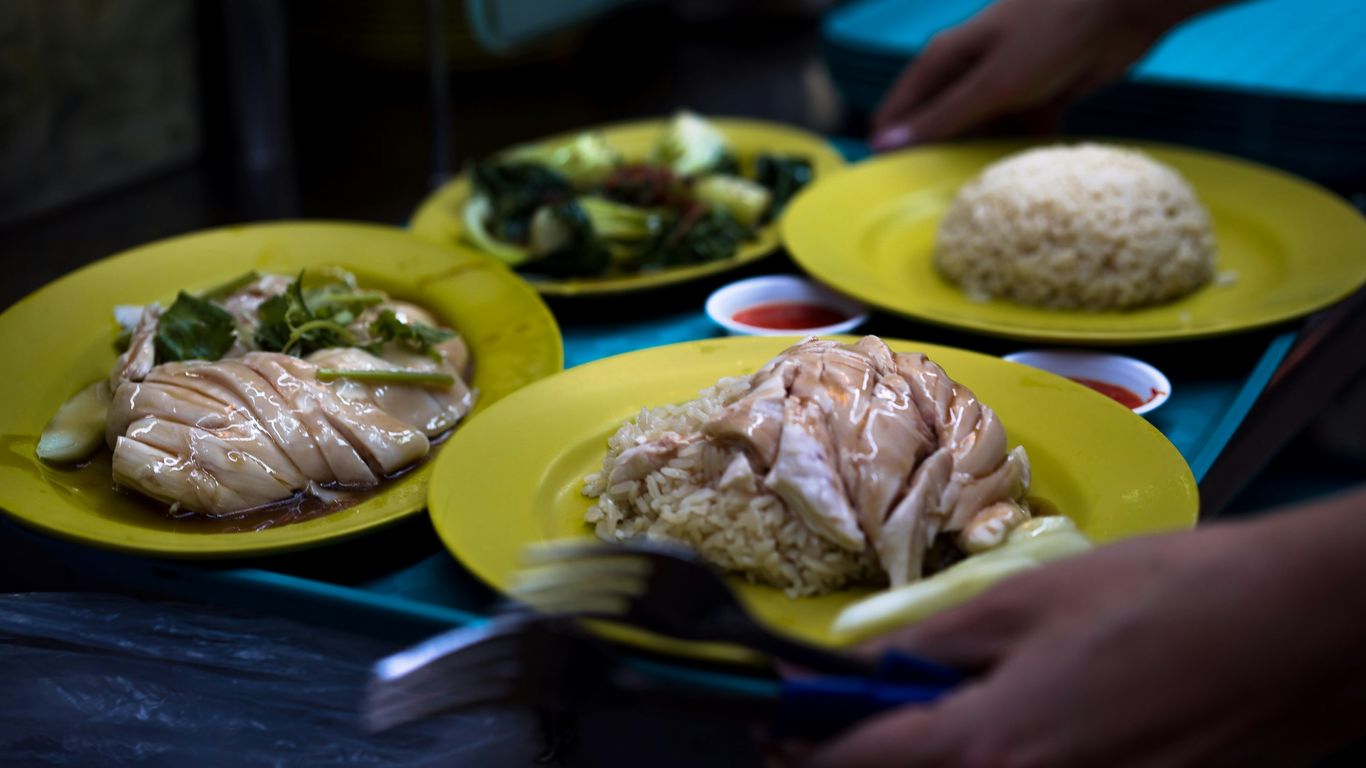
Many migrant workers lived in simple, crowded accommodation close to employment. Shared rooms or lodging houses reduced costs and made it easier to reach work, though privacy was limited. Meals had to be filling and affordable, with little room for waste after rent and remittances were paid.
A kopitiam, market stall or shared kitchen could become part of this practical world. Singapore Heritage’s account of kopitiam everyday life helps show how ordinary food spaces carried social meaning as well as nourishment. For workers, a familiar drink or shared table could offer a brief sense of steadiness.
Mutual support among female migrant workers
Women relied on one another for information, company and practical help. A newcomer might learn where to find work, how to navigate a neighbourhood or whom to approach when money was short. Such support did not erase conflict or inequality, but it made solitary migration less isolating.
The forms of support were often modest and immediate:
- sharing information about employers and available work;
- keeping an eye on belongings or personal safety;
- lending small sums during illness or unemployment;
- preparing food and maintaining familiar social habits.
These acts created a working community. They also show why the women’s history cannot be told only through buildings: it was sustained in rooms, streets, meals and conversations.
Family responsibilities and remittances
Sending money home was one of the central reasons many women worked in Singapore. Remittances could pay for food, schooling, medical care or household needs, and they tied the worker’s daily effort to family life in another country. A woman might be physically alone while remaining deeply involved in decisions at home.
This arrangement brought pride as well as pressure. Earnings had to be divided between immediate needs and promises made before departure. The amount sent home, the frequency of letters and the timing of visits all carried emotional weight.
The social costs of an independent working life
Independent work could give women more control than a life confined to a poor rural household, but it could also attract judgement. They lived away from customary family structures, performed work associated with physical toughness and managed money in public. Loneliness, fatigue and concern about ageing without close family were part of the cost.
A respectful account avoids turning independence into a simple success story. The women made choices within narrow economic limits, and those choices could bring both dignity and vulnerability. Their resilience was social and practical, not an absence of hardship.
Samsui women and Singapore’s development
Singapore’s changing landscape was built through many kinds of labour, much of it ordinary and poorly documented. Samsui women carried materials, supported construction processes and helped make expansion possible at ground level. Their contribution sits alongside the work of men, other migrant groups, skilled tradespeople and domestic workers. It also sits within the daily life of a port whose buildings depended on the people around them.
Their contribution to the city’s changing landscape
The women’s labour belonged to the physical making of streets, homes and workplaces. A completed building can appear permanent and self-contained, yet its construction involved temporary teams whose members moved on once the job was done. Their effort became part of the city without always becoming part of its visible authorship.
The Singapore River’s working history offers another way to understand this connection between urban growth and labour. Coolies, lightermen, warehouse workers and construction labourers all helped turn a trading settlement into a functioning city. The Samsui women were one important part of that larger human infrastructure.
Work that often went unrecorded
Official histories tend to preserve dates, plans, institutions and prominent names more easily than repetitive manual work. A worker who carried materials left few documents behind, especially if she had limited literacy and moved between employers. Even photographs may identify the clothing without identifying the individual.
This absence should not be mistaken for insignificance. The records are incomplete because of how history was collected, not because the labour lacked value. Family stories, oral testimony and careful local research can restore texture where formal archives are quiet.
How gender and migrant status shaped their history
The women occupied a complicated position. They were valued for their labour but could remain socially marginal as migrants and as women in a male-dominated construction industry. Their wages and working conditions were shaped by employers, recruiters, immigration controls and the wider economy.
Gender also influenced how they were remembered. Their toughness could be celebrated as an exceptional quality, while the ordinary rights and protections owed to workers received less attention. A balanced history recognises agency without pretending that the surrounding power structures were equal.
Connecting individual stories to Singapore’s national narrative
National development is often told through impressive milestones: new roads, housing estates, industries and institutions. Those milestones matter, but they can feel abstract unless connected to people who carried, mixed, cleaned, cooked and repaired. Samsui women bring a human scale to the story of modern Singapore.
A timeline of Singapore’s pivotal moments becomes richer when read beside such lives. Infrastructure and policy changed the island, but those changes were experienced through tired feet, remitted wages, shared rooms and the gradual remaking of familiar neighbourhoods.
Remembering the Samsui women in Singapore today
The Samsui women remain present in Singapore through statues, museum displays, photographs, books and family memories. Their red headscarves make them visually memorable, while the circumstances of their lives invite more searching questions. Who was named, who was forgotten and whose version of the past became public? Remembering them well means allowing admiration, uncertainty and human detail to exist together.
Museums, monuments and public remembrance
Public representations give visitors a first point of contact with the women’s history. A sculpture or exhibition can make an overlooked group visible to people who might otherwise pass through a neighbourhood without knowing its working past. It can also encourage conversations about migration, labour and the changing city.
Singapore Heritage’s heritage tours take a story-led approach to neighbourhood history, connecting places with the people and practices that shaped them. In this context, remembrance works best when it leads beyond a single statue and back into the streets where ordinary lives unfolded.
Oral histories and family memories
Oral history can preserve things that official records rarely capture: a woman’s preferred meal, the sound of a dialect, a remembered employer or the way money was sent home. These recollections may be partial and sometimes conflict with one another, but that is part of their value. Memory reveals how the past was lived, not only how it was later classified.
Families may hold photographs, letters, tools or stories that have never entered an archive. Sharing them should involve consent, proper credit and care for personal details. The act of listening can be as important as the final display.
How artists and writers preserve their legacy
Artists and writers keep the story moving between evidence and imagination. They may focus on the red cloth, the weight of a basket, the crowded lodging house or the distance between Singapore and Guangdong. The strongest work does not flatten the women into heroic figures; it makes room for contradiction and individual voice.
Research also matters. Books and essays that examine migration, public memory and self-defined identity help readers question why some images endure. Creative work can then build on that foundation without treating symbolism as a substitute for historical care.
What their story means for modern Singapore**
For modern Singapore, the Samsui women offer a reminder that development has always depended on people whose names may not appear on plaques. Their story also asks present-day readers to consider how migrant labour is valued, recorded and remembered. The red headscarf is therefore not only a symbol of the past; it is an invitation to look more closely at the people behind every familiar street.
Singapore Heritage’s researched gifts are designed to help people carry local stories home through thoughtfully made objects, while its storytelling experiences keep attention on neighbourhoods and community memory. Readers who want to continue that encounter can book a heritage walk and meet Singapore’s layered history through place and conversation.
Conclusion
The Samsui women helped build Singapore in ways both visible and easy to overlook. Their migration, labour, friendships and family responsibilities formed part of the practical foundations of a changing city, while the red headscarf became a lasting sign of their presence. To remember them fully is to look past the familiar image and recognise the individual lives, difficult choices and everyday skills behind it.
Frequently Asked Questions
Who were the Samsui women?
They were Chinese female migrants, many from Sanshui in Guangdong and nearby districts, who came to Malaya, including Singapore, mainly between the 1920s and 1940s for employment.
Why are they associated with construction work?
Construction provided accessible manual employment during periods when Singapore needed labour for its expanding built environment. Their jobs involved carrying materials and supporting work at building sites.
What does “Samsui” mean?
“Samsui” is the Cantonese pronunciation of Sanshui, a district in Guangdong. The term describes a place-based migrant identity rather than one completely uniform group.
Why did they wear red headscarves?
The headscarves helped protect the head and hair from sun and dust and became a recognisable feature of their workwear. They later developed into a powerful symbol of the women’s contribution.
Did all Samsui women come from the same place?
No. Many came from Sanshui, but others came from nearby areas such as Shunde and Dongguan, as well as from other parts of southern China.
How did they support families in China?
Many sent remittances from their Singapore wages. The money could help with household expenses, education, medical care and other family responsibilities.
How are Samsui women remembered today?
They are remembered through monuments, museums, photographs, oral histories, family stories, writing and artistic representations that connect their lives to Singapore’s wider development.
Walk Through Singapore’s Stories
Readers can explore Singapore Heritage’s small-group heritage walks and storytelling experiences to encounter neighbourhood history through local places, people and memories.
Key Takeaways
Singapore’s traditional coffee shops are more than places to buy breakfast: they are living records of migration, work and neighbourhood life.
- Hainanese coffee-shop workers helped shape Singapore’s early kopitiam trade.
- The word “kopi” reflects the region’s layered linguistic and cultural history.
- Familiar orders, cups and breakfast foods form a shared social ritual.
- Redevelopment, rents and changing tastes have altered the traditional coffee shop.
- Kopitiams survive when skills, stories and everyday relationships are carried forward.
Where Singapore’s kopitiams began
The story of Singapore’s kopitiams begins with movement: migrants arriving at a busy port, workers seeking affordable meals and small businesses taking root along crowded streets. These coffee shops were practical enterprises, but they also became places where languages, recipes and habits met. To understand kopitiam history singapore, it helps to look beyond the drink itself and towards the people who made the trade part of ordinary life.
The Hainanese origins of the coffee-shop trade
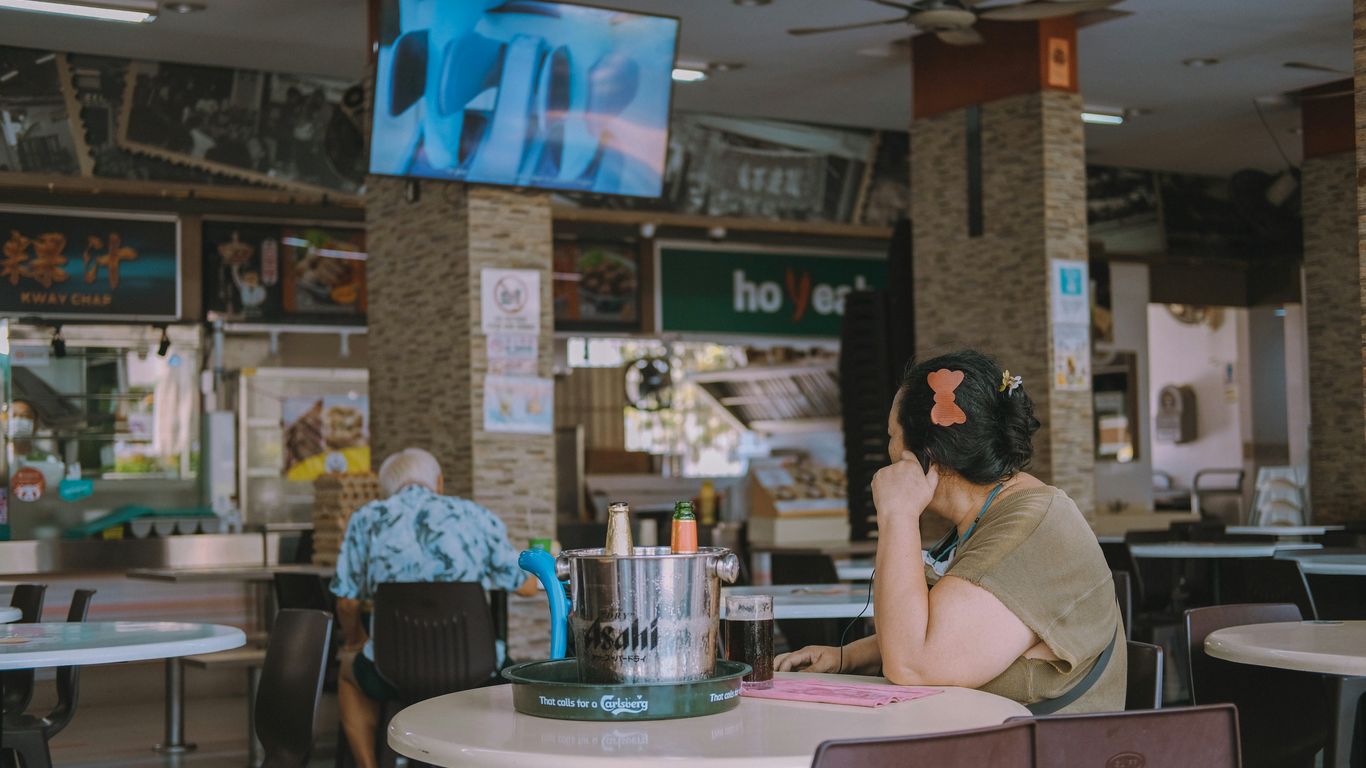
Hainanese migrants became closely associated with Singapore’s coffee-shop trade, particularly through their work as coffee brewers, cooks and service workers. Many had experience in domestic service or hotel kitchens, where they encountered European-style bread, butter and preserves alongside Chinese cooking methods. The resulting coffee shop was neither wholly imported nor wholly traditional; it was a useful, improvised meeting point between different food cultures.
The trade depended on close practical knowledge. Brewing, preparing kaya, grilling bread and remembering regular customers were skills learnt through observation and repetition rather than formal instruction. In this way, the Hainanese contribution became part of a wider Singaporean breakfast culture.
Chinese migration and the making of a new food culture
Chinese migration brought dialect groups, cooking traditions and systems of mutual support into the growing port city. Coffee shops often served food that reflected this mixture, with familiar rice, noodle and snack dishes appearing alongside toast and hot drinks. Their menus changed according to neighbourhood, available ingredients and the preferences of the people who gathered there.
This was food culture made in close quarters. A stallholder might adapt a recipe for local tastes, while a customer carried a habit from one district to another. The kopitiam therefore recorded migration not through grand declarations, but through small adjustments in flavour, language and service.
How the Malay word “kopi” shaped everyday language
“Kopi” is the Malay and Indonesian word for coffee, while “tiam” comes from Hokkien and means shop. Together, the word describes a coffee shop, but it also captures the region’s habit of borrowing and reshaping language through daily contact. Kopitiam orders developed in a practical mixture of Malay, Chinese dialects and English, allowing customers and servers to communicate quickly across linguistic boundaries.
The vocabulary remains one of the most distinctive parts of the experience. A short order can specify the coffee’s milk, sugar and strength, turning a drink into a compact piece of local knowledge. It is language used not for display, but to get breakfast right.
From home brewing to neighbourhood businesses
As Singapore’s population grew, coffee shops became dependable neighbourhood businesses rather than occasional household conveniences. Their open fronts, shared tables and steady morning hours suited a city where workers, families and small traders lived close together. A kopitiam could be modest in appearance and still hold an important place in the local economy.
Its value lay partly in repetition. The same brewer might recognise a customer’s order, a stall might open before the first shift began, and a table might host different groups over the course of one day. That dependable rhythm helped turn a commercial space into a familiar part of home territory.
The kopitiam during Singapore’s colonial and early post-war years
During the colonial period and the difficult years after the Second World War, coffee shops offered inexpensive food, shade and company in a city changing quickly. They stood near workplaces, markets, transport routes and housing, making them accessible to people with little time or money to spare. Their history sits alongside the wider story of Singapore’s port, including the labour and trade described in accounts of the Singapore River’s working life.
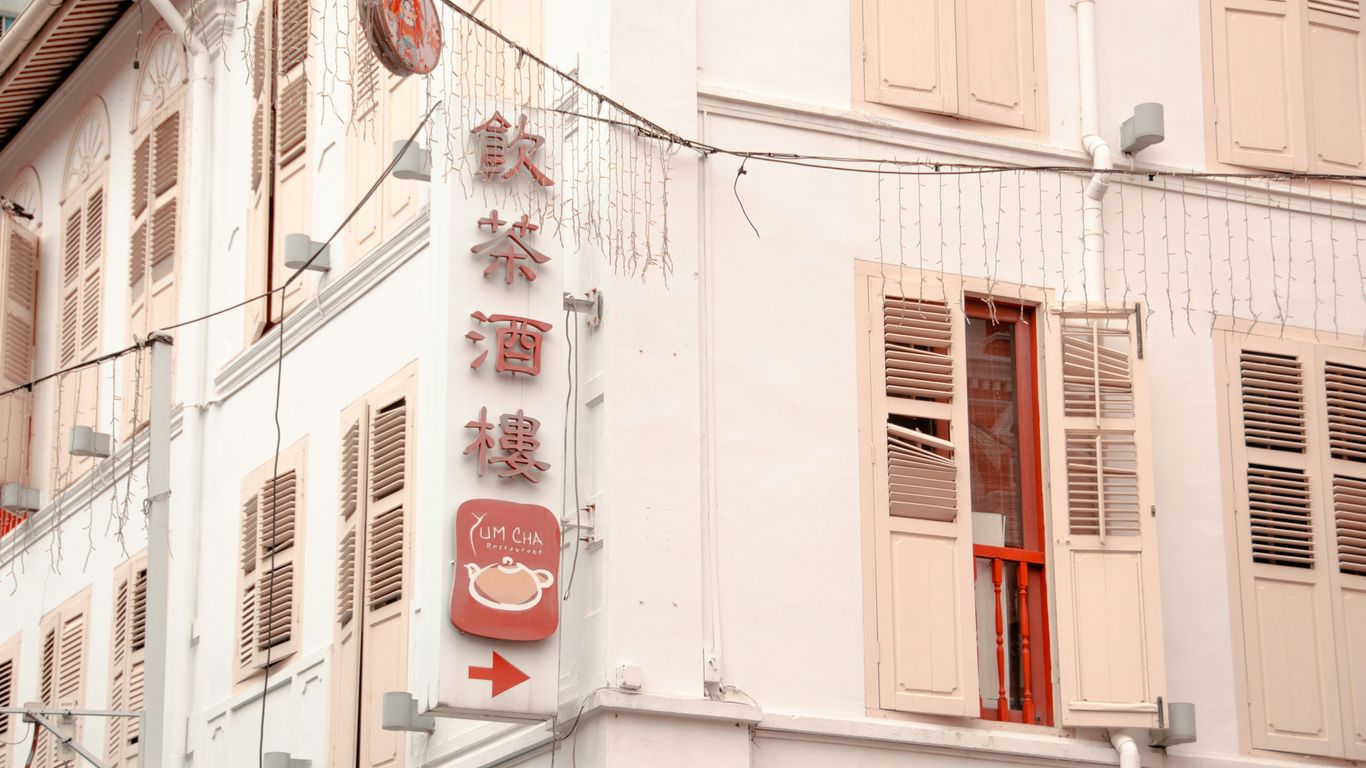
Coffee shops as gathering places for workers and residents
For dockworkers, clerks, artisans and residents, the coffee shop was often the first public room of the day. It offered a place to pause before work, exchange news or wait for someone without needing to spend much. The sounds were ordinary but memorable: cups touching saucers, ceiling fans turning, orders called across a busy counter.
These spaces were especially useful because they did not demand a formal invitation. A person could arrive alone, share a table when necessary and still feel part of the surrounding life. The kopitiam’s openness made it a natural social institution.
Affordable meals in a rapidly changing city
Low-cost meals mattered in a city where many households were managing uncertain wages, crowded housing and long working hours. Coffee shops provided simple breakfasts and filling dishes that could be eaten quickly or stretched into a longer conversation. The food was shaped by thrift as much as taste, making use of familiar ingredients and efficient cooking methods.
Affordability also widened the social reach of the kopitiam. Students, labourers, shop assistants and older residents might occupy the same room, even if their lives outside it were very different. Shared tables created a modest form of equality: everyone had to make space for the next customer.
The role of hawkers, provision shops and adjoining trades
Traditional coffee shops were rarely isolated businesses. Around them, provision shops, market sellers, repairers and hawkers formed an everyday network of goods and services. Customers could drink coffee, buy household essentials, collect a parcel or speak with a neighbour within the same short walk.
This relationship between food and work remains visible in places where a food centre sits beside workshops and small enterprises. A study of Alexandra Village’s foodways shows how eating places can function as practical community dining rooms for workers and residents, rather than as destinations separated from local working life.
How social class and community life met around shared tables
A kopitiam did not erase differences in income, occupation or status, but it brought people into physical proximity. The shared table was both a convenience and a social arrangement, particularly during busy hours. Conversations could remain within a family group, yet the room itself was collective.
That mixture of privacy and openness helped coffee shops become trusted places for informal exchange. Someone might hear about a job, a landlord, a shipment or a family matter simply by being present. Community knowledge travelled through these small, busy rooms.
The rituals and language of traditional kopi
Traditional kopi is a system of small choices, remembered by servers and learnt by customers through use. Milk, sugar, strength and preparation are expressed in familiar terms, while breakfast arrives as a set of textures: strong coffee, crisp toast, cool butter and soft eggs. The ritual is simple enough for a hurried worker and rich enough to reward attention.
The material details matter too. A cup, saucer, metal kettle or coffee sock can carry years of handling, making the ordinary feel unusually personal. Singapore Heritage’s kopitiam objects archive explores how such things preserve evidence of daily routines, migration and shared use.
Kopi, kopi-o and kopi-c: understanding the classic orders
A classic kopi is commonly understood as coffee served with condensed milk and sugar. Kopi-o is black coffee with sugar, while kopi-c is coffee with evaporated milk and sugar. The vocabulary can include further changes in sweetness, strength or temperature, so an order often functions as a brief set of instructions.
The terms are not merely culinary shorthand. They show how a multilingual society made a practical language of food, using words that were clear at the counter even when customers came from different backgrounds. A newcomer may need help at first, but the pattern becomes intuitive with time.
Kaya toast, soft-boiled eggs and the enduring breakfast set
Kaya toast pairs grilled bread with coconut-and-egg jam, usually with butter melting into the warm centre. Soft-boiled eggs add a savoury, delicate contrast, and the coffee completes a breakfast designed around speed without feeling hurried. The set has endured because it is inexpensive, recognisable and satisfying.
Its colonial-era influences do not make it foreign to Singapore. Local cooks and customers adapted bread, preserves and coffee to their own tastes, turning borrowed ingredients into a firmly rooted habit. The breakfast table is therefore a record of exchange rather than a single origin story.
The significance of the enamel cup and saucer
The enamel or ceramic cup and saucer are small objects, but their appearance and use help define the traditional coffee-shop atmosphere. They are durable, easy to replace and shaped for a drink that is served hot and consumed in company. Some customers cool their coffee in the saucer, a familiar gesture that also reveals how people make the setting their own.
Objects become meaningful through repeated handling. The everyday heritage archive places cups, kettles and tables alongside food traditions, showing how material evidence can illuminate the people and practices behind a neighbourhood.
To see why the details remain useful, it helps to distinguish the object from the habit attached to it:
| Object or practice | What it makes possible | What it can reveal |
|---|---|---|
| Cup and saucer | Quick, durable service | Shared ideas of comfort and routine |
| Coffee sock | Filtered brewing in batches | Practical knowledge passed between workers |
| Tiled or marble table | Easy cleaning and shared seating | The communal design of the coffee shop |
| Handwritten tab | Informal payment and trust | Relationships between regulars and stallholders |
These details are not decorations added after the fact. They explain how a kopitiam worked, and why its atmosphere cannot be recreated by appearance alone.
Unwritten etiquette at the kopitiam table
Kopitiam etiquette is mostly learned by watching others. Customers make room, keep belongings close during busy periods and understand that a table may serve several groups in one morning. They also learn to listen for their order and to treat stallholders as part of the social fabric rather than as invisible service providers.
The rules are flexible, but they protect the shared nature of the space. A person can linger over coffee, yet the table remains available to others. That balance between welcome and consideration is one of the reasons the traditional coffee shop feels communal without being ceremonious.
How kopitiams became anchors of neighbourhood life
The kopitiam became a neighbourhood anchor through repetition rather than formal planning. It was where residents began the day, where workers returned between tasks and where people encountered news that had not yet travelled through official channels. Over time, the coffee shop gathered memories in layers.
Its role also changed with the city. Older establishments served one generation, then another, while newer customers brought different languages, schedules and expectations. The result was not a frozen tradition, but a public habit capable of absorbing change.
Morning routines and multigenerational regulars
Morning regulars gave the coffee shop its strongest sense of continuity. Grandparents might arrive early, parents stop by before work and younger family members learn the familiar orders at the same table. The routine offered an everyday form of inheritance, passed through gestures rather than instruction.
A regular customer’s presence could also reassure others. Stallholders noticed absences, neighbours exchanged brief updates and a person living alone had somewhere recognisable to go. Such small acts made the kopitiam part of the social infrastructure of a district.
News, debate and informal community networks
Coffee shops have long been places for conversation, from practical matters such as rent and employment to arguments about sport, politics and local change. The talk could be serious, playful or simply repetitive, but it helped residents interpret what was happening around them.
This informal network mattered before digital communication became so immediate, and it still matters where trust is built face to face. A notice, recommendation or warning carried through familiar voices can have a different weight from a message encountered alone on a screen.
Coffee shops as spaces for migrant workers and local families
As Singapore changed, kopitiams continued to bring together people with different origins and working lives. Migrant workers, local families, older residents and students could use the same place for different purposes, whether for a meal, a rest or a conversation. The room’s meaning was shaped by whoever needed it that day.
That layered use reflects the wider movement of people through Singapore’s neighbourhoods. It also complicates nostalgia: the traditional coffee shop belongs not only to memories of the past, but to the people who continue to make use of it now.
Why the kopitiam offered more than food and drink
A kopitiam offered familiarity at a modest price. It could be a waiting room, a meeting place, a source of local information and a brief refuge from heat or work. Its social value was ordinary—and precisely because it was ordinary, it was easy to overlook.
The coffee shop also gave residents a sense of belonging without requiring membership. Someone could be known by a usual order, a preferred seat or the time they arrived. Those repeated recognitions turned a business into a local relationship.
The pressures that changed Singapore’s traditional coffee shops
Traditional coffee shops have never been static, but the pressures around them have intensified. Land values, redevelopment, labour costs and changing consumer habits all affect whether a small operator can continue. The atmosphere of a kopitiam may look timeless while the economics beneath it are changing quickly.
Some changes have improved comfort or widened access. Others have made it harder for family businesses and independent stallholders to preserve the pace, price and informal character that customers associate with the form.
Rising rents and redevelopment
Redevelopment can remove the physical setting in which a coffee shop’s relationships were built. When shophouses, markets or older estates are altered, regulars may be dispersed and operators may face higher rents or new lease conditions. Even when a business reopens elsewhere, its old network may not travel with it.
The loss is therefore more than architectural. A kopitiam’s value lies in the combination of place, people and routine, and that combination is difficult to relocate intact. Neighbourhood change must be understood through those everyday connections as well as through buildings.
Competition from fast-food chains and speciality cafés
Fast-food outlets and speciality cafés have changed what customers expect from speed, comfort, branding and choice. They may offer air-conditioning, consistent menus or a setting designed for work and leisure. Traditional coffee shops, by contrast, often rely on narrower menus, shared seating and the personal knowledge of long-serving staff.
Neither model fully replaces the other. A café can provide a different experience, while the kopitiam continues to offer quick, affordable food with a strong sense of local continuity. The pressure arises when the latter is judged only by the standards of the former.
Changing tastes, health concerns and younger customers
Younger customers may seek less sugar, different drinks, clearer information about ingredients or more comfortable places to sit. Health concerns can also alter how people think about condensed milk, butter and sweetened beverages. Traditional operators therefore face the delicate task of responding without making the old menu unrecognisable.
Adaptation can be gradual. Smaller portions, revised recipes, new payment methods or clearer explanations may help a shop welcome new customers while retaining its established character. What matters is whether change grows from the business’s own knowledge rather than being imposed as a costume.
The impact of franchising and commercial standardisation
Franchising can make a familiar name available in more locations, but scale may also change the relationship between a coffee shop and its neighbourhood. Standardised menus, interiors and procedures offer predictability, while reducing the small variations that once reflected local staff and regular customers.
The distinction is not simply between old and new. A larger operation may preserve recipes and create work, while a small shop may still lose its character if skills are not passed on. The central question is whether the practice remains connected to people who understand its meaning.
Operators often adapt through a handful of practical decisions:
- Keeping a few established drinks and dishes at the centre of the menu.
- Training younger staff in brewing, service and ingredient preparation.
- Introducing modern payment or ordering methods without removing conversation.
- Explaining the origins of recipes instead of relying only on nostalgic decoration.
These choices do not guarantee survival, but they show that continuity can involve sensible change. A living tradition needs room to respond to the people who use it.
Preserving the kopitiam in modern Singapore
Preservation is most useful when it supports working businesses and the people who hold their knowledge. A recipe written down is valuable, but so is the hand movement that controls a pour, the judgement used to toast bread or the memory of which customers prefer less sugar. Heritage exists in these relationships as much as in the shopfront.
Singapore Heritage approaches local history through neighbourhoods, foodways, objects and community memory. Its work includes story-led walks and researched gifts, offering ways for residents and visitors to encounter everyday heritage rather than treating it as a display detached from daily life.
Family-run stalls and recipes passed between generations
Family-run stalls often preserve knowledge through long apprenticeships within the household. A younger relative learns not only a recipe, but also how to judge heat, manage a rush and speak with regulars. Such learning can be difficult to record because much of it is embodied and situational.
Passing skills on also depends on whether the next generation can make a viable living. Respect for tradition must therefore include attention to working conditions, fair recognition and the practical future of the people who keep the stall open.
Hawker centres, food courts and the evolution of the coffee shop
The kopitiam form has evolved alongside hawker centres and food courts. Shared seating and multiple stalls remain, but the architecture, management and customer expectations may differ. These spaces continue the idea of a common dining room while adapting it to high-density housing, transport links and contemporary schedules.
Singapore’s hawker culture shows how food traditions can survive through movement and adjustment. Its story is also one of multicultural exchange, with Chinese, Malay, Indian and Peranakan influences appearing across menus and neighbourhoods. A useful account of Singapore’s food heritage places individual dishes within those wider histories.
Heritage branding and the question of authenticity
Nostalgic signs, old-style cups and tiled interiors can make a new venue resemble a traditional kopitiam, but visual resemblance alone is not authenticity. The deeper questions concern who prepares the food, whose knowledge is credited, how workers are treated and whether the place serves a real community.
That does not mean a newer business cannot be meaningful. Authenticity can include careful adaptation, provided the story is researched honestly and not reduced to a decorative mood. Context gives nostalgia its weight.
How traditional operators are adapting without losing their identity
Operators are finding ways to accommodate digital payments, delivery, changing diets and younger customers while keeping familiar brewing methods and service habits. Some update seating or menus; others make their history more visible through conversation and explanation. The strongest adaptations tend to feel like extensions of the business rather than a replacement for it.
Visitors can support this continuity by ordering thoughtfully, allowing staff time to work, asking respectful questions and returning to places that rely on regular custom. Singapore Heritage’s local heritage walks similarly invite people to encounter neighbourhood stories through guided, place-based experiences rather than through landmarks alone.
Why kopitiam history still matters today
Kopitiam history matters because it gives scale to the story of Singapore. National change can be seen in ports, housing estates and infrastructure, but it can also be tasted in a breakfast set and heard in an order called across a counter. The coffee shop brings large histories down to the level of ordinary decisions.
It also reminds people that heritage is not limited to monuments. It can be a table shared with strangers, a recipe adjusted over decades or a shopkeeper who remembers how a street once worked. Those details make the past recognisable without making it simple.
Coffee shops as living records of Singapore’s past
A traditional coffee shop records layers of migration, labour and urban change. Its menu may reveal movement between regions, its language may show everyday multilingualism and its objects may preserve habits no longer visible elsewhere. The evidence is modest, but it is remarkably close to lived experience.
Such records need care because memory is selective. A responsible history listens to stallholders, workers, residents and customers, acknowledging both affection and difficulty. The result is richer than a polished story of unbroken continuity.
The value of affordable, accessible communal spaces
An affordable coffee shop gives people access to public life without the cost of a formal venue. It welcomes a person who comes for ten minutes, a family sharing breakfast and an older resident who wants familiar company. In a dense city, that openness is a meaningful civic resource.
When such places disappear, residents lose more than a cheap meal. They lose one of the settings in which casual trust is built. Protecting communal spaces therefore involves social and economic questions, not only questions of taste.
What younger Singaporeans are rediscovering
Younger Singaporeans are returning to traditional coffee shops with curiosity, sometimes bringing cameras, family members or questions about words they have heard since childhood. Many are discovering that kopi is not simply an old-fashioned drink but a compact way of understanding work, migration and belonging.
The renewed interest can be thoughtful when it leaves room for the people who use these places every day. A visitor who listens, pays fairly and notices the working rhythm sees more than a nostalgic backdrop. They encounter a culture still in use.
From everyday necessity to cultural heritage
The kopitiam’s journey from ordinary necessity to recognised cultural heritage is not a change from unimportant to important. It is a reminder that ordinary things were always carrying meaning. Their significance became clearer only when rapid development made their survival uncertain.
Singapore Heritage’s community stories and heritage experiences reflect this wider principle: lived heritage is gathered through people, places, objects and practices, then shared with care. The future of the kopitiam will depend on whether that care remains connected to everyday use.
Experience Singapore’s Living Heritage
A heritage walk can turn a familiar street, food stall or coffee shop into a richer conversation about the people who shaped it. Explore Singapore Heritage’s story-led routes to meet neighbourhood histories through local storytellers and place-based memories, then book a heritage walk for a closer look at the city beyond its most photographed landmarks.
Conclusion
Singapore’s traditional coffee shops endure because they hold several kinds of life at once: food and work, language and migration, habit and friendship. Their future will not be secured by preserving appearances alone, but by supporting the people, skills and affordable communal routines that make a kopitiam meaningful.
Frequently Asked Questions
What does “kopitiam” mean?
“Kopitiam” combines “kopi”, the Malay and Indonesian word for coffee, with “tiam”, a Hokkien word meaning shop. It commonly refers to a traditional coffee shop in Singapore and parts of Southeast Asia.
What is the difference between kopi, kopi-o and kopi-c?
Kopi is generally coffee with condensed milk and sugar, kopi-o is black coffee with sugar, and kopi-c is coffee with evaporated milk and sugar. Customers can also request changes to sweetness, strength or temperature.
Why are Hainanese communities associated with Singapore’s coffee shops?
Hainanese migrants became strongly associated with the trade through work as coffee brewers, cooks and service workers. Their knowledge helped shape the combination of coffee, toast, kaya and other dishes now linked with the traditional kopitiam.
What is usually included in a traditional kopitiam breakfast?
A familiar breakfast set may include kopi, kaya toast and soft-boiled eggs. The combination is popular because it is quick, affordable and built around contrasting textures and flavours.
Why are kopitiams important to neighbourhood life?
Kopitiams provide accessible places for eating, conversation and informal exchange. Their shared tables allow residents, workers, families and visitors to occupy the same everyday public space.
Are modern coffee shops still kopitiams?
Some modern coffee shops retain the communal layout, local drinks and food traditions associated with kopitiams, while others mainly borrow the name or visual style. Whether they carry the tradition forward depends on their practices, people and relationship with the surrounding community.
How can people help preserve traditional coffee shops?
People can support independent operators, learn about the labour behind familiar dishes, treat staff respectfully and return regularly when possible. Listening to local memories and documenting recipes and objects with permission can also help keep the history connected to its communities.
Key Takeaways
Singapore’s older playgrounds were more than places to climb and slide. They were colourful, tactile parts of estate life, and many still carry memories of how neighbourhood childhood once felt.
- Dragon playgrounds turned concrete into imaginative landmarks.
- Pelican and other animal forms made everyday play feel theatrical.
- Sand pits, corridors and void decks supported spontaneous social life.
- Mosaic and terrazzo gave public design a distinctive local character.
- Surviving playgrounds connect present-day families with shared memories.
The rise of old Singapore playgrounds
The story of old singapore playgrounds is closely tied to the growth of Singapore’s public housing estates. As families moved from kampongs and older urban settlements into new towns, childhood began to unfold around shared blocks, paved paths and communal amenities. The playground became one of the most familiar parts of that new landscape. It was close to home, free to use and open to children from many different households.
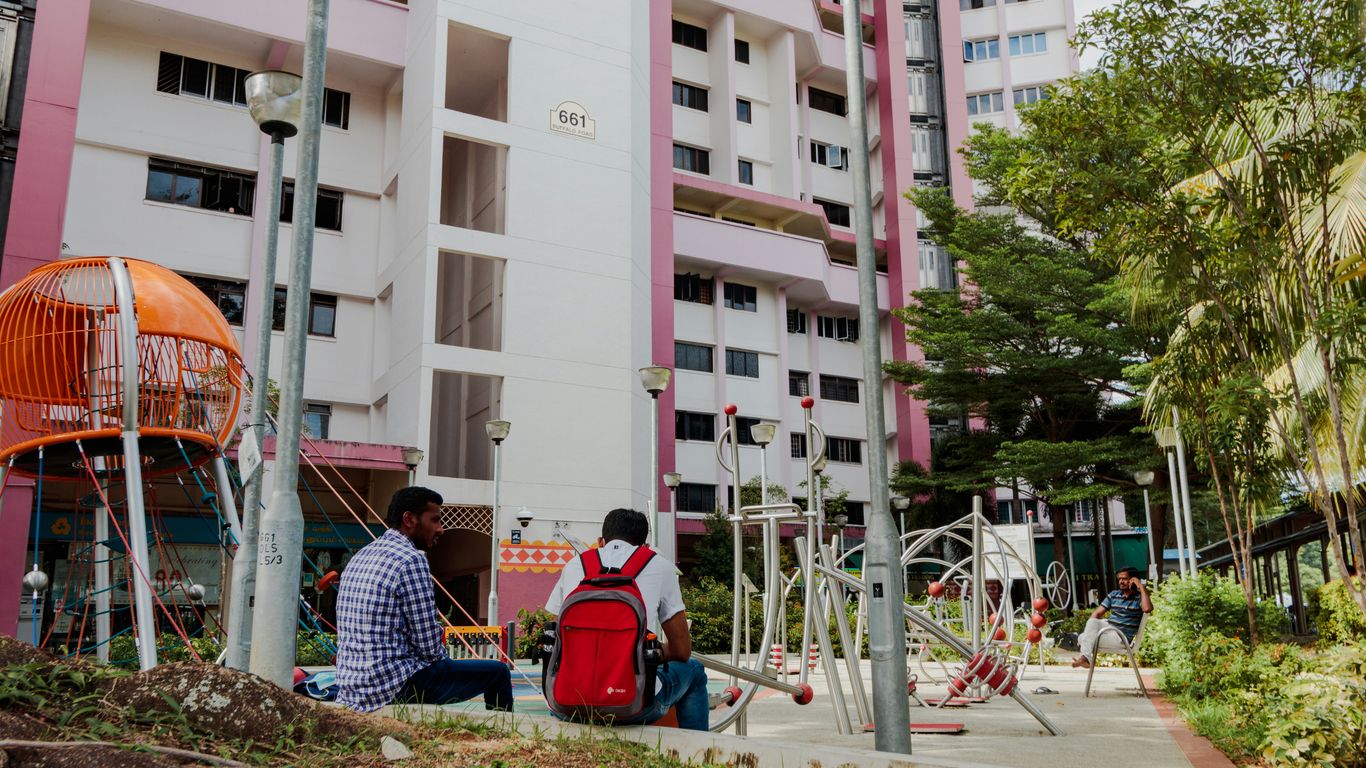
Housing estates and the changing shape of childhood
The new housing estates brought many families into closer physical proximity. A child might live several floors above the ground but still know the neighbours gathered near the sand pit, the auntie watching from a corridor, or the older children racing around the blocks. Playgrounds helped soften the scale of high-rise living by giving children a low, accessible world of their own.
Toa Payoh is a particularly useful place to understand this change. Its development from a rural district of kampongs and swamps into a planned HDB town brought new infrastructure as well as new routines. The story of Toa Payoh shows how housing, resettlement and community ties shaped the town, and the playgrounds belong within that wider story rather than standing apart from it.
Why playgrounds became part of Singapore’s nation-building story
A playground might appear small beside the larger work of building housing, schools and transport. Yet it expressed the same belief in shared public life. Children from different backgrounds could meet there without an appointment, while parents and grandparents built their own informal circles nearby. These spaces made the new estates feel lived in.
Public design also offered a way to give young neighbourhoods a recognisable identity. Instead of repeating anonymous equipment, designers introduced animals, boats, fruit and other forms that encouraged children to see their surroundings with curiosity. The result was practical recreation with a distinctly local imagination.
From practical recreation spaces to neighbourhood landmarks
At first, the playground was simply part of the estate’s amenities. Over time, particular structures became meeting points and directions: near the dragon, behind the pelican, beside the sand pit. Their shapes were easy to remember, even for children who did not yet know the names of the roads around them.
That everyday usefulness helped turn them into landmarks. A playground could be a place to wait for a sibling, cool down after school or spend an hour before dinner. Today, when residents revisit an old estate, the structure often brings back not one grand event but a scatter of ordinary afternoons.
The visual language of public play in the 1970s and 1980s
The playgrounds of the period were bold without being polished. Curved concrete, painted surfaces, terrazzo and ceramic mosaic tiles gave them a handmade visual presence. Their colours could fade under the sun, but the designs remained legible: a dragon was still a dragon, and a pelican’s beak still suggested a slide.
This visual language reflected a confident young city making room for pleasure in its built environment. The structures were not hidden behind elaborate landscaping. They sat among blocks, paths and open ground, asking children to invent the action themselves.
The dragons that became local icons
Among Singapore’s older playgrounds, the dragon is the form that has travelled furthest through memory. Its long body could be read as a climbing route, a tunnel or a bridge, while its head gave the whole structure a story. The design was recognisable across generations, even when individual playgrounds differed in scale, colour or layout.
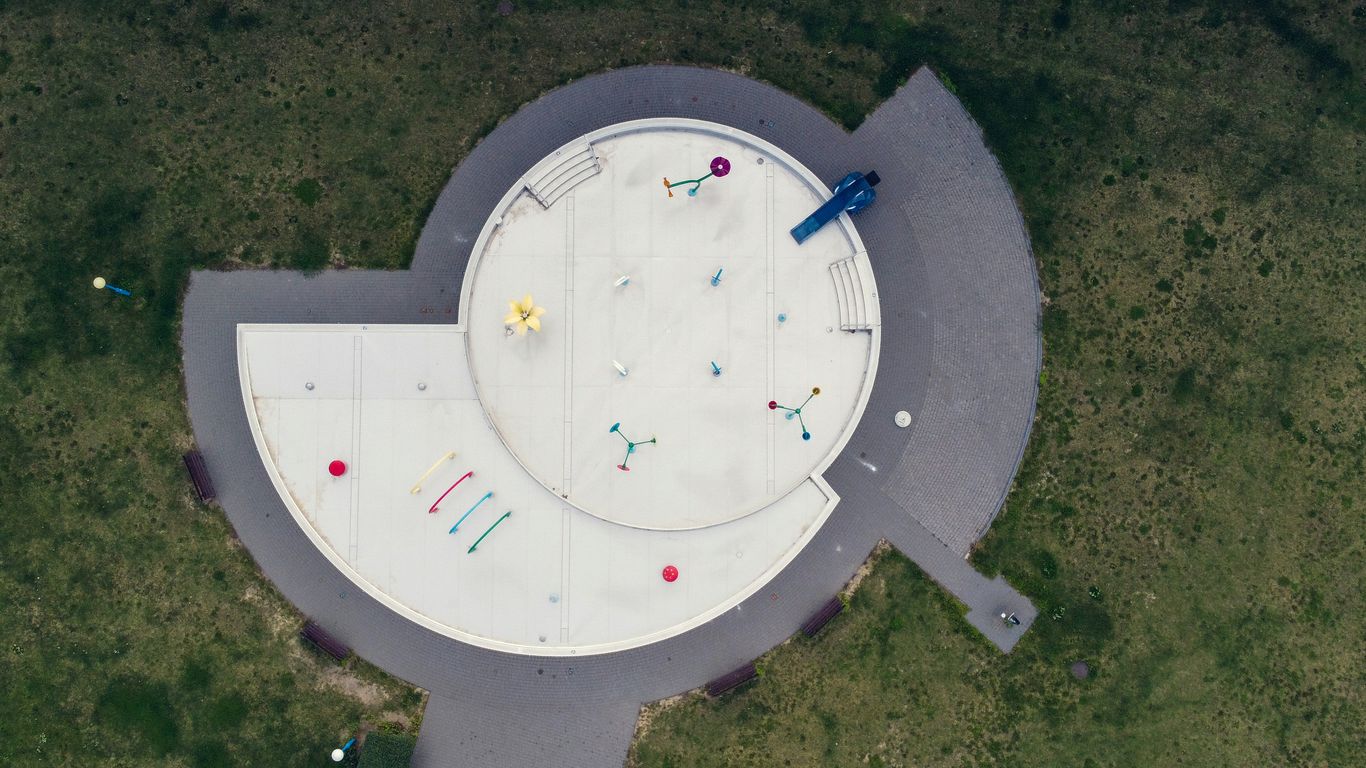
How the dragon playground design captured children’s imaginations
The dragon offered an immediate invitation to pretend. Children did not need instructions to understand that its body could become a path through an imaginary landscape. One child might be the traveller, another the guard at the head, while a younger sibling stayed close to the safer curves below.
Its appeal came partly from being neither entirely realistic nor entirely abstract. The concrete form suggested a creature, but left enough gaps for children to supply the rest. That balance made the playground feel like a permanent prop for stories that changed every afternoon.
Sand pits, concrete curves and climbing routes
The classic dragon arrangement combined several kinds of movement. Children climbed over rounded sections, crawled through openings and used the body’s curves to reach a slide or raised platform. Where sand remained beneath the structure, it also provided a softer surface and a separate world of digging, building and collecting.
The sand pit was social as much as physical. A child who was not ready to climb could still join in with a bucket or a makeshift road. Meanwhile, the older children treated the dragon’s body as a route to master, returning to the same challenge until it felt easy.
The differences between Singapore’s dragon playgrounds
Not every dragon playground looked or worked in exactly the same way. Some were fuller, longer forms, while others were smaller or arranged for younger children. Mosaic patterns, colour schemes, surrounding surfaces and the presence or absence of a sand pit changed the experience from one estate to another.
Those differences matter because memory is usually attached to a particular place. A resident may remember the dragon near a certain block, the roughness of its steps or the view of laundry above it. The shared design created a national image, but local details made each playground personal.
Why the dragon remains a symbol of shared childhood memories
The dragon has endured because it holds several kinds of memory at once. It recalls public housing, children’s independence and the close observation of adults nearby. It also belongs to a period when a neighbourhood amenity could become a piece of civic character without being designed as a landmark.
A useful way to see the surviving structures is through the old dragon playgrounds guide, which places the remaining examples in their estate settings. Their value lies not only in rarity. They show how design, play and everyday Singaporean life once met in the same small patch of ground.
Pelican slides and the imagination of everyday play
The pelican slide belonged to the same broad family of imaginative public structures, but it created a different mood. Its animal shape made the slide itself part of the story, rather than a separate piece of equipment attached to a frame. In an estate filled with repeated blocks, such a form could give children a memorable visual pause.
What made the pelican slide so distinctive
A pelican slide was easy to recognise because the animal’s body and beak suggested how it should be used. The slide’s route became part of the creature’s identity, turning a simple descent into an act of entering, travelling through or emerging from the animal. The design encouraged children to talk about what they were playing on, not merely what they were doing.
Its distinctiveness also came from scale. To a small child, the structure could feel like a large creature settled in the estate. That sense of encounter was central to the old designs: children were not just surrounded by equipment but invited to negotiate a strange, friendly object.
Animal-shaped structures across Singapore’s estates
Animal forms gave neighbourhoods their own small cast of characters. Alongside dragons and pelicans, residents remember elephants, birds and other themed structures, each using familiar images to make play more vivid. These designs were especially effective in places where the blocks and roads followed a broadly planned pattern.
The nostalgic elephant and watermelon playgrounds offer another view of this tradition. Their importance is not simply that they look unusual. They show how a functional estate space could also carry references to animals, food and childhood fantasy.
How children turned fixed designs into open-ended adventures
The designers fixed the concrete in place, but children supplied the rules. A slide could become a waterfall, a dragon’s opening a cave, and the ground around an animal a shoreline or campsite. The same structure supported quiet solitary play in the morning and noisy group games after school.
A few recurring habits often shaped an afternoon:
- Children claimed the highest reachable point before anyone else arrived.
- Younger players used the sand or lower platforms as their own territory.
- Older children invented races around the structure and nearby blocks.
- A familiar adult became the lookout, caller or referee without planning to.
These routines made the playground feel changeable despite its permanent materials. The structure stayed put; the meaning moved with the children.
The tactile appeal of mosaic, concrete and painted surfaces
Old playgrounds were designed to be touched. Hands met warm concrete, small tile joints and painted edges worn smooth by years of use. The surfaces carried heat after a sunny afternoon and held a different coolness when clouds gathered, making the playground part of the sensory life of the estate.
That tactility is one reason photographs cannot fully replace a visit. The colours and patterns may be visible, but not the scale of the curves or the feel of standing beneath a large concrete form. A careful look at mosaic playgrounds can suggest their faded beauty, while the physical places reveal how children once moved through them.
Growing up around the playground
For many residents, the playground was less an occasional destination than part of the daily route home. It sat between school, the lift lobby, the provision shop and dinner. Children could arrive without a booking, and adults could keep an eye on them while continuing a conversation or an errand nearby.
That informality gave the spaces their particular social texture. The playground was public, but it was also known territory, watched by people who recognised the children and noticed when someone new appeared.
After-school rituals and spontaneous neighbourhood games
The afternoon often began with a loose gathering rather than a formal plan. School bags were put down, shoes became dusty and a simple visit stretched longer than expected. Games changed according to who arrived, how hot the day was and whether the sand pit or slide was already occupied.
There was room for repetition. Children returned to the same routes, argued over turns and then resumed play minutes later. The ritual mattered because it gave the day a dependable pause between school and home.
The role of parents, grandparents and older siblings
Adults were present without always directing the action. A grandparent might sit near the edge, a parent might call from a block entrance, and an older sibling might quietly decide which parts were safe for a younger child. Supervision was woven into the setting rather than separated into a dedicated activity.
This arrangement also allowed adults to meet one another. Information about school, work, weather and neighbours travelled through these small gatherings. The playground was therefore an intergenerational space, with children’s movement and adult conversation happening side by side.
Friendships formed across corridors, void decks and sand pits
High-rise living did not automatically create community. Familiarity had to be made through repeated encounters, and playgrounds provided one of the easiest places for that to happen. Children met others from nearby floors, then carried those friendships into corridors, stairwells and the void deck.
The wider history of Singapore is often told through major changes, but the stories of ordinary people help recover these quieter forms of connection. A childhood friendship formed beside a sand pit may seem small, yet such encounters gave a new estate its feeling of belonging.
Play before smartphones and organised enrichment
Before screens and tightly scheduled enrichment filled so much family time, outdoor play could remain pleasantly unplanned. Children learnt to make their own entertainment from what was available: concrete, sand, chalk, a ball and the presence of other children. Boredom was not always solved by an adult; it often became the beginning of a game.
This did not make every afternoon idyllic. There were quarrels, falls, heat and the occasional instruction to go home. Still, the looseness of the experience gave children practice in negotiation and invention, qualities that are easy to miss when play is always organised in advance.
Materials, memories and the character of public design
The old playgrounds were memorable partly because their materials gave them a strong physical character. They were not interchangeable plastic units, and their surfaces changed visibly with use and weather. In that sense, wear was not merely damage; it became another layer of the neighbourhood’s history.
Their construction also reflected the practical demands of an outdoor city. Heat, rain, heavy use and limited space all shaped what could endure. The result was a public design language that felt sturdy, bright and direct.
Mosaic tiles as an enduring decorative signature
Small ceramic tiles gave the playgrounds colour and pattern without requiring elaborate ornament. They could outline a dragon’s body, mark an eye or enliven a plain curve. The mosaic made the structure readable from a distance, but rewarded closer attention with tiny variations in colour and texture.
For residents, particular tiles could become part of the memory. A chipped patch, a faded blue section or a rough edge might be more recognisable than the full design. Such details explain why restoration requires care: replacing everything with a perfect surface can remove the evidence of use that made the place meaningful.
Why concrete suited Singapore’s climate and urban landscape
Concrete allowed designers to form broad curves, openings and raised routes in a material suited to permanent outdoor installation. It could sit directly within an estate, without the visual fragility of a temporary structure. Its weight also gave the playground a sense of permanence that children understood instinctively.
The material was not always gentle. It became hot in strong sun and demanded attention around edges, steps and landings. Yet its limitations were part of the design story. The playgrounds were substantial pieces of the built environment, not objects that could be folded away after use.
Safety, maintenance and the changing standards of play
Standards for playground safety have changed considerably. Surfaces, fall zones, heights and access are now assessed with a level of consistency that older structures did not always have. Some playgrounds have therefore disappeared, while others have been repaired, fenced or adapted for continued use.
The debate is not simply between nostalgia and progress. Children need safe spaces, and public equipment must be maintained responsibly. At the same time, conservation asks whether a structure can retain its identity while meeting current expectations, rather than being replaced until only the theme remains.
How familiar wear and weathering became part of the charm
Weathering gives an old playground a visible biography. Paint fades, tiles loosen, and concrete gathers marks from rain, shoes and years of play. These signs can make a structure seem less attractive by conventional standards, but they also show that it has been part of ordinary life.
The contrast between material and memory is especially clear in small details. A repaired section may be newer than the surrounding surface, yet it belongs to the same continuing story. The charm comes not from pretending the playground has never changed, but from seeing how it has lasted.
Finding the legacy of Singapore’s playgrounds today
The surviving playgrounds are now visited by former residents, curious families, photographers and people who simply remember the shape of a dragon from childhood. They sit within active neighbourhoods rather than behind museum glass. That makes a visit both accessible and delicate: the playground is heritage, but it is also part of someone’s everyday surroundings.
A thoughtful visit looks beyond the familiar photograph. It notices the blocks, footpaths, shops and mature trees around the structure, because those surroundings explain why the playground mattered in the first place.
Old playgrounds that can still be visited
Several older or carefully recreated playgrounds remain across Singapore, although their condition and access can change. Toa Payoh’s dragon is the most widely recognised, while other surviving animal and themed structures offer a less complete but equally valuable picture of estate play. Families planning a visit should check current access and treat the space as a working public amenity.
For a broader route, the heritage walks collection offers ways to explore neighbourhood history through housing, architecture, food and community life. A playground becomes more expressive when it is encountered as part of that wider street-level setting.
What has survived through restoration and relocation
Some structures have survived in their original locations, while others have been moved or restored after redevelopment. Relocation can preserve a recognisable object, but it may separate it from the blocks, routes and neighbours that gave it meaning. Restoration therefore raises a question of context as well as condition.
The most successful preservation keeps enough of the original form and setting for visitors to understand how the playground worked. Even when a site has changed, careful interpretation can connect the remaining structure with the estate’s earlier routines.
Balancing conservation with modern safety needs
Conservation and safety need not be treated as enemies. A restored playground can retain its outline, colours and cultural meaning while receiving discreet improvements where necessary. The difficult part is deciding which changes protect the structure’s use and which changes erase its character.
That decision is best made with attention to residents, children and the people responsible for maintenance. Heritage belongs in active neighbourhoods only when it remains respectful of present needs, not when it is frozen for the sake of an idealised past.
Why these playgrounds still matter to a new generation
A child today may approach a dragon without knowing its history, and that is perfectly fitting. The structure can first be a climbing challenge, then a curious old object, and only later a link to parents’ or grandparents’ memories. Its meaning grows through use and conversation.
Singapore Heritage’s neighbourhood heritage stories take a similar interest in the objects, routes and memories that make ordinary places significant. For residents, the old playgrounds offer a chance to see a familiar estate afresh; for visitors, they provide a gentler entry into the lived history beyond major landmarks. Those who want to plan a heritage walk can continue the story on foot, with attention to the people and places around the playground.
Conclusion
Dragon playgrounds, pelican slides and their weathered companions remain powerful because they joined imagination to ordinary estate life. They were made of concrete and mosaic, but remembered through friendships, family routines and the feeling of having a whole neighbourhood to explore. Preserving them means caring for both the structures and the living communities around them, so that a new generation can make its own memories there.
Frequently Asked Questions
Where can visitors see an old dragon playground in Singapore?
The best-known surviving example is in Toa Payoh, with other dragon-related structures and replicas found in different neighbourhoods. Visitors should check current conditions and access before travelling.
Why were dragon playgrounds built in Singapore?
Dragon playgrounds were designed as imaginative public recreation spaces within housing estates. Their distinctive forms also gave growing neighbourhoods memorable local landmarks.
What materials were used in older Singapore playgrounds?
Many used concrete, terrazzo, ceramic mosaic tiles and painted surfaces. These materials allowed large themed forms to stand outdoors and withstand regular use.
Did every dragon playground look the same?
No. Dragon playgrounds varied in size, layout, colour, mosaic treatment and surrounding features. Some included sand pits or different climbing and sliding arrangements.
What was special about the pelican slide?
The pelican slide combined an animal-shaped structure with the sliding experience itself. Its form encouraged children to treat the equipment as part of an imaginative story.
Why were sand pits common in older playgrounds?
Sand pits provided a flexible play surface for digging, building and quieter games. They also allowed younger children to participate while older children used climbing routes and slides.
Are old playgrounds still suitable for children today?
Some can still be used, while others are mainly appreciated as heritage structures or have been modified. Families should follow signs, observe safety guidance and respect any restricted areas.
Key Takeaways
Singapore’s hawker centres are more than convenient places to eat: they are everyday civic spaces shaped by migration, planning and habit.
- Hawker centres grew from older street-food traditions and organised relocation.
- Shared tables make room for different incomes, ages and backgrounds.
- The menu reflects Chinese, Malay, Indian, Peranakan and other influences.
- Hawker culture depends on skilled people, not only famous dishes.
- Diners can help sustain it through respectful, regular support.
From itinerant hawkers to purpose-built centres
Singapore’s hawker story began before the familiar covered centres and orderly rows of stalls. Food sellers moved through streets, markets and working districts, bringing hot meals to people who needed something filling and affordable. Over time, these practices became part of the city’s social memory, as much a feature of daily life as the shophouse, the bus stop or the wet market.
The street-food traditions that shaped Singapore’s early food scene
Early hawkers worked with portable equipment and ingredients that could be prepared quickly in crowded urban settings. Their food carried traces of migration and trade: recipes were adjusted to available produce, local preferences and the tastes of neighbouring communities. A dish might retain an older name while becoming distinctly Singaporean in flavour and method.
This adaptability is central to singapore hawker culture. It explains why the food feels both rooted and open-ended, with family knowledge sitting alongside practical improvisation. Hawkers were not simply selling meals; they were building a cuisine suited to a busy, multicultural port.
Why the government moved hawkers into organised centres
As Singapore urbanised, itinerant food selling brought practical challenges. Stalls operating beside roads and drains could make sanitation harder to manage, while the movement of people and cooking equipment created congestion. The government’s decision to move hawkers into organised centres was therefore tied to town planning as well as food.
Purpose-built centres gave vendors a more stable place to work and brought food into planned neighbourhoods. They also made it easier to provide shared utilities, regulate stalls and create a dependable supply of inexpensive meals. The change was a major reorganisation of working life, not merely a change of address.
How relocation improved hygiene, access and public health
Relocation created conditions in which washing facilities, refuse collection and food-safety oversight could be handled more consistently. It also made hawker food easier to find in housing estates, market complexes and transport-linked areas. The result was a food system woven into the ordinary geography of the city.
The story is best understood through both policy and lived experience. A history of ordinary Singaporeans helps place hawkers among the traders, labourers and shopkeepers whose work shaped the island. Their contribution was practical and continuous: feeding workers, families and passers-by at prices that made urban life more manageable.
The hawker centre as social architecture
A hawker centre is designed to move people through it, but it is not designed to keep them separate. Stalls face a common dining area, and the open arrangement allows conversations, glances and small acts of accommodation to happen without planning. This is why the phrase “community dining room” feels accurate rather than decorative.
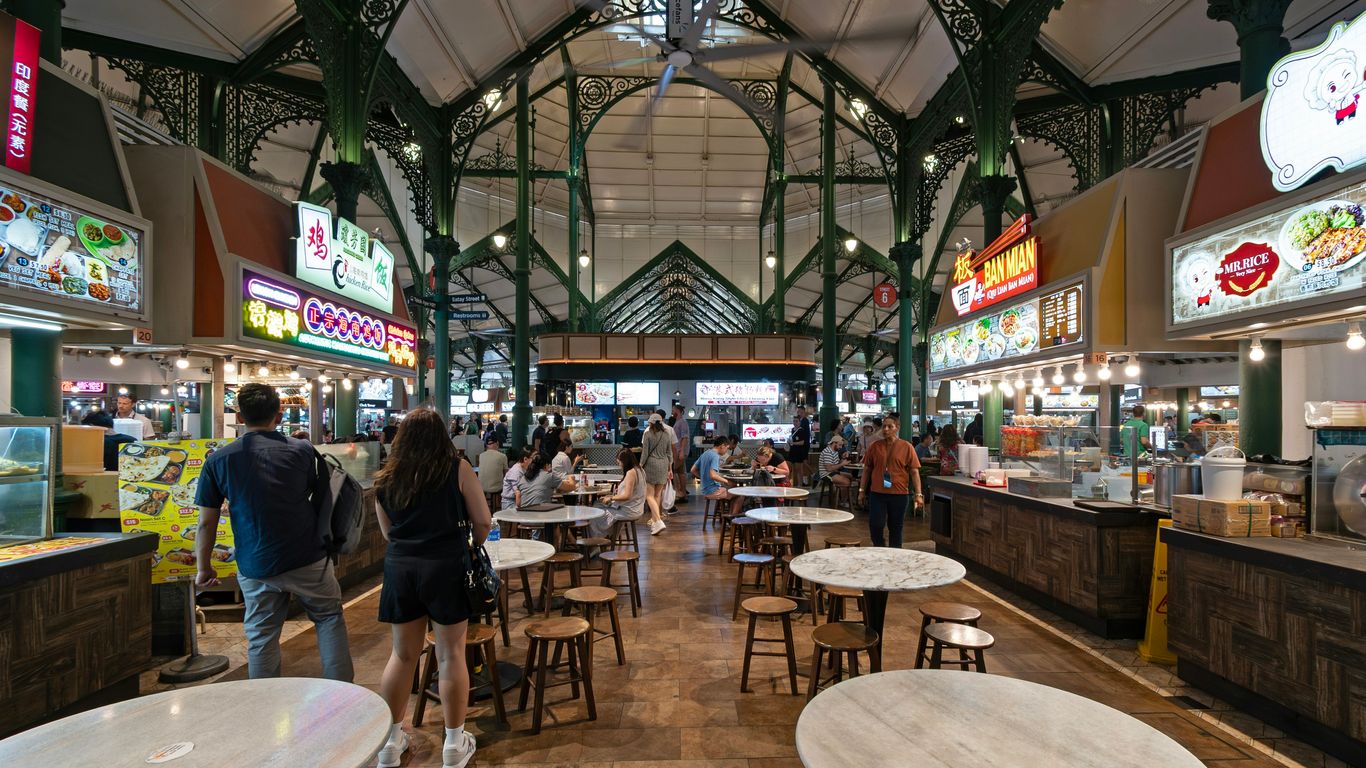
Its architecture is modest, even plain, yet its social purpose is unusually generous. A person can eat alone, meet a family member, sit beside a stranger or pause between errands. The room belongs to everyone for the duration of a meal.
Open seating and the idea of a table for everyone
Open seating removes many of the signals associated with formal dining. There is no expectation that a guest must order from one stall or reserve an entire table. A tray, a drink and a few minutes are enough to establish a temporary place in the room.
That arrangement supports a broad public: office workers, schoolchildren, older residents, delivery riders and visitors. The table is shared without requiring intimacy. It offers company at the edge of one’s attention, which can be a quiet form of belonging.
How location connects housing estates, markets and transport
Many centres sit where daily routes overlap. They may be beside a market, below flats, near a bus interchange or along a well-used path between home and work. Their importance comes partly from this position: food is encountered as part of an errand, not separated from the rest of neighbourhood life.
Alexandra Village offers a particularly clear example of food, repair workshops and housing existing beside one another. A close look at its foodways and old trades shows how lunch can be connected to the working rhythms of mechanics, artisans and other skilled workers. The setting makes the centre feel less like a destination than a shared piece of infrastructure.
The everyday choreography of queues, trays and shared space
The centre has its own choreography. People read stall signs, join short queues, keep an eye on an available seat and negotiate narrow passages with a tray in hand. None of this is announced, yet regular diners learn the rhythm quickly.
A few habits keep the room moving: standing aside after ordering, leaving space for others and returning trays where required. The actions are small, but together they turn a crowded room into an accommodating one. They also reveal how public life is built from repeated, ordinary gestures.
A menu that maps Singapore’s multicultural identity
The menu of a hawker centre is a map made from taste. Dishes associated with different communities sit within the same roofline, sometimes beside one another and sometimes sharing ingredients, techniques or customers. The result is not a neat display of separate traditions, but an ongoing conversation between them.
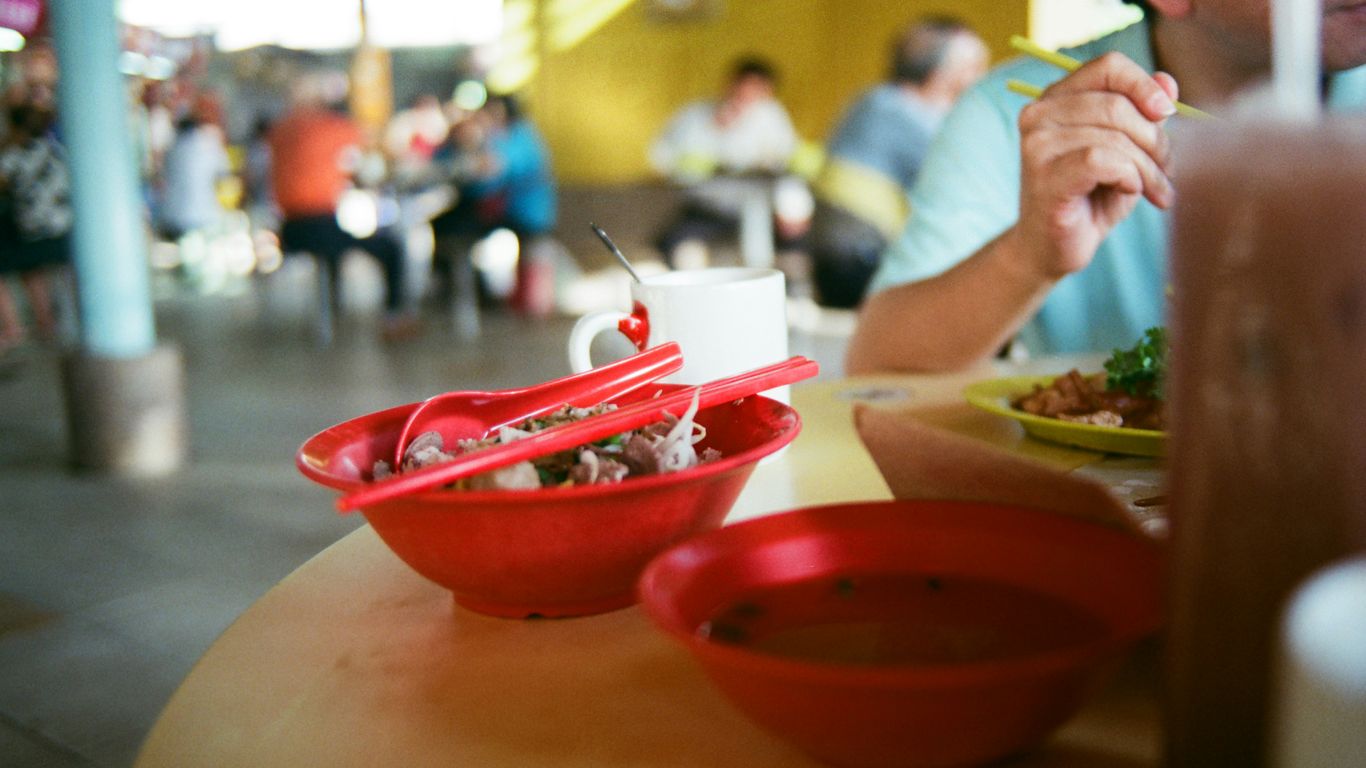
For a visitor, the range can feel dazzling. For residents, it may be more intimate: a breakfast remembered from childhood, a stall visited after work, or a dish chosen because it tastes like a particular neighbourhood. Food culture lives in those repetitions.
Chinese, Malay, Indian and Peranakan influences on one food court
Chinese, Malay, Indian and Peranakan influences are among the visible strands in Singapore’s hawker food, alongside other communities and histories. They appear in spice blends, noodles, rice preparations, breads, sweets and methods of cooking. Yet a stall’s identity is rarely contained by a single label.
Migration brought recipes and techniques; local cooks adapted them to new customers and circumstances. That layering helps explain why a single centre can hold such variety without feeling like a collection of unrelated cuisines. The shared room gives the differences a common setting.
Dishes shaped by migration, adaptation and local taste
Hawker dishes often carry evidence of adjustment. Ingredients may be substituted, sauces recalibrated and methods streamlined for a busy service. A recipe passed through several kitchens can become familiar in Singapore while retaining an echo of somewhere else.
The same principle appears in the Singapore street noodles recipe, where a dish associated with Singapore is interpreted for home cooking. It is a useful reminder that culinary identity is not frozen at the moment a recipe first arrives. It changes through use, memory and adaptation.
Why familiar classics matter alongside newer interpretations
Classics matter because they give communities a common vocabulary. They can mark a childhood, a workplace routine or a long relationship with one stall. Their value is not only nostalgic; repeated cooking preserves small decisions about texture, timing and balance.
Newer interpretations can sit alongside them without automatically weakening the tradition. A living food culture has room for experimentation, provided innovation does not erase the people, labour and histories that made the dishes meaningful. Familiarity and change are companions here, not opposites.
The rituals that turn a meal into community
Community is often easiest to see in a hawker centre before the main meal begins. Kopi orders arrive, shutters lift and regulars exchange brief greetings. Later, the same space may hold a family dinner, a solitary bowl of noodles or a group absorbed in conversation.
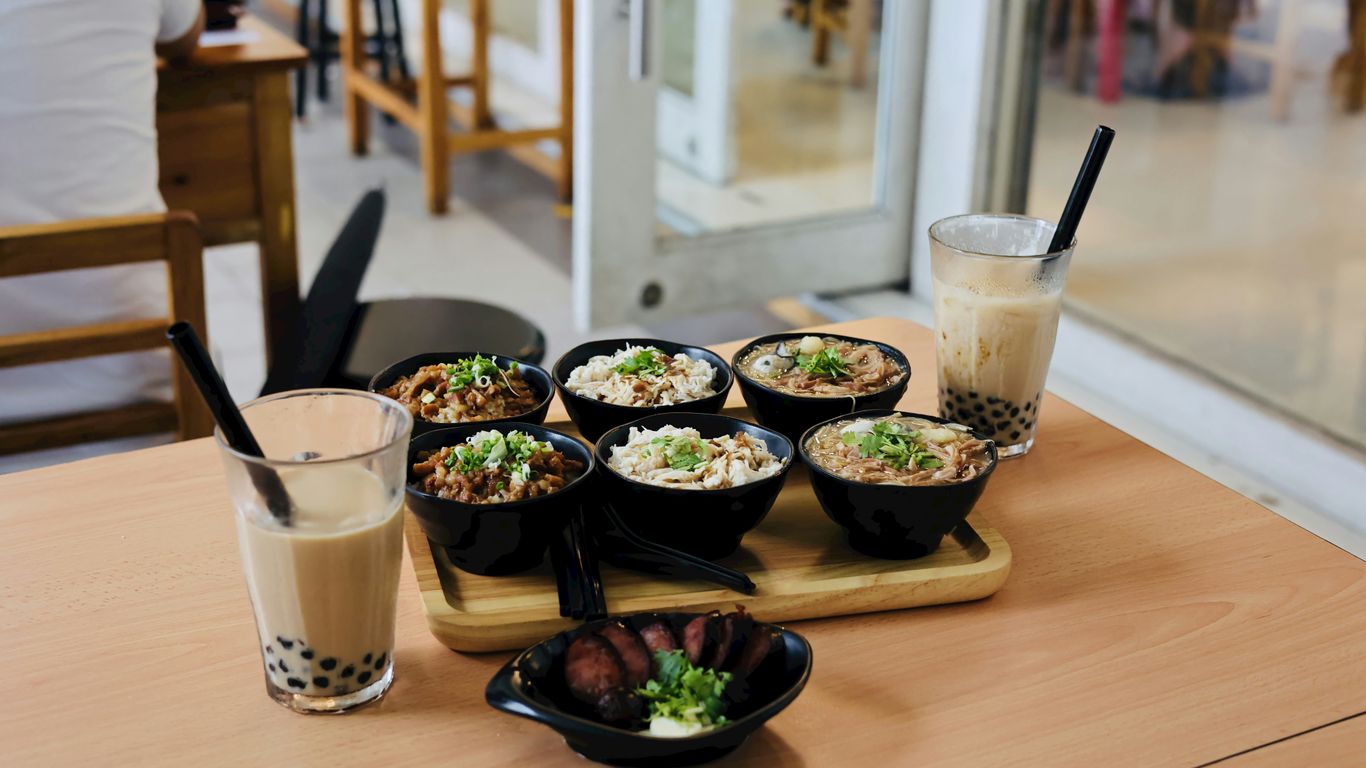
These routines are unremarkable precisely because they are repeated. They allow people to recognise a place and one another without requiring a formal community programme. The centre becomes familiar through sound, smell and timing.
Kopi, breakfast and the rhythms of daily life
Breakfast at a hawker centre can be quick or unhurried. Someone may carry a coffee back to a flat, while another person lingers over toast and conversation. The vocabulary of kopi, with its variations in milk, sugar and preparation, is part of the social texture as well as the beverage itself.
The objects matter too: cups, trays, order tabs and worn tables record countless mornings. A closer look at kopitiam objects and routines shows how material details can hold memories of migration, work and family life. They are humble archives, used until their meaning becomes almost invisible.
The unwritten etiquette of chope, tray returns and shared tables
A packet of tissues placed on a seat may signal that a table is taken, a practice widely known as chope. The gesture is simple but depends on shared understanding. So do the expectations around returning trays, clearing leftovers and making room when the centre is busy.
The etiquette is not identical everywhere, and visitors should watch before assuming. A useful set of habits is:
- Observe how nearby diners mark an occupied seat.
- Keep bags and elbows from spreading across shared tables.
- Return trays and waste according to the centre’s instructions.
- Give stall workers time during a crowded service.
These actions do not make a diner an expert, but they reduce friction. Respect is shown less through grand declarations than through attention to the room.
How strangers coexist without needing to dine together
Hawker centres allow proximity without demanding conversation. Two strangers can share a table while remaining absorbed in separate meals, newspapers or phones. That arrangement may seem minor, yet it creates a public space where difference does not have to be solved before people can sit together.
There are also livelier forms of connection: chess games, busking, children learning to choose food and neighbours exchanging news. The social life varies from centre to centre, but the underlying invitation remains broad. Everyone can enter as a customer and briefly participate in the same civic room.
The people behind the stalls
The centre’s atmosphere can make the work behind each meal easy to overlook. Customers see a plate arrive in minutes; they may not see the prep that began before dawn, the purchasing decisions, the cleaning or the years spent refining one dish. A stall is often a small business, a workplace and a family story at once.
Family recipes, apprenticeship and the passing down of skills
Knowledge travels through demonstration as much as through written recipes. A younger family member may learn how to judge heat by sound, knead by feel or season without measuring. Apprenticeship is similarly practical, built through repetition and correction during service.
This passing down keeps a dish recognisable while allowing it to respond to new conditions. It also shows why a recipe cannot be separated from the person who knows when it is ready. The skill is embodied, local and often difficult to summarise on a menu.
The long hours and physical demands of hawker work
Hawker work can involve early starts, prolonged standing, heat, lifting and relentless repetition. Service leaves little room for error, especially when a queue forms and several orders arrive together. Even a small stall requires purchasing, preparation, cooking, cleaning and administration.
The work has a physical rhythm that is easy to romanticise from the dining area. Looking at Singapore’s old trades and working skills encourages a fuller view of heritage: longevity depends on adaptation, but also on the bodies and attention that sustain a trade each day.
Why low prices do not always reflect the labour involved
Affordable food is one of the great strengths of the hawker centre, but a low price can conceal a narrow margin. Ingredients, utilities, rent, equipment and labour all press against the cost of a meal. The customer sees value; the operator must still make the numbers work.
That tension does not mean every stall should become expensive or exclusive. It does mean that diners can understand affordability as a social achievement requiring support. Patience, repeat custom and fair expectations all matter when a meal is priced for broad access.
Preserving a living culture in a changing city
Preservation becomes complicated when the culture being preserved is still working. A hawker centre cannot be treated like a display case, because its meaning depends on meals being cooked, sold and eaten. The challenge is to protect the conditions that allow ordinary practice to continue without turning it into a performance.
What UNESCO recognition can and cannot protect
UNESCO recognition has given international attention to Singapore’s hawker culture and its role in community dining. It can encourage documentation, public discussion and support for safeguarding efforts. It can also help people understand that the heritage lies in culinary practices and social relationships, not just in a list of famous dishes.
Recognition alone cannot guarantee that a stall remains viable or that younger workers will choose the trade. Heritage status is a framework for care, not a substitute for fair working conditions and thoughtful policy. The UNESCO hawker culture guide offers useful context for seeing the practice as both food heritage and urban community life.
Rising rents, ingredient costs and an ageing hawker workforce
The pressures are familiar but significant: operating costs rise, ingredients fluctuate and experienced hawkers grow older. Younger people may be reluctant to enter a demanding trade when other jobs offer different hours or clearer progression. A centre can be culturally treasured and still be economically difficult to run.
Support therefore needs to reach beyond publicity. Training, rental arrangements, succession planning and practical help with operations all affect whether a stall can continue. The future rests on making the work possible, not simply praising its results.
The tension between heritage, commercialisation and innovation
Commercial attention can bring visitors and income, but it can also simplify a living culture into a tidy image. A centre may be promoted as an experience while residents’ needs, stallholders’ knowledge and everyday affordability receive less attention. The most meaningful heritage work keeps those voices in view.
That is why SingaporeHeritage.sg treats heritage as lived through neighbourhoods, objects, food routes and community memory rather than only formal monuments. Its approach is a reminder that documentation should be ethical, credited and connected to the people who carry the knowledge.
How the shared dining room is finding its future
The future of hawker culture will not be secured by nostalgia alone. It will depend on whether the next generation can enter the trade, whether customers continue to value shared spaces and whether technology serves the centre without flattening its character. Change is already part of the tradition.
Training schemes and new routes into hawker careers
Training can make entry into hawker work less daunting by combining practical skills with business knowledge. New routes might include apprenticeships, supported incubation, partnerships with schools or gradual succession within family stalls. The aim should be to respect established expertise while giving newcomers a realistic way to learn.
Community organisations and educational institutions also have a role in recording techniques and stories. Singapore Heritage takes a related public-facing approach through story-led experiences and gifts rooted in neighbourhoods, foodways, objects and everyday practices. Such work can complement, rather than replace, the living work of hawkers.
Digital ordering, delivery platforms and changing customer habits
Digital ordering can make meals easier to access, particularly for people with limited time or mobility. Delivery also changes the relationship between stall and dining room: food travels away from the shared tables, while orders become more mediated by screens and systems.
The convenience is real, but it should not make the physical centre disappear from public life. Customers still need places to meet, eat and observe the work behind the meal. A balance between access and presence will shape how the shared dining room remains socially useful.
What diners can do to support Singapore’s hawker culture responsibly
Diners have influence through ordinary choices. They can return regularly to less celebrated stalls, allow workers time to prepare food and avoid treating the centre as a stage set. They can also learn a little about local etiquette before arriving.
A thoughtful visit might include:
- Choosing a stall because of its craft, not only its online visibility.
- Paying attention to the people and routines behind the food.
- Keeping shared seating available during busy periods.
- Supporting reasonable prices while recognising the labour involved.
These choices are modest, but culture is sustained through modest choices repeated over time. Visitors who want a more contextual experience can book a heritage walk that approaches neighbourhood stories with attention to place and community.
Walk the Foodways
For readers who want to encounter these stories on foot, Singapore heritage tours offer story-led routes through neighbourhoods, foodways and old trades, connecting a meal with the people and places around it.
Conclusion
Singapore’s hawker centre became a shared dining room because planning, migration, skilled work and everyday courtesy met in one accessible space. Its future will be strongest when preservation remains practical and human: supporting hawkers, respecting residents and allowing the culture to keep changing without losing its memory.
Frequently Asked Questions
What is Singapore hawker culture?
Singapore hawker culture is the living tradition of preparing and eating affordable food in shared hawker centres, shaped by multiple communities and embedded in everyday urban life.
Why are hawker centres important to Singapore?
They provide accessible meals while also functioning as social spaces where people from different backgrounds can share tables and routines.
How did hawker centres develop?
They developed from earlier street-food practices, with hawkers later moved into organised centres as Singapore’s population, infrastructure and public-health needs changed.
What kinds of food are found in hawker centres?
Menus commonly include dishes influenced by Chinese, Malay, Indian, Peranakan and other culinary traditions, often adapted to local ingredients and tastes.
What does chope mean?
Chope is an informal Singaporean term for reserving a seat, often by placing a small personal item such as a packet of tissues on the table.
Is hawker culture only about food?
No. It also includes craft knowledge, family and apprenticeship traditions, shared dining etiquette, neighbourhood relationships and the social life of the centres.
How can visitors support hawker culture?
Visitors can eat respectfully, follow local etiquette, return trays where required, support a range of stalls and recognise the labour involved in keeping affordable food available.
Key Takeaways
Little India is best understood at walking pace, with its museum, temples, shops, kitchens and residents read as parts of one living neighbourhood.
- The Indian Heritage Centre offers a useful starting point for understanding Indian migration and settlement in Singapore.
- Serangoon Road and its side streets preserve memories of trade, craft, worship and family enterprise.
- Temples and food businesses remain active places of faith, gathering and cultural expression.
- Community stories add the everyday detail that formal landmarks cannot provide on their own.
- Respectful, unhurried visits help support the neighbourhood as a lived heritage district.
Start with the Indian Heritage Centre Singapore
The Indian Heritage Centre Singapore makes a thoughtful first stop before a walk through Little India. Its galleries place migration, settlement and community life within a wider South Asian story, giving visitors a frame for what they will later notice outdoors. From there, the streets become less a collection of colourful façades and more a connected record of work, belief and belonging.
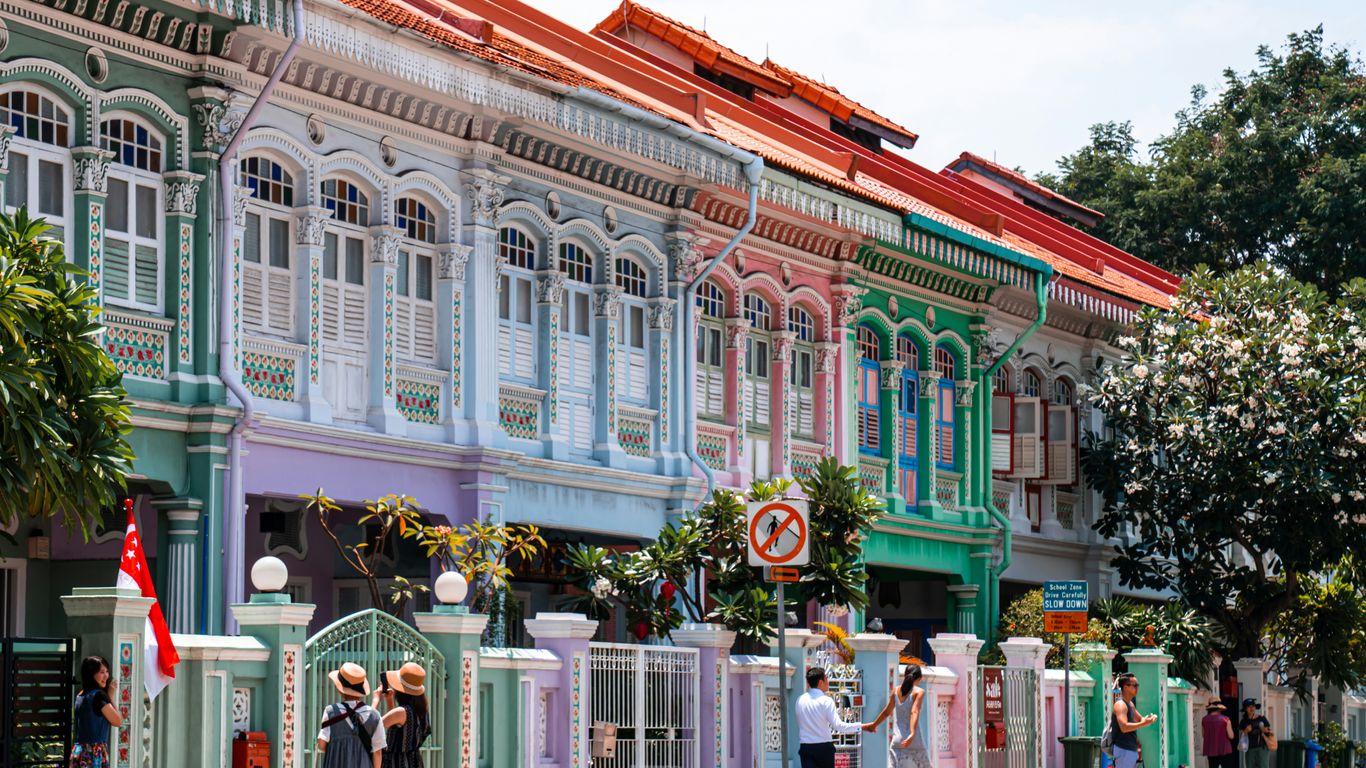
How the galleries frame Indian migration and settlement
The galleries trace the history of Indian and South Asian communities in Southeast Asia, including the movement of people and ideas across the region. The permanent exhibition, Indians in Singapore: Past & Present, helps visitors consider how early arrivals built lives through commerce, labour, religion and social organisation. That context matters in Little India, where the past is still visible in ordinary shopfronts and daily routines.
The communities and regions represented in the collections
The collections present Indian heritage as diverse rather than singular. Regional identities, languages, faiths, clothing, adornment and domestic objects all point to the variety within Indian and South Asian communities. Visitors may find it useful to carry that sense of plurality into the streets, where different traditions sit close together without becoming interchangeable.
What to look for in photographs, objects and oral histories
Photographs can reveal people at work, in family groups or in changing urban settings, while objects give a more tactile sense of movement and memory. Oral histories add voices and small details that a timeline alone might miss. A visitor interested in how ordinary people shaped the city can also browse these everyday Singapore stories, which offer a wider lens on workers, families and community networks.
Planning a visit around exhibitions, programmes and nearby sites
The centre is at 5 Campbell Lane and is open from 10am to 6pm, closing on Mondays; Singapore citizens and permanent residents receive free admission. Checking current exhibition and programme information before setting out leaves more time for the surrounding temples and shophouses. Readers following different research threads may also find a Longmont SEO guide, a solar orientation guide, a pain relief guide, a Histamine intolerance guide and Singapore Street Noodles among the wider site material, though they sit outside this heritage itinerary.
Trace Little India’s historic trades and working life
Little India’s commercial character grew from work as much as from architecture. Cattle, spices, textiles, jewellery, food and religious goods each brought skills, suppliers and customers into the district. The result is a neighbourhood where a walk can move quickly from a polished retail frontage to a shop still organised around practical knowledge.
From cattle trade and spice businesses to modern retail
The area’s earlier cattle trade and spice businesses shaped its working identity, even as the original activities have changed or disappeared. Modern retail has not erased that history; it has layered new uses over old routes of supply, service and exchange. The most revealing details are often modest ones: sacks, scales, handwritten signs, or a counter arranged for repeat customers.
The role of Serangoon Road and its side streets
Serangoon Road is the district’s familiar spine, but its side streets often provide the quieter clues. Campbell Lane, Kerbau Road and the lanes around the temples show how worship, food, residence and commerce overlap. A slower route, rather than a straight march between landmarks, gives the neighbourhood’s working rhythm time to appear.
Traditional crafts, textiles, goldsmiths and religious goods
Textiles and gold jewellery speak to ceremony, family milestones and the continuing importance of skilled retail. Religious goods connect shops to active forms of worship, while tailoring and repair work reveal the knowledge involved in adapting things for particular people. The wider old trades archive is useful for thinking about such work as living practice, sustained through community use rather than age alone.
How family-run businesses preserve commercial memories
A family business may preserve memory through a recipe, a display case, a familiar supplier or the way a younger generation has updated the shop. These places are not museum sets: they are workplaces, and their owners decide what can be shared. A courteous question, a purchase and attention to the answer can be more meaningful than treating the premises as a backdrop.
Read the neighbourhood through its temples and sacred spaces
Little India’s temples are active religious places, not simply architectural stops. Their towers, courtyards, shrines and ritual objects carry histories of migration while continuing to serve worshippers today. Together with Buddhist and other sacred spaces nearby, they show how the neighbourhood’s identity has always been broader than one community or one tradition.
Sri Veeramakaliamman Temple and the heart of Serangoon Road
Sri Veeramakaliamman Temple stands prominently along Serangoon Road and is closely associated with the district’s Tamil Hindu presence. Its ornament and ritual life draw attention, but the deeper story lies in its continuing use by devotees and families. Visitors should watch quietly from appropriate areas and allow worshippers to set the pace of the space.
Sri Srinivasa Perumal Temple and Singapore’s Vaishnavite heritage
Sri Srinivasa Perumal Temple offers another perspective on Hindu practice in Little India, with its Vaishnavite traditions and distinctive visual language. It reminds visitors that Indian heritage includes different theological lineages and ceremonial forms. The temple is best approached with patience, especially during prayer times or festival preparations.
Sakya Muni Buddha Gaya Temple and Little India’s wider faith landscape
Sakya Muni Buddha Gaya Temple adds a Buddhist presence to the neighbourhood’s religious geography. Its large Buddha image and devotional atmosphere sit within the same urban fabric as the Hindu temples, shops and eateries. This proximity is one of Little India’s most telling features: different forms of faith share streets shaped by everyday movement.
Customs, festivals and respectful temple etiquette
Temple etiquette is simple but deserves care. Visitors can dress modestly, remove shoes where required, avoid blocking entrances and ask before photographing people or ceremonies. During festivals, crowds may change the usual flow, so the considerate visitor follows instructions rather than assuming that a striking ritual is available for observation.
Explore Little India through its food heritage
Food gives Little India an especially immediate way into history. A banana-leaf meal, a sweet bought for a festival or the scent of toasted spices can connect the visitor to regional traditions and migration routes. Eating here is not merely a pause between sights; it is one way the neighbourhood remembers itself.

Banana-leaf meals, South Indian staples and regional traditions
Banana-leaf meals and South Indian staples reflect culinary traditions that have travelled, adapted and settled in Singapore. Rice, vegetables, breads, lentils and spice blends may look familiar while differing from one kitchen to another. The unhurried format of the meal encourages attention to texture, sequence and the social ease of eating together.
North Indian, Muslim Indian and migrant food influences
Little India’s food heritage is not confined to one region. North Indian cooking, Muslim Indian traditions and later migrant influences sit alongside South Indian fare, creating a varied food map within a compact district. Menus, languages and cooking methods reveal connections that are sometimes easier to taste than to explain.
Spices, sweets and ingredients that tell a story
Spice shops and sweet counters make culinary history visible through colour, scent and arrangement. Ingredients may point towards home cooking, religious observance, hospitality or seasonal celebration. Taste is a form of listening here, provided the visitor remains curious about the people and labour behind what is being served.
How eateries, markets and hawker stalls carry culinary memory
Restaurants, markets and hawker stalls hold memory through repeated practice: a dish prepared in much the same way, a regular customer greeted by name, or a counter that has become part of someone’s weekly route. Singapore Heritage’s food heritage walks take this kind of story-led approach across the island, connecting food with the people and places around it. In Little India, the best meal is often the one that leaves a visitor more attentive to the street outside.
Listen to the community stories behind the streets
The strongest account of Little India includes the people who have lived, worked, studied and worshipped there. Official histories can establish dates and names, but memories supply the texture: where children waited, which shop stayed open late, or how a family made a room serve several purposes. These details keep heritage from becoming purely decorative.
Early migrants, families and changing ideas of home
Early migrants often built belonging through associations, places of worship, food and mutual support. For families, home could mean a rented room, a shop above a business or a network spread across several streets. Those changing arrangements help explain why Little India feels both rooted and mobile.
Women’s work, domestic life and informal community networks
Women’s work was central to domestic life, family businesses and informal networks of care, even when it was less visible in public accounts. Shopping, cooking, sewing, childcare and religious participation all helped maintain connections across households. Listening for these histories broadens the story beyond prominent men, institutions and shop signs.
Workers, students and newer generations in the neighbourhood
Workers, students and younger residents continue to reshape the meaning of the district. Some arrive temporarily, while others inherit businesses, memories or family obligations tied to the area. Their presence shows that living heritage is continually made, not simply carried forward unchanged.
Oral histories, street names and memories of everyday Little India
Street names can suggest old trades or communities, but personal recollections show how those places actually felt and functioned. Singapore Heritage’s community work includes oral histories, neighbourhood story calls and programmes that invite people to share photographs, recipes and shop memories. The community archive reflects that principle: heritage grows when residents are credited as knowledge holders.
Follow a heritage walk through Little India
A walk through Little India works best as a sequence of connected observations rather than a race to collect landmarks. Starting indoors at the Indian Heritage Centre gives the route historical depth, while Serangoon Road supplies the movement, colour and sound of present-day life. Singapore Heritage’s walking routes similarly centre local storytellers and the names behind shopfronts.
A practical route from the Indian Heritage Centre to Serangoon Road
A practical route can begin at the centre on Campbell Lane, continue towards the nearby temples, and then open onto Serangoon Road. From there, a visitor can turn into side streets before returning to the main road for food or further browsing. The route should remain flexible, since temple activity, shop hours and weather may alter the day’s rhythm.
Historic landmarks to notice between temples and shophouses
Between the major stops, attention can settle on shophouse proportions, tiled façades, sign lettering, covered walkways and the relationship between upper-floor homes and ground-floor businesses. These features are not isolated details; they show how commerce and domestic life shared a narrow urban footprint. Plaques help, but the continuity of use often tells the richer story.
Where to pause for food, photographs and local context
A pause is most useful when it allows the visitor to eat, observe and reflect without obstructing work or worship. Food streets, temple edges and quieter corners can each offer a different view of the district. A short rest also creates room for a conversation, which may reveal more than another hurried photograph.
Adapting the walk for heat, crowds and accessibility
Singapore’s heat and sudden rain make shade, water and sensible footwear part of the heritage plan. Visitors with mobility needs can choose shorter stretches, check step-free access in advance and use public transport links to break the route into manageable sections. For a broader approach to planning routes around weather, access and opening hours, this heritage walking guide offers useful general advice.
Understand how Little India’s heritage is changing
Change is visible in every living neighbourhood, and Little India is no exception. Conservation can protect façades and streetscapes, but heritage also depends on affordable space, active businesses, residents and the freedom to practise faith and culture. The question is not whether the district should change, but how its changing life is understood and respected.
Conservation of shophouses and the pressures of redevelopment
Conserved shophouses retain valuable architectural character, yet a façade alone cannot preserve the work and relationships once held inside it. Redevelopment pressures can affect rents, business continuity and the mix of residents. A meaningful approach therefore considers buildings together with the people and practices that give them purpose.
Festivals, tourism and the balance between living culture and display
Festivals can bring attention and energy, while tourism can help businesses remain viable. At the same time, crowded rituals or staged-looking encounters can flatten a living culture into a performance for outsiders. Visitors can help maintain balance by following restrictions, avoiding intrusive photography and remembering that worshippers and workers are not attractions.
How businesses and residents shape the area’s future
Shopkeepers, tenants, religious institutions, community groups and residents all influence what remains possible. Their decisions may involve changing a menu, modernising a shop, teaching a craft or making space for a new generation. Singapore Heritage’s story-led approach treats heritage as lived rather than locked away, a useful reminder that continuity can include adaptation.
Ways visitors can support respectful, community-minded heritage tourism
Visitors can support the area through ordinary, considerate choices:
- Buy from local businesses when the purchase is welcome and practical.
- Follow temple rules and ask before recording people or ceremonies.
- Choose guides and stories that credit residents, makers and practitioners.
- Share observations without revealing private details or treating workplaces as exhibits.
These actions keep curiosity connected to responsibility. Readers who want a guided experience can book a local walk built around story and place, rather than simply moving between photo stops.
Plan a More Meaningful Visit
Little India rewards visitors who leave room for conversation, appetite and quiet observation. A small-group walk can help connect the museum, temples, businesses and memories without asking the neighbourhood to perform. Singapore Heritage creates heritage walks and storytelling experiences rooted in Singapore’s neighbourhoods, foodways, objects, places and everyday practices; its gifts are designed to help people carry those stories home.
Conclusion
Little India is a place where migration, work, worship, food and family memory remain close to the surface, and a thoughtful visit allows those layers to be felt without reducing them to a display.
Frequently Asked Questions
What is the Indian Heritage Centre Singapore?
It is a museum in Little India that traces the history of Indian and South Asian communities in Southeast Asia, including the permanent exhibition Indians in Singapore: Past & Present.
How long should visitors spend in Little India?
Around half a day allows time for the heritage centre, one or two temples, a meal and a slower look at the surrounding streets. A full day suits visitors who want to browse shops and spend longer with exhibitions or food.
Which temples can visitors see in Little India?
Notable places include Sri Veeramakaliamman Temple, Sri Srinivasa Perumal Temple and Sakya Muni Buddha Gaya Temple. Each represents a different part of the neighbourhood’s religious landscape.
Is Little India suitable for a self-guided walk?
Yes. The district is compact and walkable, though visitors should check opening hours, plan for heat and allow flexibility around worship and festivals.
What food is Little India known for?
Visitors can find South Indian staples, banana-leaf meals, North Indian cooking, Muslim Indian dishes, sweets and a wide range of spices and ingredients.
How should visitors behave in temples?
They should dress modestly, remove shoes where required, follow signs, avoid blocking entrances and ask before taking photographs. Ritual spaces should be treated as active places of worship.
How can visitors support Little India’s heritage?
They can buy thoughtfully from local businesses, choose respectful guides, listen to community voices and avoid intrusive photography or behaviour that disrupts work and worship.
Key Takeaways
Singapore heritage food is a record of migration, adaptation and everyday ingenuity. Each dish carries the imprint of a community, while hawker centres and kopitiams keep those stories in motion.
- Hainanese, Teochew, Hokkien, Malay, Indian Muslim and Peranakan traditions all shape Singapore’s food culture.
- Familiar dishes often reflect exchange rather than a single point of origin.
- Hawker stalls, kopitiams and neighbourhood eateries are living heritage spaces.
- Food is best understood alongside the streets, trades and communities that sustain it.
- Eating thoughtfully can become a way of listening to Singapore’s layered history.
1. Hainanese chicken rice and Singapore’s Hainanese community
Hainanese chicken rice is one of Singapore’s most recognisable dishes, but its story is less about a fixed recipe than about migration and adaptation. Hainanese migrants arrived as cooks, stewards and domestic workers, bringing culinary habits from southern China and developing new versions in Singapore’s kitchens. The poached chicken, fragrant rice, chilli sauce and ginger paste are now familiar far beyond the community that helped establish the dish.
The rice is often treated as the quiet star. It is cooked with stock, aromatics and rendered chicken fat, so every spoonful carries more flavour than its plain appearance suggests. The chicken itself may be poached until tender, then cooled and sliced, while the sauces provide heat, sharpness and lift. Texture is part of the memory: soft meat, glossy rice and a clean broth create a meal that feels both carefully made and wonderfully ordinary.
At a hawker centre, the dish also reveals how a migrant trade became part of a shared national food vocabulary. Families debate the best stall, regulars notice small changes in seasoning, and younger cooks inherit technique through work rather than formal instruction. That continuity is central to understanding singapore heritage food: its meaning sits not only in ingredients, but in the people who repeat, adjust and pass on a practice.
2. Katong laksa and Peranakan culinary traditions
Katong laksa belongs to the richly spiced world of Peranakan cooking, shaped by the long meeting of Chinese and Malay worlds in the archipelago. Its broth is creamy, aromatic and warm with dried chillies, coconut milk, belacan and herbs. The noodles are traditionally cut into shorter lengths, making the dish easy to eat with a spoon rather than chopsticks.
The flavour is layered rather than simply hot. Lemongrass, galangal, turmeric and shrimp paste give the broth depth, while cockles, fish cake and prawns add different kinds of savouriness. Peranakan food often asks for patience: spice pastes are pounded, fried and balanced until their raw edges soften. That labour is part of the dish’s cultural meaning, especially in households where recipes were taught by watching and helping.
Katong and Joo Chiat offer a useful setting for reading this history because food sits beside colourful tiles, shophouses, churches and family businesses. A Joo Chiat-Katong heritage guide helps place culinary traditions within that wider neighbourhood story, including trade, architecture and adaptation. The bowl is not a museum piece; it changes with cooks and customers, while still carrying a recognisable Peranakan sensibility.
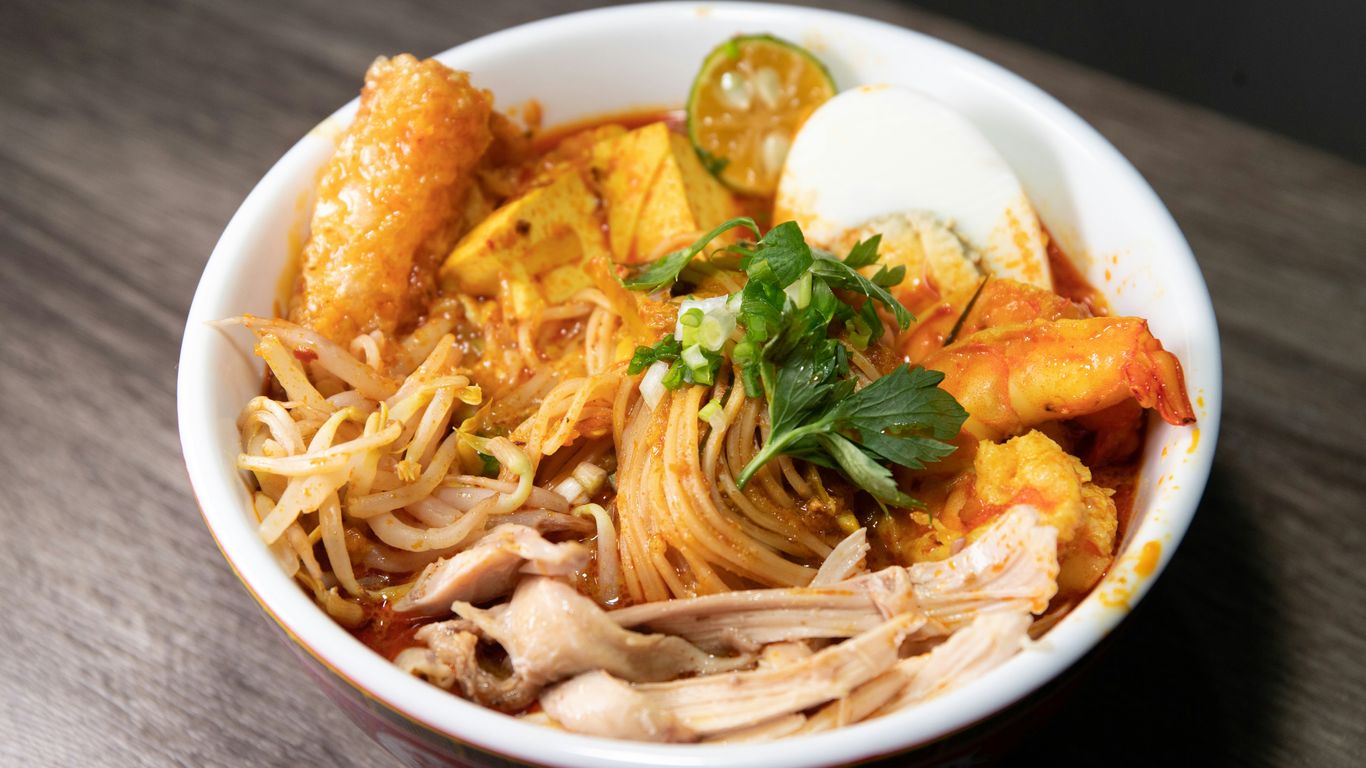
3. Nasi lemak and Malay heritage
Nasi lemak is built around coconut rice, but its character comes from the company it keeps. Sambal, fried anchovies, peanuts, cucumber and egg create a balance of heat, salt, crunch and freshness. It may appear as breakfast, a wrapped takeaway meal or a more elaborate plate, and that flexibility reflects its place in everyday Malay foodways.
The dish’s roots extend across the Malay Peninsula and the wider archipelago, where coconut, rice and sambal form an enduring culinary grammar. In Singapore, nasi lemak has travelled across neighbourhoods and into many kinds of eateries. Additions such as fried chicken, fish or otah may vary, but the coconut rice and sambal usually anchor the meal.
Its heritage is also social. A banana-leaf parcel eaten before school, a family breakfast prepared at home, or a plate shared after evening prayers can hold as much cultural weight as a formal celebration. The dish shows how Malay heritage remains present through routine, and how a food becomes widely loved without losing the histories that shaped it.
4. Roti prata and Singapore’s Indian Muslim community
Roti prata is a flaky, pan-fried flatbread associated with Singapore’s Indian Muslim community and with the broader South Asian food traditions that travelled through the port. Dough is stretched, folded and cooked on a hot griddle until the outside is crisp while the inside stays tender. It is commonly served with dhal or curry, though sweet and filled versions have become part of the local repertoire too.
The preparation is a small performance of skill. A prata maker works quickly, turning a ball of dough into a thin sheet before folding it into layers. The result is rich without needing an elaborate presentation. It is food for late nights, quick breakfasts and animated tables, often eaten with the hands and accompanied by teh tarik or a cooling drink.
The dish also belongs to a living network of eateries, mosques, markets and family businesses. Singapore Heritage approaches such places through immersive tours and story gifts, connecting neighbourhood experiences with researched objects and community histories. That perspective matters because prata is not merely a popular flatbread; it is part of the working life and social fabric of the streets where it is made.
5. Satay and Malay, Javanese and Arab influences
Satay is instantly recognisable: skewers of marinated meat grilled over charcoal and served with peanut sauce, cucumber and onion. Yet its history is made from several currents. Malay and Javanese cooking traditions, Muslim foodways and the movement of traders through the region all helped shape the dish as it is known in Singapore.
Charcoal gives satay its particular fragrance, creating a lightly smoky edge around the sweet, savoury marinade. The peanut sauce brings roasted richness, while the raw accompaniments keep the plate from becoming heavy. Beef, chicken and mutton may appear in different settings, with choices sometimes reflecting religious practice as well as personal preference.
Satay is especially revealing when eaten in a group. Skewers arrive in batches, hands reach across the table, and the meal encourages conversation rather than ceremony. At historic food halls and neighbourhood stalls, the dish connects present-day dining with the port’s older patterns of movement. Hawker culture has become recognised as intangible heritage, but its life still depends on cooks, suppliers, regulars and the shared spaces around them.
6. Char kway teow and the Teochew community
Char kway teow is a dish of flat rice noodles and yellow wheat noodles stir-fried with dark soy sauce, bean sprouts, egg, seafood and sometimes Chinese sausage. Its name refers to fried rice cake strips, while its technique belongs to the fast, intense rhythm of the wok. The cook must control heat, timing and moisture so the noodles gain wok hei without turning greasy or broken.
Teochew migrants and other Chinese communities contributed to the dish’s development in Singapore, where ingredients and cooking methods shifted with availability. Cockles may bring a briny sweetness, while lard or oil gives the noodles their familiar depth. Different stalls protect different balances of sweetness, smoke and savouriness, and regular customers often have strong views about each one.
A simple comparison helps show how the dish changes without losing its core identity. These elements are not a fixed rulebook, but common points of attention when a diner watches a plate being made.
| Element | What it contributes | What to notice |
|---|---|---|
| Flat rice noodles | Softness and body | Whether they remain intact |
| Dark soy sauce | Colour and savoury sweetness | How evenly it coats the noodles |
| Bean sprouts | Freshness and crunch | Whether they retain some bite |
| Wok heat | Toasted, smoky fragrance | A dry, lively finish rather than wetness |
The table also explains why char kway teow is difficult to reduce to a list of ingredients. Much of its character comes from sequence: what enters the wok first, how quickly it is tossed and when the sauce is added. That practical knowledge, learned over years, is one reason hawker food belongs to the history of work as much as to the history of taste.
7. Bak kut teh and Singapore’s Teochew heritage
Bak kut teh is a peppery pork rib soup closely associated with Teochew foodways in Singapore. The name is often translated as “meat bone tea”, although the bowl is a broth rather than a tea in the usual sense. Pork ribs simmer with garlic, white pepper and other seasonings until the soup is fragrant and the meat loosens from the bone.
Singapore’s version is commonly lighter and more pepper-forward than some darker herbal styles found elsewhere. That clarity makes the pepper especially noticeable, warming the throat without overwhelming the pork. The meal is often accompanied by rice, dough fritters and Chinese tea, which cuts through the richness and turns the soup into a complete, unhurried ritual.
The dish carries the memory of labour and migration. It has long suited workers who needed a sustaining meal, and its communal presentation makes it natural for family tables as well. A bowl of bak kut teh can therefore point towards Teochew identity while also showing how food crosses class, generation and neighbourhood.
8. Kaya toast and Hainanese kopitiam culture
Kaya toast is a modest combination of toasted bread, coconut-and-egg kaya, butter and often soft-boiled eggs with dark soy sauce and pepper. Its setting is as important as its ingredients. In a kopitiam, coffee is brewed to order, cups move across tiled counters and breakfast becomes a daily exchange between stallholders and regulars.
Hainanese cooks played a significant role in shaping Singapore’s early coffee-shop culture, adapting their skills to the needs of a growing urban population. Kopitiam food is economical, quick and precise. The toast should crackle lightly, the butter should soften against the warm kaya, and the coffee should have the roasted bitterness that makes the sweet spread feel balanced.
The objects around the meal matter too: enamel cups, metal spoons, old order slips and familiar tables. A kopitiam objects archive explores how such ordinary things record migration, work and routine. Kopitiams are not identical to hawker centres, but both provide spaces where food heritage stays active through repeated use rather than occasional display.
9. Popiah and Hokkien and Peranakan traditions
Popiah is a fresh spring roll made with a thin wheat wrapper and a filling of cooked turnip, bean sprouts, tofu, egg, peanuts, lettuce and sauces. The ingredients are layered rather than fried, so the roll feels soft, juicy and textural. Each bite can be slightly different depending on where the sweet sauce, chilli and crushed peanuts sit.
The dish is linked with Hokkien traditions and has also become part of Peranakan food culture in Singapore. Preparing it for a gathering is often collaborative: one person spreads the wrapper, another adds the filling, and diners may customise their own rolls. The act of assembly creates a gentle social rhythm, with conversation happening around the open ingredients.
Popiah also shows that heritage can be seasonal and domestic. It appears at celebrations, family visits and communal occasions, where the work of preparation is shared rather than hidden. The recipe may look simple on paper, yet the judgement involved in cooking the turnip, balancing sauces and rolling without tearing is learned through practice.
10. Fish head curry and Singapore’s Indian community
Fish head curry is a Singapore dish born from culinary exchange. Indian cooks adapted the use of fish head to local tastes and ingredients, combining a spice-rich curry with vegetables such as okra and aubergine. The result is generous and communal, usually served in a large vessel from which diners help themselves.
The fish head brings gelatinous texture and a depth that differs from fillets, while tamarind or other souring ingredients keep the curry lively. Its flavour may range from fiery to gently tangy depending on the kitchen. What matters is the conversation between Indian spice techniques and ingredients familiar across Chinese, Malay and wider Southeast Asian cooking.
That exchange makes fish head curry a useful reminder that Singaporean food does not always fit neat ethnic categories. Dishes can be made by one community, enjoyed by many and altered by each generation. Singapore’s food culture offers wider context for this kind of culinary tapestry, in which trade and migration are tasted through everyday meals.
11. Nasi biryani and the city’s Indian Muslim heritage
Nasi biryani is a rice dish of South Asian origin that became deeply rooted in Singapore’s Indian Muslim food culture. Long-grained rice is cooked with spices, stock and meat or vegetables, producing a fragrant dish in which each grain should remain distinct. It is often served with curry, achar and a cooling side, creating a plate of contrasts.
Different biryani traditions can be found across the city, shaped by family histories, regional preferences and the ingredients available to each kitchen. Some versions are richly coloured, while others are pale and aromatic. The meal is closely tied to festive gatherings, religious occasions and the commercial life of eateries around areas such as Kampong Gelam and Little India.
When visitors or residents want to explore the foodways around such dishes, a route through historic neighbourhoods can offer useful context. A small group might notice these details along the way:
- The relationship between eateries, markets and places of worship.
- The spices and ingredients displayed in shops and stalls.
- The languages, signs and family names that mark a street’s history.
- The ways recipes change while remaining recognisable to regulars.
Those observations turn a meal into a wider act of attention. Singapore Heritage creates small-group heritage walks across the island, including routes focused on neighbourhoods, food and local history. The value lies in connecting a plate of biryani with the people and places that give its fragrance a setting.
12. Chwee kueh and Singapore’s Teochew foodways
Chwee kueh consists of steamed rice cakes topped with preserved radish, usually called chai poh, and served with chilli. The cakes are soft and slightly springy, while the topping is salty, savoury and finely chopped. It is a breakfast or snack that rewards attention to proportion: too much topping overwhelms the rice, while too little leaves the dish flat.
The food is associated with Teochew communities and with the wider tradition of inexpensive steamed snacks sold in markets and hawker centres. Its ingredients are humble, but its preparation depends on repetition. The batter must steam evenly, and the preserved radish must be fried until aromatic without becoming bitter.
Chwee kueh makes a fitting final dish because it shows heritage at its most everyday. It does not need a grand setting to carry memory; a familiar stall, a paper packet and the first warm bite can be enough. For those who want to keep following these connections, foodways and old trades offers a way to see how meals sit alongside work, tools and neighbourhood routines. That is the enduring lesson of singapore heritage food: it is made visible through ordinary acts, repeated by people who know why they matter.
Walk Singapore’s Stories
Readers who want to encounter these histories beyond the plate can join Singapore Heritage for a story-led walk through the island’s neighbourhoods, food routes and everyday places. Its researched gifts also offer a considered way to carry a local story home, with objects connected to makers and community memory. Plan a heritage walk when a slower, more attentive view of Singapore would add meaning to the meal.
Conclusion
Singapore’s heritage dishes are living records of movement, ingenuity and belonging. From chicken rice and kaya toast to laksa, biryani and chwee kueh, each one links flavour with a community’s work and memory, while hawker centres, kopitiams and family kitchens keep the stories changing in useful, human ways.
Frequently Asked Questions
What is Singapore heritage food?
Singapore heritage food refers to dishes, cooking methods and eating practices shaped by the island’s communities, migration histories and shared public spaces. It includes both widely recognised dishes and everyday foods whose stories are carried through families, stalls and neighbourhood routines.
Which communities have influenced Singaporean cuisine?
Malay, Chinese, Indian, Indian Muslim, Peranakan and Eurasian communities have all contributed to Singapore’s food culture, alongside influences from the wider Malay Archipelago and global trading networks. Many dishes reflect exchange between several traditions rather than a single origin.
What is the difference between a hawker centre and a kopitiam?
A hawker centre is generally a larger shared food complex with many independent stalls, while a kopitiam is a coffee shop traditionally centred on drinks and a smaller range of meals. The two may overlap in function, but their histories, layouts and daily rituals are distinct.
Why is chicken rice associated with the Hainanese community?
Hainanese migrants became well known for cooking and service work in Singapore, and they helped establish local versions of chicken rice. The dish has since travelled widely and belongs to Singapore’s shared food culture, even as its Hainanese associations remain important.
What makes Peranakan food distinctive?
Peranakan food often combines Chinese culinary influences with Malay and Southeast Asian ingredients, techniques and flavour profiles. Spice pastes, coconut, seafood and careful preparation are common features, although recipes vary greatly between families and regions.
Where can visitors learn more about Singapore’s food heritage?
Visitors can begin at hawker centres, markets, kopitiams and historic neighbourhoods, taking time to observe the people and routines around the food. Guided walks, community archives and conversations with stallholders can add context that a dish alone cannot provide.
How should diners approach traditional food respectfully?
Diners can support small businesses, follow the customs of each venue, avoid treating working neighbourhoods as backdrops and ask before photographing people or stalls. Curiosity is welcome when it is paired with patience, credit and respect for residents and makers.
Food, repair workshops and working memory sit side by side in one of Singapore’s most layered everyday places.
Key summary
- Alexandra Village was planned so motor repair, housing, shops and everyday food could coexist.
- Work began in 1978 on Singapore’s first motor-repair “village”.
- Today, nine blocks of single-storey terrace workshops stand at 1001–1010 Bukit Merah Lane.
- Eat first, then walk the public edges to see how lunch follows the rhythm of repair work.
- Do not obstruct businesses, enter workshops uninvited or photograph workers without permission.
- The story is about recognising skilled work and practical knowledge while they remain in use.

Image 1: Food in the foreground, repair work across the lane.
Lunch within earshot of a workshop
Sit near the open edge of Alexandra Village Food Centre and lunch arrives with an unusual background. A spoon touches a bowl. A drinks seller calls an order. Beyond the tables, a roller shutter is open and a car is raised above a workshop floor. The sounds do not cancel one another. They form the working register of the place.
Alexandra Village should not be approached as a list of famous dishes followed by separate historic facts. Its significance is spatial. Food, repair and residential life were put close together, and that relationship can still be read at walking speed. A mechanic can cross for coffee; a customer waiting for a vehicle can eat nearby.
The food centre is officially listed as Block 120 Bukit Merah Lane Food Centre, also known as Alexandra Village Food Centre. Around it, workshop doors reveal lifts, tyres, tools and shelves arranged for daily use. These are not museum displays; they are evidence of work continuing in real time.
Heritage may be present before anyone labels it. Here, it survives in a route taken at noon, a tool returned to the same drawer and workers moving from a repair bay to a hawker table.
A village deliberately built for repair
According to the National Library Board’s Singapore Infopedia history of Alexandra, work started in 1978 on Singapore’s first motor-repair “village”. The site had previously been a kampong associated in local memory with British servicemen. The new development combined workshops and shophouses selling motor accessories with flats, eating houses and food stalls for residents and workers.
Food was not an ornamental addition to the industrial area; eating places were part of its operating system. Repair businesses needed vehicle access, suppliers, customers and workers. Those people needed affordable meals and places to pause. Nearby housing made Alexandra Village both a productive landscape and an everyday neighbourhood.
The industrial component remains legible. JTC’s current Alexandra Village Industrial Estate listing identifies nine blocks of single-storey terrace workshops at 1001–1010 Bukit Merah Lane. The units provide ground-floor and front-of-house vehicular access and are designated for motor-related trades. JTC also describes Alexandra Village Food Centre and ABC Brickworks Hawker Centre as neighbouring amenities rather than unrelated destinations.
The official language is functional—access, automotive use and proximity—but those features explain the precinct’s character. It was made to shorten distances between repairing, eating, buying and living.
The old trade is still a present-tense business
Calling motor repair an “old trade” can make the workshops sound obsolete. Vehicles, diagnostics, parts supply and customer expectations have changed. What persists is not a frozen technique but the ability to locate a fault, judge wear and explain a repair.
Some knowledge is written in manuals or displayed by a machine. Other knowledge is embodied: the pressure used on a fitting, the sound distinguishing one vibration from another, or the sequence of components laid out for reassembly. A workbench can hold a memory system, with frequently used tools kept within reach.
Not every workshop is automatically “heritage”, and visitors are not entitled to enter it. The point is that skilled work deserves attention alongside architecture and food. A place can lose meaning even while its buildings remain if its trade and working relationships disappear.

Image 2: Repair knowledge is carried through tools, touch and repetition.
A hawker lunch shaped by working time
Singapore’s hawker culture was inscribed in 2020 as the country’s first element on UNESCO’s Representative List of the Intangible Cultural Heritage of Humanity. The National Heritage Board’s account of the inscription emphasises community participation, continued practice and transmission. Alexandra Village adds a useful local question: what does a “community dining room” look like when part of that community is an industrial workforce?
It looks practical. Businesses break at different times. A longer meal may depend on parts arriving or a customer returning. Regular diners learn which tables receive the breeze and which stalls close on particular days; hawkers learn familiar orders and the rush created by nearby workplaces.
The foodway is larger than any “must-eat” dish. Menus and operators change, so no article should promise that a stall will be open without checking. The durable story is affordable choice, shared tables and eating close to work.

Image 3: A working lunch understood through its setting, not as an isolated food photograph.
Walk the relationship, not just the landmarks
Allow 60 to 90 minutes, including a meal. This route follows public paths and does not grant entry to industrial premises.
Stop 1: Alexandra Village Food Centre
Begin at Block 120 Bukit Merah Lane 1. Walk once around the public edge and notice which sides face housing, shops or industrial activity. From your table, listen for transitions between cooking, conversation, delivery and mechanical work. Ask what the stalls reveal about the people eating here and when they arrive.
Stop 2: The threshold between lunch and labour
Leave by a public exit facing the workshop landscape. Look for movement between uses: a worker carrying a drink, a customer returning to a vehicle or supplies being unloaded. Stay on the pavement and clear of manoeuvring vehicles.
Stop 3: The terrace-workshop blocks
Continue towards 1001–1010 Bukit Merah Lane. JTC describes nine blocks of single-storey workshops designed for ground-floor access. From public space, compare the repeated building frame with the shutters, trolleys, racks and benches that make each unit distinct.
An open shutter is not an invitation. For a closer look or photograph, introduce yourself, explain SingaporeHeritage.sg, state where the material may appear and accept “no” immediately. Never record registration numbers, documents, faces or proprietary processes without approval.
Stop 4: Read the wider service landscape
On the return loop, notice motor-accessory shops, food businesses, parking and housing. If time allows, extend towards Queensway Shopping Centre or ABC Brickworks Hawker Centre. The wider area shows Alexandra as a network of industrial, retail and residential layers rather than an isolated “heritage village”.

Image 4: Walk along public edges and remain clear of active work areas.
What to notice
Look for systems rather than picturesque clutter. How are tools stored? Where does a completed job wait? Does the workshop communicate through tags, apps, memory or all three? How does rain change the usable edge of a unit?
Apply the same questions to lunch. How are orders called and collected? Which objects organise the table? What changes between breakfast and afternoon? A foodway is made from movements and relationships as much as recipes.
Both hawking and repair rely on preparation, speed, accuracy and reputations built through repeated encounters. Both are physically demanding. Both are misrepresented when outsiders value an “authentic atmosphere” while ignoring rent, succession, long hours and business viability.
Community memory requires permission and return
This draft contains no invented interview or attributed personal memory. A field version should add community voices only through a respectful consent trail.
Before recording, explain the project, audience and whether material may also be used in tours, social media, products or exhibitions. Interview consent does not automatically cover a portrait or merchandise. Record the contributor’s preferred credit, approved uses, off-record topics, permission date and correction contact.
Send edited quotations back for review when practical, credit contributors as agreed and provide the finished page. If a story generates a paid walk, gift or corporate programme, state how participating people and communities benefit.
My Community’s guiding principles emphasise collaboration, accessibility, long-term relationships and community-centrism. Here, that means treating workers as knowledge holders and partners—not scenery for a visitor experience.
Practical visit information
Starting point: Alexandra Village Food Centre, Block 120 Bukit Merah Lane 1, Singapore 150120. The food centre appears on the NEA list as Block 120 Bukit Merah Lane Food Centre / Alexandra Village Food Centre.
Workshop area: Alexandra Village Industrial Estate, 1001–1010 Bukit Merah Lane.
Public transport: JTC lists buses 14, 123, 147, 153, 196, 197, 198, 855 and 961, and estimates Queenstown MRT at a 15-minute walk or five-minute bus ride. Check a live journey planner because routes can change.
Best visiting approach: Choose a weekday outside the lunch peak for observation. Hours vary, so verify any named business before making a special trip.
Safety and courtesy: Use public pavements, watch for reversing vehicles, keep children close, do not touch tools or parts, and ask before taking a close photograph. The industrial estate is an active workplace, not a pedestrianised attraction.
Key takeaways
- Alexandra Village’s heritage lies in the designed proximity of repair, food, housing and retail.
- The 1978 motor-repair “village” remains visible through its single-storey workshop form and working uses.
- A hawker lunch here is part of an industrial daily rhythm, not separate from it.
- Skilled repair knowledge can be carried in sound, touch, routine, language and workshop organisation.
- Visitors should observe from public space and seek explicit permission for access, interviews or images.
- Preservation should support viable living practices and fair community participation, not only attractive storytelling.
Frequently asked questions
1. What is Alexandra Village best known for?
Alexandra Village is widely known for its food centre and its concentration of motor-related workshops. What makes it especially interesting is that these uses were planned close together. The precinct also sits near ABC Brickworks Hawker Centre, Queensway Shopping Centre and IKEA Alexandra. For a heritage visitor, its value is not one landmark but the relationship among food, repair, retail, housing and movement. It remains an active everyday district, so the most rewarding visit is observant and respectful rather than organised like a museum tour.
2. When was the motor-repair village developed?
The National Library Board records that work started in 1978 on Alexandra Village, described as Singapore’s first motor-repair “village”. It was developed on a former kampong site and included workshops, motor-accessory shophouses, flats, eating houses and food stalls. That mix helps explain why the precinct still feels different from a self-contained industrial park. The history should be understood as redevelopment and industrial planning, not as the survival of an unchanged kampong.
3. Where exactly are the workshops?
JTC lists Alexandra Village Industrial Estate at 1001–1010 Bukit Merah Lane. It comprises nine blocks of single-storey terrace workshops intended for motor-related industries. Because businesses and tenancy can change, use the estate address rather than relying on an old list of workshop names. The safest heritage route follows public pavements around the blocks and the food centre. Do not enter a bay, yard or marked work area unless a business has invited you.
4. Is Alexandra Village Food Centre the same as Block 120 Bukit Merah Lane Food Centre?
Yes. Official materials identify the centre as Block 120 Bukit Merah Lane Food Centre and also call it Alexandra Village Food Centre. It is at Block 120 Bukit Merah Lane 1. Individual stall schedules differ, and closures can be temporary or permanent, so check current information if you are travelling for one particular vendor. For this story, the food centre is the starting point from which to understand the surrounding working landscape.
5. What should I eat at Alexandra Village?
Choose a dish that suits your dietary needs, budget and the stalls actually open that day. This article intentionally avoids promising a definitive “best” stall because operators, hours and queues change, and a heritage page should not turn the precinct into a fixed ranking. A simple local meal and drink are enough for the route. Pay attention to ordering, collection, table use and the flow of workers at different times; those everyday practices are part of the foodway.
6. What is the best time to visit?
A weekday morning or mid-afternoon usually makes it easier to observe public spaces without adding to the lunch crowd, but it may not coincide with every stall or workshop’s operating hours. If eating is central to your visit, arrive before the main lunch rush and expect popular stalls to have their own rest days. Avoid touring during heavy rain or at dusk if reduced visibility makes vehicle movement harder to judge. Always prioritise the needs of businesses and workers over photography.
7. How long does the suggested walk take?
Allow 60 to 90 minutes, including a meal and a slow loop along public paths. The core workshop-and-food relationship can be seen over a short distance, so there is no need to rush or cover every block. An extension to ABC Brickworks Hawker Centre or the Queensway Shopping Centre area will take longer. Use a live map for navigation, remain alert at service lanes and shorten the route for children, older visitors or anyone uncomfortable around active vehicle traffic.
8. Can visitors enter the workshops?
Not without permission. These are operating businesses handling customer vehicles, equipment, parts and records. An open roller shutter provides ventilation and access; it does not make the premises a public exhibit. If a workshop offers an organised visit, follow its safety instructions and agreed boundaries. Otherwise, observe only from public space. SingaporeHeritage.sg should arrange any formal workshop stop in advance, define the group size and photography rules, and compensate hosts where their time or expertise forms part of a paid experience.
9. May I photograph workers and workshop interiors?
Ask first, even when taking a photograph from a public path. Explain who you are, what the image will show and where it may be published. Obtain separate approval for identifiable faces, interviews and commercial uses. Avoid licence plates, invoices, computer screens, telephone numbers, customer details and proprietary procedures. A refusal requires no justification and should be accepted immediately. Wide architectural views without identifiable people are generally less intrusive, but courtesy remains essential in a close working environment.
10. Is the route suitable for children?
It can be, with close adult supervision. Children should remain on pavements, never enter a work bay, and stay well away from moving or reversing vehicles, lifts, tools, liquids and parts. A shorter activity can focus on comparing objects used to organise work: trays and order tokens at the food centre, then trolleys and labelled storage viewed from a safe distance. Schools should conduct a prior risk assessment and arrange any interaction with a workshop or hawker in advance.
11. Why treat motor repair as heritage?
Heritage includes living knowledge and social practice, not only old buildings. Motor repair involves diagnosis, manual skill, technical language, supplier networks, trust and knowledge passed through work. The trade also reveals how Singapore planned space for small industry and supported it with food, housing and transport. Calling it heritage does not mean resisting every technological change. It means documenting how skills and relationships evolve, and recognising the people who sustain them before their experience disappears from the public record.
12. How can I contribute an Alexandra Village memory?
Share a specific memory rather than a general statement: the workshop or stall, an approximate year, the object involved, who was present and why the moment mattered. Include only photographs you own or have permission to reproduce. State how you want to be credited and whether SingaporeHeritage.sg may contact you for clarification. Submissions should be reviewed with contributors before publication, especially when they identify another person or business. Use the Submit a Memory page to begin.
Related reading and next steps
- Explore more Foodways and Old Trades stories.
- See upcoming heritage walks and tour-plus-gift experiences.
- Carry the route home with the Memory Map Print.
Add your memory to the route
Did you repair a first car here, work in one of the workshop blocks, eat lunch here between jobs or grow up nearby? Submit your Alexandra Village memory and help document the people, objects and routines behind the place.
Source credits
- National Library Board, “Alexandra,” Singapore Infopedia.
- JTC, Alexandra Village Industrial Estate, current property and access information.
- National Heritage Board, Hawker Culture in Singapore.
- National Environment Agency, list identifying Block 120 Bukit Merah Lane Food Centre as Alexandra Village Food Centre.
- My Community, Guiding Principles.