
Key Takeaways
Singapore’s traditional coffee shops are more than places to buy breakfast: they are living records of migration, work and neighbourhood life.
- Hainanese coffee-shop workers helped shape Singapore’s early kopitiam trade.
- The word “kopi” reflects the region’s layered linguistic and cultural history.
- Familiar orders, cups and breakfast foods form a shared social ritual.
- Redevelopment, rents and changing tastes have altered the traditional coffee shop.
- Kopitiams survive when skills, stories and everyday relationships are carried forward.
Where Singapore’s kopitiams began
The story of Singapore’s kopitiams begins with movement: migrants arriving at a busy port, workers seeking affordable meals and small businesses taking root along crowded streets. These coffee shops were practical enterprises, but they also became places where languages, recipes and habits met. To understand kopitiam history singapore, it helps to look beyond the drink itself and towards the people who made the trade part of ordinary life.
The Hainanese origins of the coffee-shop trade
Hainanese migrants became closely associated with Singapore’s coffee-shop trade, particularly through their work as coffee brewers, cooks and service workers. Many had experience in domestic service or hotel kitchens, where they encountered European-style bread, butter and preserves alongside Chinese cooking methods. The resulting coffee shop was neither wholly imported nor wholly traditional; it was a useful, improvised meeting point between different food cultures.
The trade depended on close practical knowledge. Brewing, preparing kaya, grilling bread and remembering regular customers were skills learnt through observation and repetition rather than formal instruction. In this way, the Hainanese contribution became part of a wider Singaporean breakfast culture.
Chinese migration and the making of a new food culture
Chinese migration brought dialect groups, cooking traditions and systems of mutual support into the growing port city. Coffee shops often served food that reflected this mixture, with familiar rice, noodle and snack dishes appearing alongside toast and hot drinks. Their menus changed according to neighbourhood, available ingredients and the preferences of the people who gathered there.
This was food culture made in close quarters. A stallholder might adapt a recipe for local tastes, while a customer carried a habit from one district to another. The kopitiam therefore recorded migration not through grand declarations, but through small adjustments in flavour, language and service.
How the Malay word “kopi” shaped everyday language
“Kopi” is the Malay and Indonesian word for coffee, while “tiam” comes from Hokkien and means shop. Together, the word describes a coffee shop, but it also captures the region’s habit of borrowing and reshaping language through daily contact. Kopitiam orders developed in a practical mixture of Malay, Chinese dialects and English, allowing customers and servers to communicate quickly across linguistic boundaries.
The vocabulary remains one of the most distinctive parts of the experience. A short order can specify the coffee’s milk, sugar and strength, turning a drink into a compact piece of local knowledge. It is language used not for display, but to get breakfast right.
From home brewing to neighbourhood businesses
As Singapore’s population grew, coffee shops became dependable neighbourhood businesses rather than occasional household conveniences. Their open fronts, shared tables and steady morning hours suited a city where workers, families and small traders lived close together. A kopitiam could be modest in appearance and still hold an important place in the local economy.
Its value lay partly in repetition. The same brewer might recognise a customer’s order, a stall might open before the first shift began, and a table might host different groups over the course of one day. That dependable rhythm helped turn a commercial space into a familiar part of home territory.
The kopitiam during Singapore’s colonial and early post-war years
During the colonial period and the difficult years after the Second World War, coffee shops offered inexpensive food, shade and company in a city changing quickly. They stood near workplaces, markets, transport routes and housing, making them accessible to people with little time or money to spare. Their history sits alongside the wider story of Singapore’s port, including the labour and trade described in accounts of the Singapore River’s working life.
Coffee shops as gathering places for workers and residents
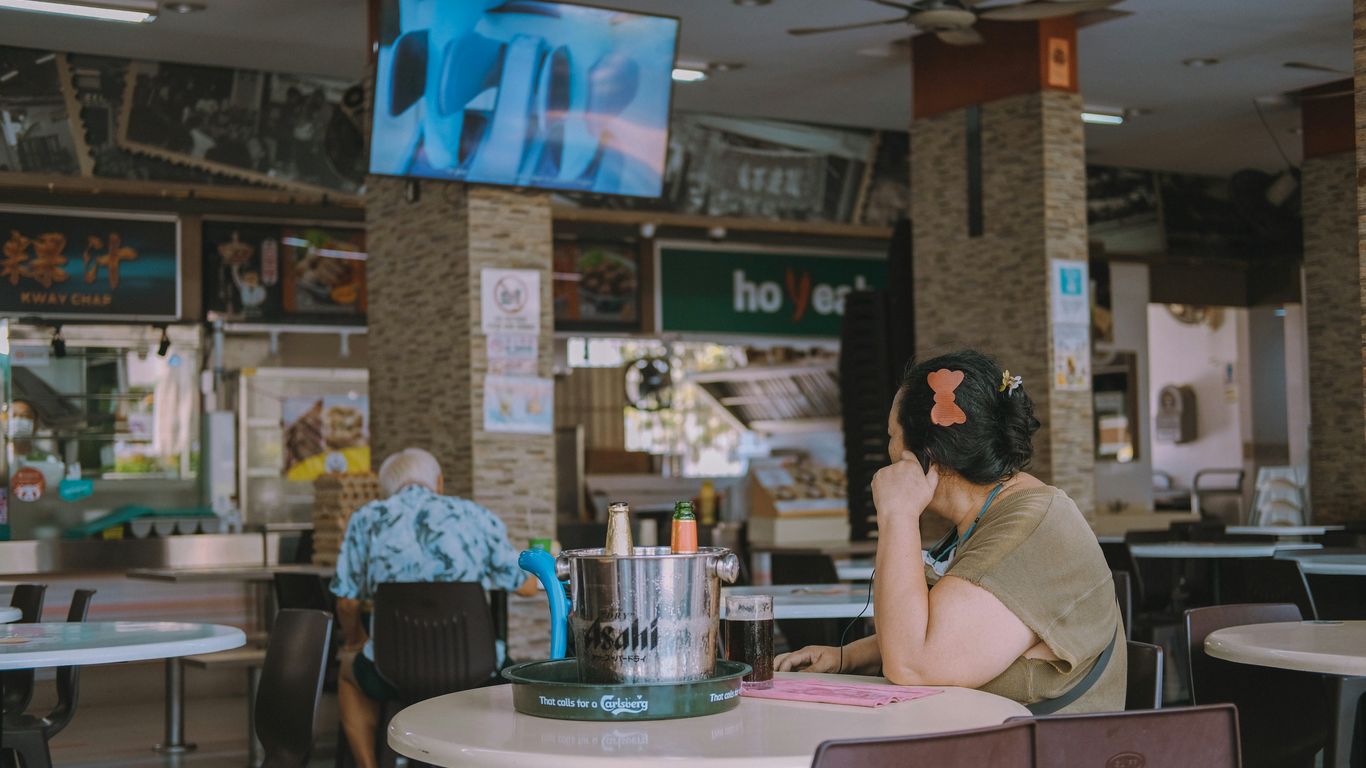
For dockworkers, clerks, artisans and residents, the coffee shop was often the first public room of the day. It offered a place to pause before work, exchange news or wait for someone without needing to spend much. The sounds were ordinary but memorable: cups touching saucers, ceiling fans turning, orders called across a busy counter.
These spaces were especially useful because they did not demand a formal invitation. A person could arrive alone, share a table when necessary and still feel part of the surrounding life. The kopitiam’s openness made it a natural social institution.
Affordable meals in a rapidly changing city
Low-cost meals mattered in a city where many households were managing uncertain wages, crowded housing and long working hours. Coffee shops provided simple breakfasts and filling dishes that could be eaten quickly or stretched into a longer conversation. The food was shaped by thrift as much as taste, making use of familiar ingredients and efficient cooking methods.
Affordability also widened the social reach of the kopitiam. Students, labourers, shop assistants and older residents might occupy the same room, even if their lives outside it were very different. Shared tables created a modest form of equality: everyone had to make space for the next customer.
The role of hawkers, provision shops and adjoining trades
Traditional coffee shops were rarely isolated businesses. Around them, provision shops, market sellers, repairers and hawkers formed an everyday network of goods and services. Customers could drink coffee, buy household essentials, collect a parcel or speak with a neighbour within the same short walk.
This relationship between food and work remains visible in places where a food centre sits beside workshops and small enterprises. A study of Alexandra Village’s foodways shows how eating places can function as practical community dining rooms for workers and residents, rather than as destinations separated from local working life.
How social class and community life met around shared tables
A kopitiam did not erase differences in income, occupation or status, but it brought people into physical proximity. The shared table was both a convenience and a social arrangement, particularly during busy hours. Conversations could remain within a family group, yet the room itself was collective.
That mixture of privacy and openness helped coffee shops become trusted places for informal exchange. Someone might hear about a job, a landlord, a shipment or a family matter simply by being present. Community knowledge travelled through these small, busy rooms.
The rituals and language of traditional kopi
Traditional kopi is a system of small choices, remembered by servers and learnt by customers through use. Milk, sugar, strength and preparation are expressed in familiar terms, while breakfast arrives as a set of textures: strong coffee, crisp toast, cool butter and soft eggs. The ritual is simple enough for a hurried worker and rich enough to reward attention.
The material details matter too. A cup, saucer, metal kettle or coffee sock can carry years of handling, making the ordinary feel unusually personal. Singapore Heritage’s kopitiam objects archive explores how such things preserve evidence of daily routines, migration and shared use.
Kopi, kopi-o and kopi-c: understanding the classic orders
A classic kopi is commonly understood as coffee served with condensed milk and sugar. Kopi-o is black coffee with sugar, while kopi-c is coffee with evaporated milk and sugar. The vocabulary can include further changes in sweetness, strength or temperature, so an order often functions as a brief set of instructions.
The terms are not merely culinary shorthand. They show how a multilingual society made a practical language of food, using words that were clear at the counter even when customers came from different backgrounds. A newcomer may need help at first, but the pattern becomes intuitive with time.
Kaya toast, soft-boiled eggs and the enduring breakfast set
Kaya toast pairs grilled bread with coconut-and-egg jam, usually with butter melting into the warm centre. Soft-boiled eggs add a savoury, delicate contrast, and the coffee completes a breakfast designed around speed without feeling hurried. The set has endured because it is inexpensive, recognisable and satisfying.
Its colonial-era influences do not make it foreign to Singapore. Local cooks and customers adapted bread, preserves and coffee to their own tastes, turning borrowed ingredients into a firmly rooted habit. The breakfast table is therefore a record of exchange rather than a single origin story.
The significance of the enamel cup and saucer
The enamel or ceramic cup and saucer are small objects, but their appearance and use help define the traditional coffee-shop atmosphere. They are durable, easy to replace and shaped for a drink that is served hot and consumed in company. Some customers cool their coffee in the saucer, a familiar gesture that also reveals how people make the setting their own.
Objects become meaningful through repeated handling. The everyday heritage archive places cups, kettles and tables alongside food traditions, showing how material evidence can illuminate the people and practices behind a neighbourhood.
To see why the details remain useful, it helps to distinguish the object from the habit attached to it:
| Object or practice | What it makes possible | What it can reveal |
|---|---|---|
| Cup and saucer | Quick, durable service | Shared ideas of comfort and routine |
| Coffee sock | Filtered brewing in batches | Practical knowledge passed between workers |
| Tiled or marble table | Easy cleaning and shared seating | The communal design of the coffee shop |
| Handwritten tab | Informal payment and trust | Relationships between regulars and stallholders |
These details are not decorations added after the fact. They explain how a kopitiam worked, and why its atmosphere cannot be recreated by appearance alone.
Unwritten etiquette at the kopitiam table
Kopitiam etiquette is mostly learned by watching others. Customers make room, keep belongings close during busy periods and understand that a table may serve several groups in one morning. They also learn to listen for their order and to treat stallholders as part of the social fabric rather than as invisible service providers.
The rules are flexible, but they protect the shared nature of the space. A person can linger over coffee, yet the table remains available to others. That balance between welcome and consideration is one of the reasons the traditional coffee shop feels communal without being ceremonious.
How kopitiams became anchors of neighbourhood life
The kopitiam became a neighbourhood anchor through repetition rather than formal planning. It was where residents began the day, where workers returned between tasks and where people encountered news that had not yet travelled through official channels. Over time, the coffee shop gathered memories in layers.
Its role also changed with the city. Older establishments served one generation, then another, while newer customers brought different languages, schedules and expectations. The result was not a frozen tradition, but a public habit capable of absorbing change.
Morning routines and multigenerational regulars
Morning regulars gave the coffee shop its strongest sense of continuity. Grandparents might arrive early, parents stop by before work and younger family members learn the familiar orders at the same table. The routine offered an everyday form of inheritance, passed through gestures rather than instruction.
A regular customer’s presence could also reassure others. Stallholders noticed absences, neighbours exchanged brief updates and a person living alone had somewhere recognisable to go. Such small acts made the kopitiam part of the social infrastructure of a district.
News, debate and informal community networks
Coffee shops have long been places for conversation, from practical matters such as rent and employment to arguments about sport, politics and local change. The talk could be serious, playful or simply repetitive, but it helped residents interpret what was happening around them.
This informal network mattered before digital communication became so immediate, and it still matters where trust is built face to face. A notice, recommendation or warning carried through familiar voices can have a different weight from a message encountered alone on a screen.
Coffee shops as spaces for migrant workers and local families
As Singapore changed, kopitiams continued to bring together people with different origins and working lives. Migrant workers, local families, older residents and students could use the same place for different purposes, whether for a meal, a rest or a conversation. The room’s meaning was shaped by whoever needed it that day.
That layered use reflects the wider movement of people through Singapore’s neighbourhoods. It also complicates nostalgia: the traditional coffee shop belongs not only to memories of the past, but to the people who continue to make use of it now.
Why the kopitiam offered more than food and drink
A kopitiam offered familiarity at a modest price. It could be a waiting room, a meeting place, a source of local information and a brief refuge from heat or work. Its social value was ordinary—and precisely because it was ordinary, it was easy to overlook.
The coffee shop also gave residents a sense of belonging without requiring membership. Someone could be known by a usual order, a preferred seat or the time they arrived. Those repeated recognitions turned a business into a local relationship.
The pressures that changed Singapore’s traditional coffee shops
Traditional coffee shops have never been static, but the pressures around them have intensified. Land values, redevelopment, labour costs and changing consumer habits all affect whether a small operator can continue. The atmosphere of a kopitiam may look timeless while the economics beneath it are changing quickly.
Some changes have improved comfort or widened access. Others have made it harder for family businesses and independent stallholders to preserve the pace, price and informal character that customers associate with the form.
Rising rents and redevelopment
Redevelopment can remove the physical setting in which a coffee shop’s relationships were built. When shophouses, markets or older estates are altered, regulars may be dispersed and operators may face higher rents or new lease conditions. Even when a business reopens elsewhere, its old network may not travel with it.
The loss is therefore more than architectural. A kopitiam’s value lies in the combination of place, people and routine, and that combination is difficult to relocate intact. Neighbourhood change must be understood through those everyday connections as well as through buildings.
Competition from fast-food chains and speciality cafés
Fast-food outlets and speciality cafés have changed what customers expect from speed, comfort, branding and choice. They may offer air-conditioning, consistent menus or a setting designed for work and leisure. Traditional coffee shops, by contrast, often rely on narrower menus, shared seating and the personal knowledge of long-serving staff.
Neither model fully replaces the other. A café can provide a different experience, while the kopitiam continues to offer quick, affordable food with a strong sense of local continuity. The pressure arises when the latter is judged only by the standards of the former.
Changing tastes, health concerns and younger customers
Younger customers may seek less sugar, different drinks, clearer information about ingredients or more comfortable places to sit. Health concerns can also alter how people think about condensed milk, butter and sweetened beverages. Traditional operators therefore face the delicate task of responding without making the old menu unrecognisable.
Adaptation can be gradual. Smaller portions, revised recipes, new payment methods or clearer explanations may help a shop welcome new customers while retaining its established character. What matters is whether change grows from the business’s own knowledge rather than being imposed as a costume.
The impact of franchising and commercial standardisation
Franchising can make a familiar name available in more locations, but scale may also change the relationship between a coffee shop and its neighbourhood. Standardised menus, interiors and procedures offer predictability, while reducing the small variations that once reflected local staff and regular customers.
The distinction is not simply between old and new. A larger operation may preserve recipes and create work, while a small shop may still lose its character if skills are not passed on. The central question is whether the practice remains connected to people who understand its meaning.
Operators often adapt through a handful of practical decisions:
- Keeping a few established drinks and dishes at the centre of the menu.
- Training younger staff in brewing, service and ingredient preparation.
- Introducing modern payment or ordering methods without removing conversation.
- Explaining the origins of recipes instead of relying only on nostalgic decoration.
These choices do not guarantee survival, but they show that continuity can involve sensible change. A living tradition needs room to respond to the people who use it.
Preserving the kopitiam in modern Singapore
Preservation is most useful when it supports working businesses and the people who hold their knowledge. A recipe written down is valuable, but so is the hand movement that controls a pour, the judgement used to toast bread or the memory of which customers prefer less sugar. Heritage exists in these relationships as much as in the shopfront.
Singapore Heritage approaches local history through neighbourhoods, foodways, objects and community memory. Its work includes story-led walks and researched gifts, offering ways for residents and visitors to encounter everyday heritage rather than treating it as a display detached from daily life.
Family-run stalls and recipes passed between generations
Family-run stalls often preserve knowledge through long apprenticeships within the household. A younger relative learns not only a recipe, but also how to judge heat, manage a rush and speak with regulars. Such learning can be difficult to record because much of it is embodied and situational.
Passing skills on also depends on whether the next generation can make a viable living. Respect for tradition must therefore include attention to working conditions, fair recognition and the practical future of the people who keep the stall open.
Hawker centres, food courts and the evolution of the coffee shop
The kopitiam form has evolved alongside hawker centres and food courts. Shared seating and multiple stalls remain, but the architecture, management and customer expectations may differ. These spaces continue the idea of a common dining room while adapting it to high-density housing, transport links and contemporary schedules.
Singapore’s hawker culture shows how food traditions can survive through movement and adjustment. Its story is also one of multicultural exchange, with Chinese, Malay, Indian and Peranakan influences appearing across menus and neighbourhoods. A useful account of Singapore’s food heritage places individual dishes within those wider histories.
Heritage branding and the question of authenticity
Nostalgic signs, old-style cups and tiled interiors can make a new venue resemble a traditional kopitiam, but visual resemblance alone is not authenticity. The deeper questions concern who prepares the food, whose knowledge is credited, how workers are treated and whether the place serves a real community.
That does not mean a newer business cannot be meaningful. Authenticity can include careful adaptation, provided the story is researched honestly and not reduced to a decorative mood. Context gives nostalgia its weight.
How traditional operators are adapting without losing their identity
Operators are finding ways to accommodate digital payments, delivery, changing diets and younger customers while keeping familiar brewing methods and service habits. Some update seating or menus; others make their history more visible through conversation and explanation. The strongest adaptations tend to feel like extensions of the business rather than a replacement for it.
Visitors can support this continuity by ordering thoughtfully, allowing staff time to work, asking respectful questions and returning to places that rely on regular custom. Singapore Heritage’s local heritage walks similarly invite people to encounter neighbourhood stories through guided, place-based experiences rather than through landmarks alone.
Why kopitiam history still matters today
Kopitiam history matters because it gives scale to the story of Singapore. National change can be seen in ports, housing estates and infrastructure, but it can also be tasted in a breakfast set and heard in an order called across a counter. The coffee shop brings large histories down to the level of ordinary decisions.
It also reminds people that heritage is not limited to monuments. It can be a table shared with strangers, a recipe adjusted over decades or a shopkeeper who remembers how a street once worked. Those details make the past recognisable without making it simple.
Coffee shops as living records of Singapore’s past
A traditional coffee shop records layers of migration, labour and urban change. Its menu may reveal movement between regions, its language may show everyday multilingualism and its objects may preserve habits no longer visible elsewhere. The evidence is modest, but it is remarkably close to lived experience.
Such records need care because memory is selective. A responsible history listens to stallholders, workers, residents and customers, acknowledging both affection and difficulty. The result is richer than a polished story of unbroken continuity.
The value of affordable, accessible communal spaces
An affordable coffee shop gives people access to public life without the cost of a formal venue. It welcomes a person who comes for ten minutes, a family sharing breakfast and an older resident who wants familiar company. In a dense city, that openness is a meaningful civic resource.
When such places disappear, residents lose more than a cheap meal. They lose one of the settings in which casual trust is built. Protecting communal spaces therefore involves social and economic questions, not only questions of taste.
What younger Singaporeans are rediscovering
Younger Singaporeans are returning to traditional coffee shops with curiosity, sometimes bringing cameras, family members or questions about words they have heard since childhood. Many are discovering that kopi is not simply an old-fashioned drink but a compact way of understanding work, migration and belonging.
The renewed interest can be thoughtful when it leaves room for the people who use these places every day. A visitor who listens, pays fairly and notices the working rhythm sees more than a nostalgic backdrop. They encounter a culture still in use.
From everyday necessity to cultural heritage
The kopitiam’s journey from ordinary necessity to recognised cultural heritage is not a change from unimportant to important. It is a reminder that ordinary things were always carrying meaning. Their significance became clearer only when rapid development made their survival uncertain.
Singapore Heritage’s community stories and heritage experiences reflect this wider principle: lived heritage is gathered through people, places, objects and practices, then shared with care. The future of the kopitiam will depend on whether that care remains connected to everyday use.
Experience Singapore’s Living Heritage
A heritage walk can turn a familiar street, food stall or coffee shop into a richer conversation about the people who shaped it. Explore Singapore Heritage’s story-led routes to meet neighbourhood histories through local storytellers and place-based memories, then book a heritage walk for a closer look at the city beyond its most photographed landmarks.
Conclusion
Singapore’s traditional coffee shops endure because they hold several kinds of life at once: food and work, language and migration, habit and friendship. Their future will not be secured by preserving appearances alone, but by supporting the people, skills and affordable communal routines that make a kopitiam meaningful.
Frequently Asked Questions
What does “kopitiam” mean?
“Kopitiam” combines “kopi”, the Malay and Indonesian word for coffee, with “tiam”, a Hokkien word meaning shop. It commonly refers to a traditional coffee shop in Singapore and parts of Southeast Asia.
What is the difference between kopi, kopi-o and kopi-c?
Kopi is generally coffee with condensed milk and sugar, kopi-o is black coffee with sugar, and kopi-c is coffee with evaporated milk and sugar. Customers can also request changes to sweetness, strength or temperature.
Why are Hainanese communities associated with Singapore’s coffee shops?
Hainanese migrants became strongly associated with the trade through work as coffee brewers, cooks and service workers. Their knowledge helped shape the combination of coffee, toast, kaya and other dishes now linked with the traditional kopitiam.
What is usually included in a traditional kopitiam breakfast?
A familiar breakfast set may include kopi, kaya toast and soft-boiled eggs. The combination is popular because it is quick, affordable and built around contrasting textures and flavours.
Why are kopitiams important to neighbourhood life?
Kopitiams provide accessible places for eating, conversation and informal exchange. Their shared tables allow residents, workers, families and visitors to occupy the same everyday public space.
Are modern coffee shops still kopitiams?
Some modern coffee shops retain the communal layout, local drinks and food traditions associated with kopitiams, while others mainly borrow the name or visual style. Whether they carry the tradition forward depends on their practices, people and relationship with the surrounding community.
How can people help preserve traditional coffee shops?
People can support independent operators, learn about the labour behind familiar dishes, treat staff respectfully and return regularly when possible. Listening to local memories and documenting recipes and objects with permission can also help keep the history connected to its communities.