Key Takeaways
Singapore heritage food is a record of migration, adaptation and everyday ingenuity. Each dish carries the imprint of a community, while hawker centres and kopitiams keep those stories in motion.
- Hainanese, Teochew, Hokkien, Malay, Indian Muslim and Peranakan traditions all shape Singapore’s food culture.
- Familiar dishes often reflect exchange rather than a single point of origin.
- Hawker stalls, kopitiams and neighbourhood eateries are living heritage spaces.
- Food is best understood alongside the streets, trades and communities that sustain it.
- Eating thoughtfully can become a way of listening to Singapore’s layered history.
1. Hainanese chicken rice and Singapore’s Hainanese community
Hainanese chicken rice is one of Singapore’s most recognisable dishes, but its story is less about a fixed recipe than about migration and adaptation. Hainanese migrants arrived as cooks, stewards and domestic workers, bringing culinary habits from southern China and developing new versions in Singapore’s kitchens. The poached chicken, fragrant rice, chilli sauce and ginger paste are now familiar far beyond the community that helped establish the dish.
The rice is often treated as the quiet star. It is cooked with stock, aromatics and rendered chicken fat, so every spoonful carries more flavour than its plain appearance suggests. The chicken itself may be poached until tender, then cooled and sliced, while the sauces provide heat, sharpness and lift. Texture is part of the memory: soft meat, glossy rice and a clean broth create a meal that feels both carefully made and wonderfully ordinary.
At a hawker centre, the dish also reveals how a migrant trade became part of a shared national food vocabulary. Families debate the best stall, regulars notice small changes in seasoning, and younger cooks inherit technique through work rather than formal instruction. That continuity is central to understanding singapore heritage food: its meaning sits not only in ingredients, but in the people who repeat, adjust and pass on a practice.
2. Katong laksa and Peranakan culinary traditions
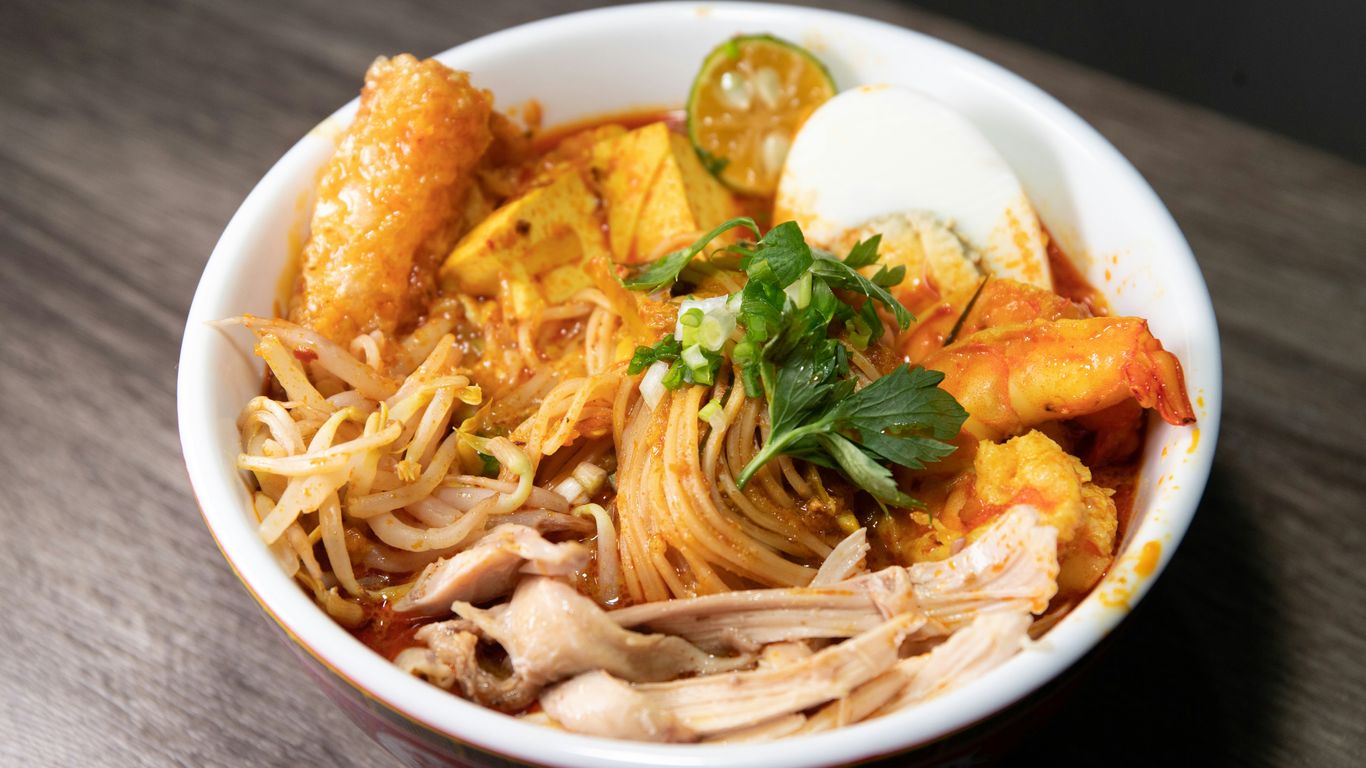
Katong laksa belongs to the richly spiced world of Peranakan cooking, shaped by the long meeting of Chinese and Malay worlds in the archipelago. Its broth is creamy, aromatic and warm with dried chillies, coconut milk, belacan and herbs. The noodles are traditionally cut into shorter lengths, making the dish easy to eat with a spoon rather than chopsticks.
The flavour is layered rather than simply hot. Lemongrass, galangal, turmeric and shrimp paste give the broth depth, while cockles, fish cake and prawns add different kinds of savouriness. Peranakan food often asks for patience: spice pastes are pounded, fried and balanced until their raw edges soften. That labour is part of the dish’s cultural meaning, especially in households where recipes were taught by watching and helping.
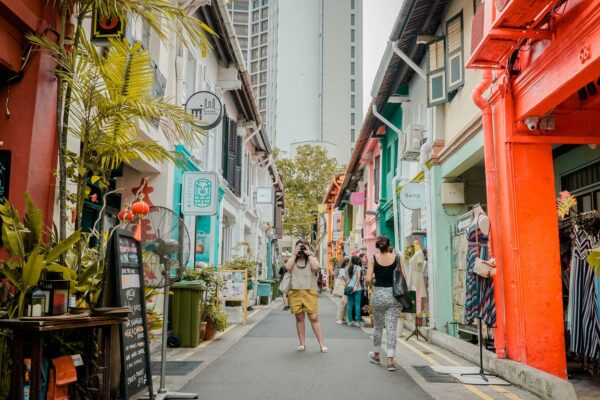
Katong and Joo Chiat offer a useful setting for reading this history because food sits beside colourful tiles, shophouses, churches and family businesses. A Joo Chiat-Katong heritage guide helps place culinary traditions within that wider neighbourhood story, including trade, architecture and adaptation. The bowl is not a museum piece; it changes with cooks and customers, while still carrying a recognisable Peranakan sensibility.
3. Nasi lemak and Malay heritage
Nasi lemak is built around coconut rice, but its character comes from the company it keeps. Sambal, fried anchovies, peanuts, cucumber and egg create a balance of heat, salt, crunch and freshness. It may appear as breakfast, a wrapped takeaway meal or a more elaborate plate, and that flexibility reflects its place in everyday Malay foodways.
The dish’s roots extend across the Malay Peninsula and the wider archipelago, where coconut, rice and sambal form an enduring culinary grammar. In Singapore, nasi lemak has travelled across neighbourhoods and into many kinds of eateries. Additions such as fried chicken, fish or otah may vary, but the coconut rice and sambal usually anchor the meal.
Its heritage is also social. A banana-leaf parcel eaten before school, a family breakfast prepared at home, or a plate shared after evening prayers can hold as much cultural weight as a formal celebration. The dish shows how Malay heritage remains present through routine, and how a food becomes widely loved without losing the histories that shaped it.
4. Roti prata and Singapore’s Indian Muslim community
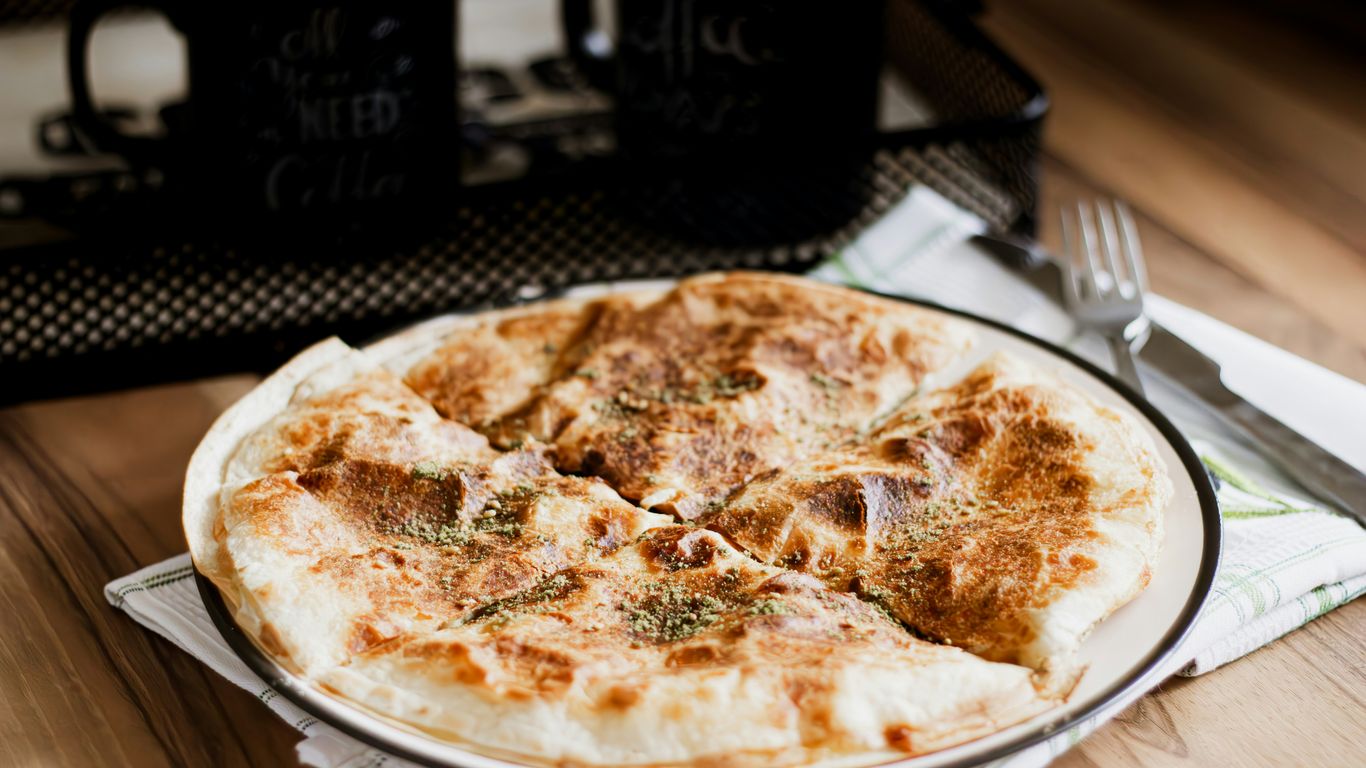
Roti prata is a flaky, pan-fried flatbread associated with Singapore’s Indian Muslim community and with the broader South Asian food traditions that travelled through the port. Dough is stretched, folded and cooked on a hot griddle until the outside is crisp while the inside stays tender. It is commonly served with dhal or curry, though sweet and filled versions have become part of the local repertoire too.
The preparation is a small performance of skill. A prata maker works quickly, turning a ball of dough into a thin sheet before folding it into layers. The result is rich without needing an elaborate presentation. It is food for late nights, quick breakfasts and animated tables, often eaten with the hands and accompanied by teh tarik or a cooling drink.
The dish also belongs to a living network of eateries, mosques, markets and family businesses. Singapore Heritage approaches such places through immersive tours and story gifts, connecting neighbourhood experiences with researched objects and community histories. That perspective matters because prata is not merely a popular flatbread; it is part of the working life and social fabric of the streets where it is made.
5. Satay and Malay, Javanese and Arab influences
Satay is instantly recognisable: skewers of marinated meat grilled over charcoal and served with peanut sauce, cucumber and onion. Yet its history is made from several currents. Malay and Javanese cooking traditions, Muslim foodways and the movement of traders through the region all helped shape the dish as it is known in Singapore.
Charcoal gives satay its particular fragrance, creating a lightly smoky edge around the sweet, savoury marinade. The peanut sauce brings roasted richness, while the raw accompaniments keep the plate from becoming heavy. Beef, chicken and mutton may appear in different settings, with choices sometimes reflecting religious practice as well as personal preference.
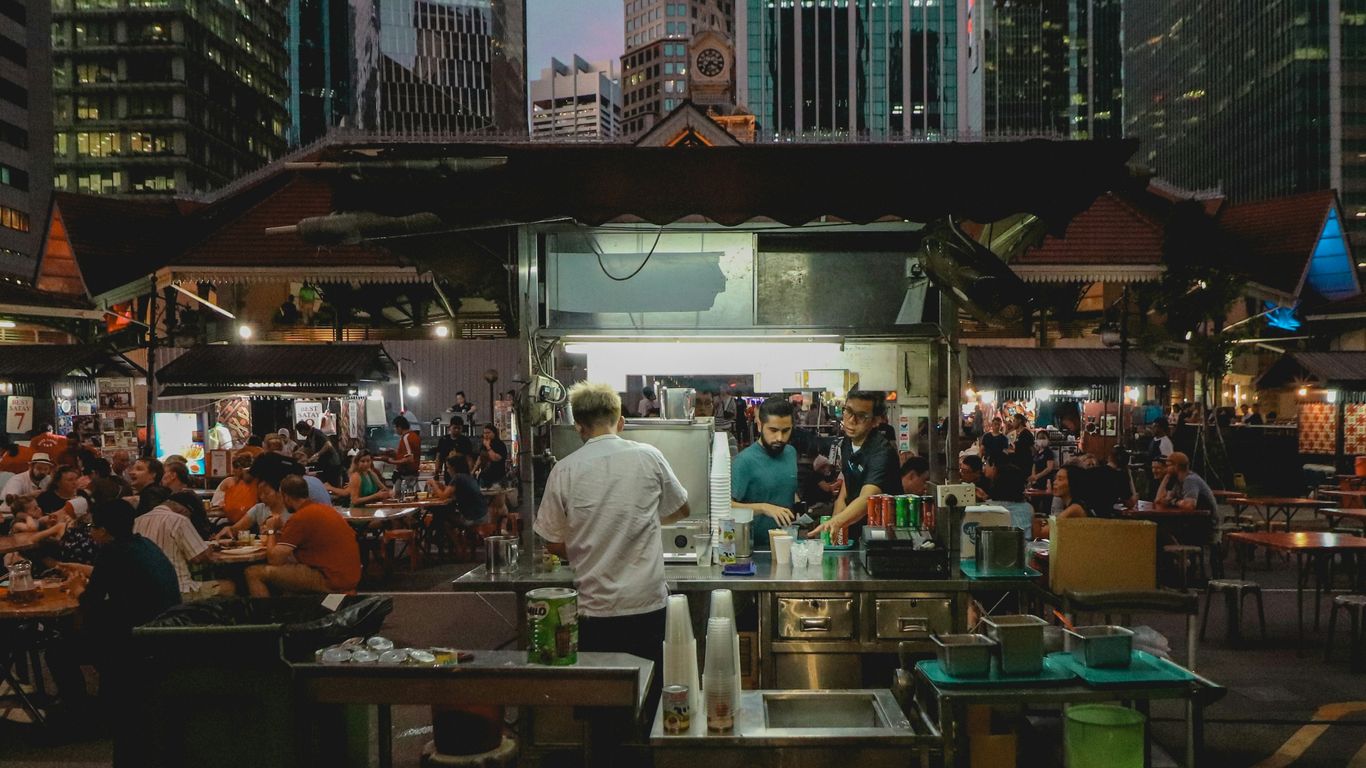
Satay is especially revealing when eaten in a group. Skewers arrive in batches, hands reach across the table, and the meal encourages conversation rather than ceremony. At historic food halls and neighbourhood stalls, the dish connects present-day dining with the port’s older patterns of movement. Hawker culture has become recognised as intangible heritage, but its life still depends on cooks, suppliers, regulars and the shared spaces around them.
6. Char kway teow and the Teochew community
Char kway teow is a dish of flat rice noodles and yellow wheat noodles stir-fried with dark soy sauce, bean sprouts, egg, seafood and sometimes Chinese sausage. Its name refers to fried rice cake strips, while its technique belongs to the fast, intense rhythm of the wok. The cook must control heat, timing and moisture so the noodles gain wok hei without turning greasy or broken.
Teochew migrants and other Chinese communities contributed to the dish’s development in Singapore, where ingredients and cooking methods shifted with availability. Cockles may bring a briny sweetness, while lard or oil gives the noodles their familiar depth. Different stalls protect different balances of sweetness, smoke and savouriness, and regular customers often have strong views about each one.
A simple comparison helps show how the dish changes without losing its core identity. These elements are not a fixed rulebook, but common points of attention when a diner watches a plate being made.
| Element | What it contributes | What to notice |
|---|---|---|
| Flat rice noodles | Softness and body | Whether they remain intact |
| Dark soy sauce | Colour and savoury sweetness | How evenly it coats the noodles |
| Bean sprouts | Freshness and crunch | Whether they retain some bite |
| Wok heat | Toasted, smoky fragrance | A dry, lively finish rather than wetness |
The table also explains why char kway teow is difficult to reduce to a list of ingredients. Much of its character comes from sequence: what enters the wok first, how quickly it is tossed and when the sauce is added. That practical knowledge, learned over years, is one reason hawker food belongs to the history of work as much as to the history of taste.
7. Bak kut teh and Singapore’s Teochew heritage
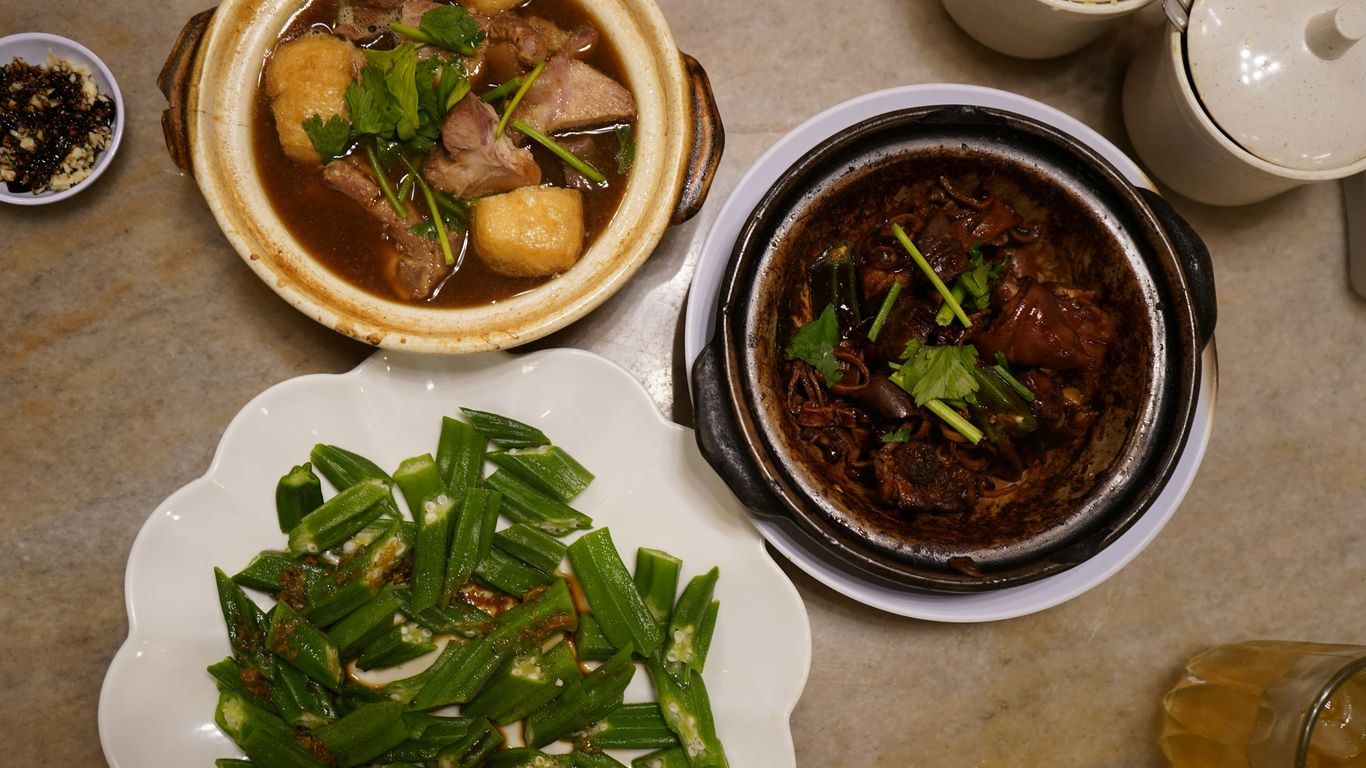
Bak kut teh is a peppery pork rib soup closely associated with Teochew foodways in Singapore. The name is often translated as “meat bone tea”, although the bowl is a broth rather than a tea in the usual sense. Pork ribs simmer with garlic, white pepper and other seasonings until the soup is fragrant and the meat loosens from the bone.
Singapore’s version is commonly lighter and more pepper-forward than some darker herbal styles found elsewhere. That clarity makes the pepper especially noticeable, warming the throat without overwhelming the pork. The meal is often accompanied by rice, dough fritters and Chinese tea, which cuts through the richness and turns the soup into a complete, unhurried ritual.
The dish carries the memory of labour and migration. It has long suited workers who needed a sustaining meal, and its communal presentation makes it natural for family tables as well. A bowl of bak kut teh can therefore point towards Teochew identity while also showing how food crosses class, generation and neighbourhood.
8. Kaya toast and Hainanese kopitiam culture
Kaya toast is a modest combination of toasted bread, coconut-and-egg kaya, butter and often soft-boiled eggs with dark soy sauce and pepper. Its setting is as important as its ingredients. In a kopitiam, coffee is brewed to order, cups move across tiled counters and breakfast becomes a daily exchange between stallholders and regulars.
Hainanese cooks played a significant role in shaping Singapore’s early coffee-shop culture, adapting their skills to the needs of a growing urban population. Kopitiam food is economical, quick and precise. The toast should crackle lightly, the butter should soften against the warm kaya, and the coffee should have the roasted bitterness that makes the sweet spread feel balanced.
The objects around the meal matter too: enamel cups, metal spoons, old order slips and familiar tables. A kopitiam objects archive explores how such ordinary things record migration, work and routine. Kopitiams are not identical to hawker centres, but both provide spaces where food heritage stays active through repeated use rather than occasional display.
9. Popiah and Hokkien and Peranakan traditions
Popiah is a fresh spring roll made with a thin wheat wrapper and a filling of cooked turnip, bean sprouts, tofu, egg, peanuts, lettuce and sauces. The ingredients are layered rather than fried, so the roll feels soft, juicy and textural. Each bite can be slightly different depending on where the sweet sauce, chilli and crushed peanuts sit.
The dish is linked with Hokkien traditions and has also become part of Peranakan food culture in Singapore. Preparing it for a gathering is often collaborative: one person spreads the wrapper, another adds the filling, and diners may customise their own rolls. The act of assembly creates a gentle social rhythm, with conversation happening around the open ingredients.
Popiah also shows that heritage can be seasonal and domestic. It appears at celebrations, family visits and communal occasions, where the work of preparation is shared rather than hidden. The recipe may look simple on paper, yet the judgement involved in cooking the turnip, balancing sauces and rolling without tearing is learned through practice.
10. Fish head curry and Singapore’s Indian community
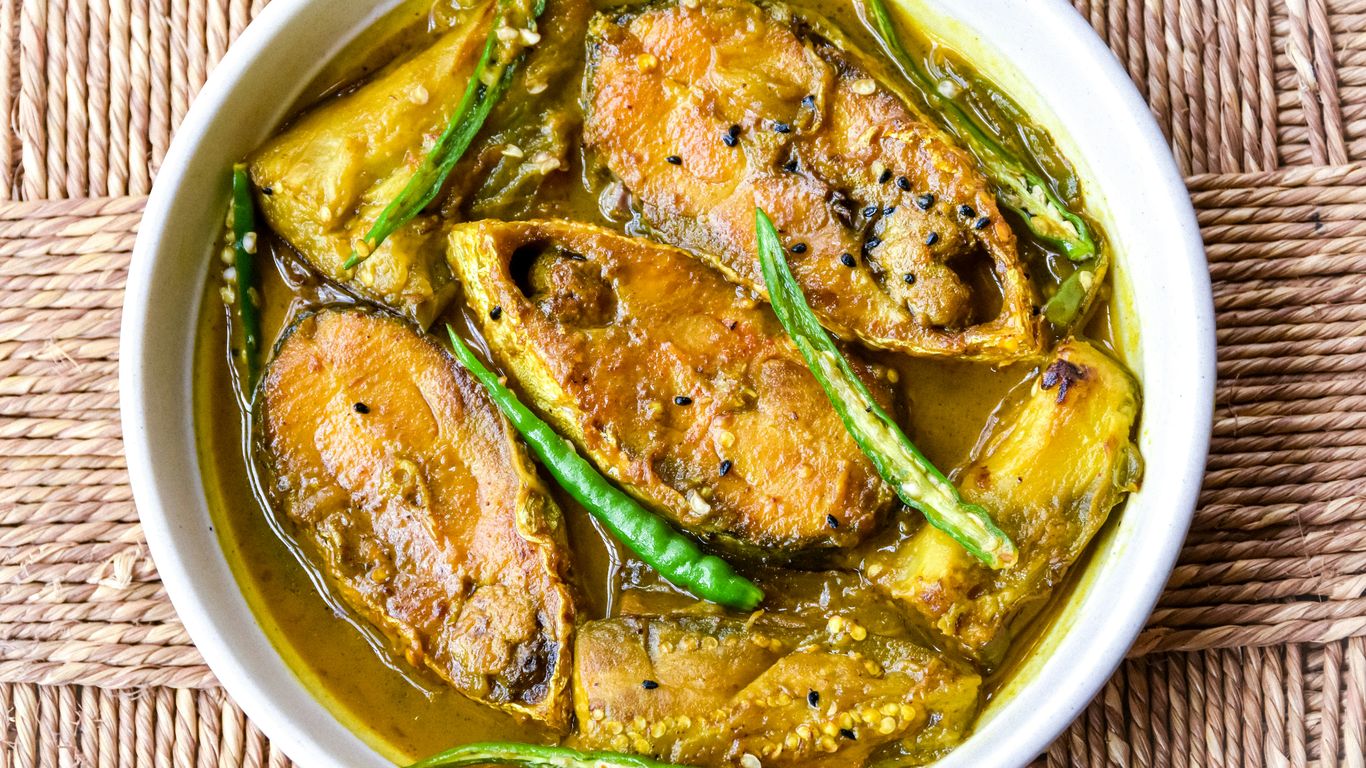
Fish head curry is a Singapore dish born from culinary exchange. Indian cooks adapted the use of fish head to local tastes and ingredients, combining a spice-rich curry with vegetables such as okra and aubergine. The result is generous and communal, usually served in a large vessel from which diners help themselves.
The fish head brings gelatinous texture and a depth that differs from fillets, while tamarind or other souring ingredients keep the curry lively. Its flavour may range from fiery to gently tangy depending on the kitchen. What matters is the conversation between Indian spice techniques and ingredients familiar across Chinese, Malay and wider Southeast Asian cooking.
That exchange makes fish head curry a useful reminder that Singaporean food does not always fit neat ethnic categories. Dishes can be made by one community, enjoyed by many and altered by each generation. Singapore’s food culture offers wider context for this kind of culinary tapestry, in which trade and migration are tasted through everyday meals.
11. Nasi biryani and the city’s Indian Muslim heritage
Nasi biryani is a rice dish of South Asian origin that became deeply rooted in Singapore’s Indian Muslim food culture. Long-grained rice is cooked with spices, stock and meat or vegetables, producing a fragrant dish in which each grain should remain distinct. It is often served with curry, achar and a cooling side, creating a plate of contrasts.
Different biryani traditions can be found across the city, shaped by family histories, regional preferences and the ingredients available to each kitchen. Some versions are richly coloured, while others are pale and aromatic. The meal is closely tied to festive gatherings, religious occasions and the commercial life of eateries around areas such as Kampong Gelam and Little India.
When visitors or residents want to explore the foodways around such dishes, a route through historic neighbourhoods can offer useful context. A small group might notice these details along the way:
- The relationship between eateries, markets and places of worship.
- The spices and ingredients displayed in shops and stalls.
- The languages, signs and family names that mark a street’s history.
- The ways recipes change while remaining recognisable to regulars.
Those observations turn a meal into a wider act of attention. Singapore Heritage creates small-group heritage walks across the island, including routes focused on neighbourhoods, food and local history. The value lies in connecting a plate of biryani with the people and places that give its fragrance a setting.
12. Chwee kueh and Singapore’s Teochew foodways
Chwee kueh consists of steamed rice cakes topped with preserved radish, usually called chai poh, and served with chilli. The cakes are soft and slightly springy, while the topping is salty, savoury and finely chopped. It is a breakfast or snack that rewards attention to proportion: too much topping overwhelms the rice, while too little leaves the dish flat.
The food is associated with Teochew communities and with the wider tradition of inexpensive steamed snacks sold in markets and hawker centres. Its ingredients are humble, but its preparation depends on repetition. The batter must steam evenly, and the preserved radish must be fried until aromatic without becoming bitter.
Chwee kueh makes a fitting final dish because it shows heritage at its most everyday. It does not need a grand setting to carry memory; a familiar stall, a paper packet and the first warm bite can be enough. For those who want to keep following these connections, foodways and old trades offers a way to see how meals sit alongside work, tools and neighbourhood routines. That is the enduring lesson of singapore heritage food: it is made visible through ordinary acts, repeated by people who know why they matter.
Walk Singapore’s Stories
Readers who want to encounter these histories beyond the plate can join Singapore Heritage for a story-led walk through the island’s neighbourhoods, food routes and everyday places. Its researched gifts also offer a considered way to carry a local story home, with objects connected to makers and community memory. Plan a heritage walk when a slower, more attentive view of Singapore would add meaning to the meal.
Conclusion
Singapore’s heritage dishes are living records of movement, ingenuity and belonging. From chicken rice and kaya toast to laksa, biryani and chwee kueh, each one links flavour with a community’s work and memory, while hawker centres, kopitiams and family kitchens keep the stories changing in useful, human ways.
Frequently Asked Questions
What is Singapore heritage food?
Singapore heritage food refers to dishes, cooking methods and eating practices shaped by the island’s communities, migration histories and shared public spaces. It includes both widely recognised dishes and everyday foods whose stories are carried through families, stalls and neighbourhood routines.
Which communities have influenced Singaporean cuisine?
Malay, Chinese, Indian, Indian Muslim, Peranakan and Eurasian communities have all contributed to Singapore’s food culture, alongside influences from the wider Malay Archipelago and global trading networks. Many dishes reflect exchange between several traditions rather than a single origin.
What is the difference between a hawker centre and a kopitiam?
A hawker centre is generally a larger shared food complex with many independent stalls, while a kopitiam is a coffee shop traditionally centred on drinks and a smaller range of meals. The two may overlap in function, but their histories, layouts and daily rituals are distinct.
Why is chicken rice associated with the Hainanese community?
Hainanese migrants became well known for cooking and service work in Singapore, and they helped establish local versions of chicken rice. The dish has since travelled widely and belongs to Singapore’s shared food culture, even as its Hainanese associations remain important.
What makes Peranakan food distinctive?
Peranakan food often combines Chinese culinary influences with Malay and Southeast Asian ingredients, techniques and flavour profiles. Spice pastes, coconut, seafood and careful preparation are common features, although recipes vary greatly between families and regions.
Where can visitors learn more about Singapore’s food heritage?
Visitors can begin at hawker centres, markets, kopitiams and historic neighbourhoods, taking time to observe the people and routines around the food. Guided walks, community archives and conversations with stallholders can add context that a dish alone cannot provide.
How should diners approach traditional food respectfully?
Diners can support small businesses, follow the customs of each venue, avoid treating working neighbourhoods as backdrops and ask before photographing people or stalls. Curiosity is welcome when it is paired with patience, credit and respect for residents and makers.