Key Takeaways
Singapore’s Civic District is best understood as a meeting place between official monuments and lived experience.
- Begin beside the Singapore River, where trade shaped the early town.
- Read the Civic District as a sequence of institutions, faith spaces and memorials.
- Notice how tropical design altered imported architectural styles.
- Look beyond grand façades to workers, migrants, families and public gatherings.
- Leave time for museums, shade, careful observation and unhurried conversation.
Begin with Singapore’s colonial heart
A Singapore history tour through the Civic District begins at the water. The Singapore River was a working edge long before the grand civic buildings appeared, carrying people, goods and stories between the harbour and the growing settlement. From here, the city’s official history can be read alongside the less formal history of movement, labour and exchange.
The first stretch is compact, but it rewards a slow pace. Reflections on the river, the scale of the old buildings and the shade beneath the arcades all help establish the character of the district before the walk turns towards its ceremonial centre.
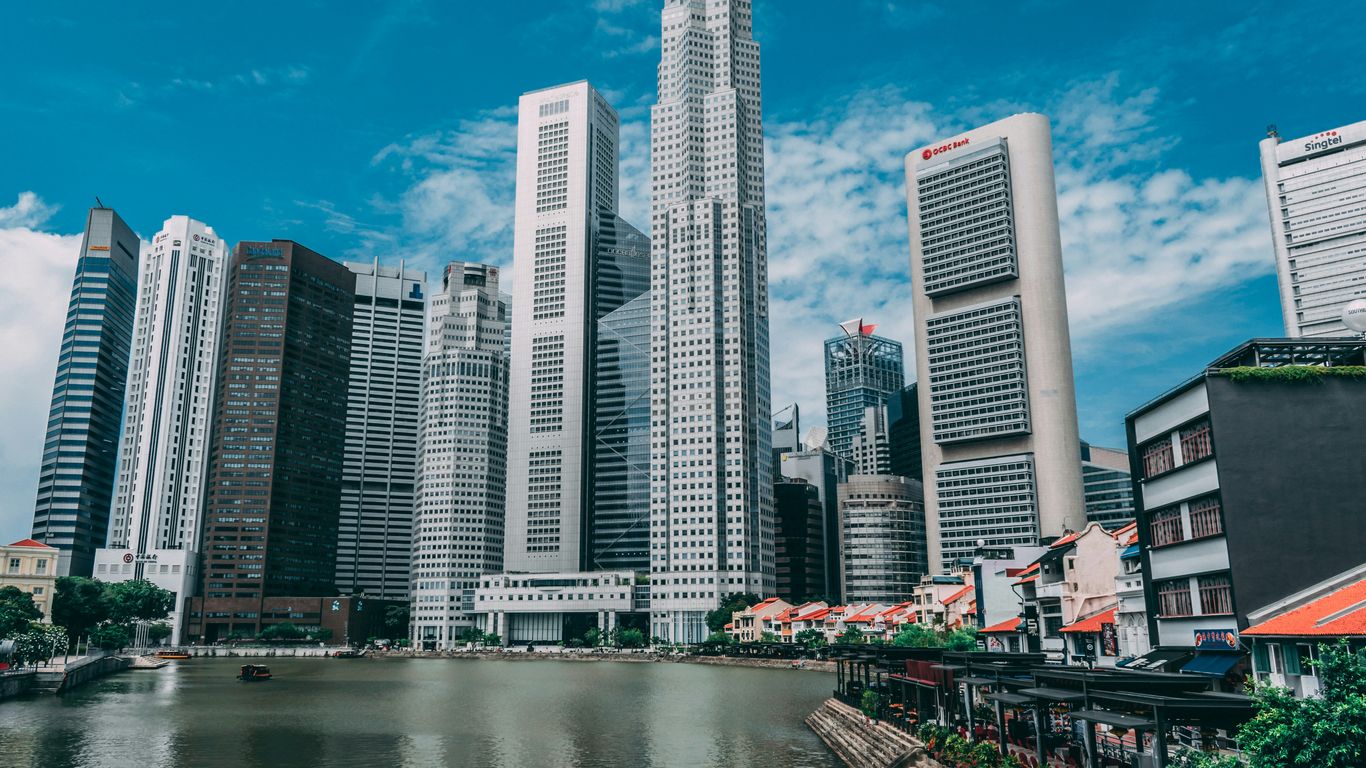
The Singapore River and the district’s early development
The river gives the district its first sense of direction. Boat Quay and the surrounding waterfront were connected to commerce, storage and transport, while the streets inland became increasingly organised around government, law, worship and public administration. A walk beside the river therefore starts with practical realities rather than a single founding date.
The early town was shaped by people arriving for work and trade, as well as by authorities attempting to order a busy port. The river’s edge still makes that relationship visible: polished promenades sit close to older building fronts, and the water remains a useful way to understand how the settlement grew.
Raffles Landing Site and the founding narrative
At Raffles Landing Site, visitors encounter one of the most familiar versions of Singapore’s beginnings. The monument and riverbank are often treated as a neat starting point, yet the wider history is more layered than the founding narrative alone suggests. Earlier connections, existing communities and regional trade all belong in the frame.
The site works best as a prompt rather than a conclusion. It invites the walker to ask who was present, whose labour made the port function and how later generations chose to remember the arrival of British power. Those questions turn a well-known statue into an opening for more careful looking.
Victoria Theatre and Concert Hall
Victoria Theatre and Concert Hall brings a cultural note into the civic landscape. Its paired buildings, tower and formal frontage show how performance and public ceremony became part of the emerging city’s identity. The architecture is composed, but its purpose was social: people gathered here to listen, watch and take part in the life of the town.
From the pavement, the relationship between the two buildings is especially clear. The open space in front creates a pause between the river and the more administrative buildings beyond, making this a natural place to consider how culture sat alongside government in the colonial centre.
Empress Place and the former civic centre
Empress Place marks the shift from waterfront activity to institutional authority. The former civic centre gathered buildings associated with administration, justice, finance and public life, giving the district a strong visual order. Its grand proportions can feel imposing, but they also reveal the ambitions of the government that built and occupied them.
The area is more revealing when read at pedestrian height. Doorways, steps, verandas and plaques soften the monumental scale, while the river-facing position recalls the commercial activity that supported the official centre. A short walk here can hold both views at once: power above, everyday movement below.
Follow the story through Singapore’s civic landmarks
The next part of the route crosses a landscape designed to make public institutions visible. Courts, city offices, churches and memorials face one another across open lawns and formal streets, creating a civic room in the middle of a dense city. Their arrangement is not accidental; it expresses ideas about order, authority and belonging.
Yet these buildings have not remained fixed in meaning. Their uses changed as Singapore moved through war, self-government and nationhood, and the same façades now support different kinds of public memory. The Civic District walking guide is useful for readers who want to place this cluster within a wider network of heritage trails.
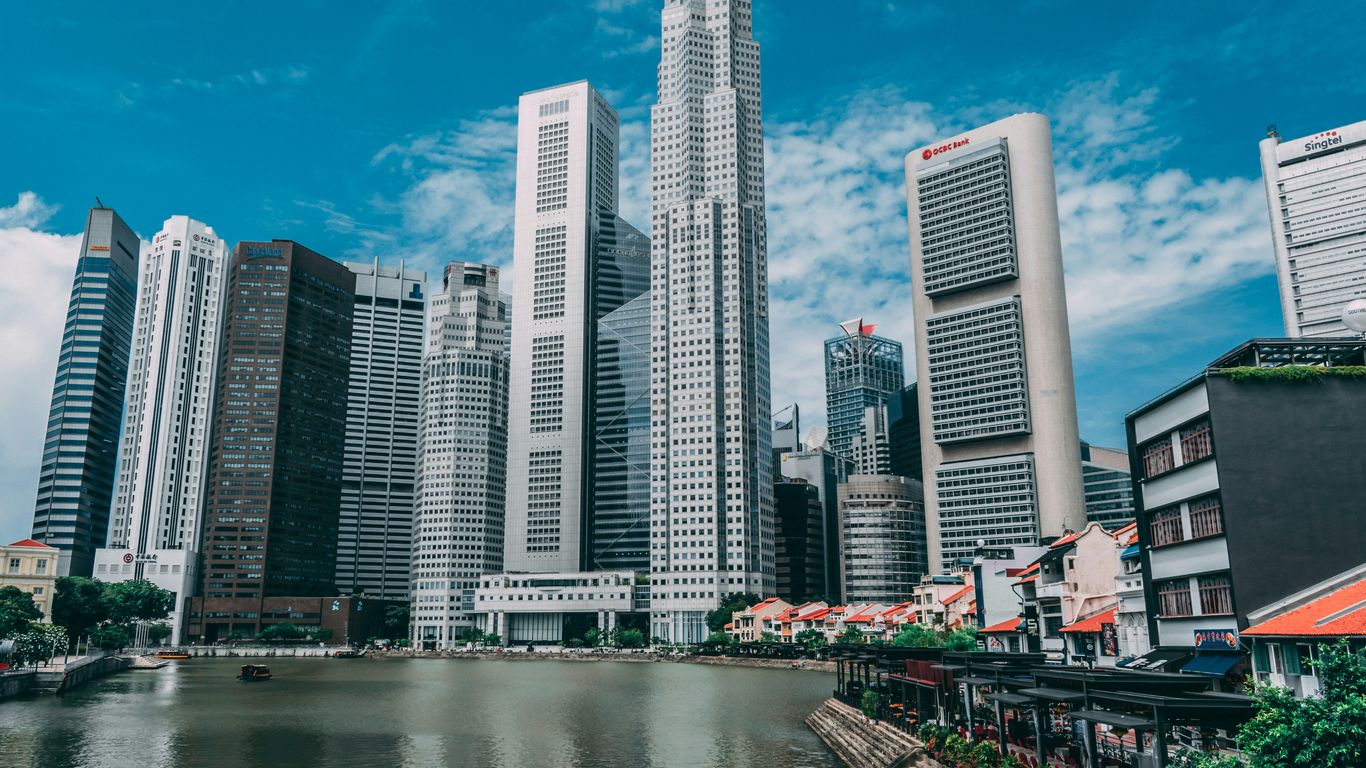
The Former Supreme Court and Old City Hall
The Former Supreme Court and Old City Hall stand opposite one another with a confidence typical of colonial civic architecture. Their columns, steps and pediments were intended to make government legible and permanent. The buildings also carry more difficult associations, including the Japanese surrender in 1945 and the legal and administrative systems of the colonial period.
Inside, where access is available, the architecture can be read in more detail. Courtrooms, corridors and ceremonial spaces reveal how law was staged as a public institution. Outside, the broad forecourt connects those formal ideas to the changing crowds that have gathered there over generations.
St Andrew’s Cathedral and the Padang
St Andrew’s Cathedral introduces a different kind of authority. Its white Gothic Revival form, cool interior and tall proportions create a marked contrast with the secular buildings around it. The Padang beside it is equally significant, not because it contains a building, but because open ground has allowed ceremonies, sport, parades and national events to unfold.
Together, cathedral and field show how the district’s history is made from both structures and spaces between them. The same view can hold religious practice, colonial ceremony and later national celebration, depending on where the observer stands and what period they bring to mind.
The National Gallery Singapore and its architectural legacy
The National Gallery Singapore occupies the former Supreme Court and City Hall, giving the old civic core a new cultural life. Its galleries allow visitors to move through spaces once associated with administration and justice while encountering art from Singapore and the wider region. That change of use makes adaptive reuse tangible rather than theoretical.
The architectural legacy remains visible in the grand staircases, high ceilings and carefully framed views. A visit inside can therefore deepen an outdoor walk, especially when the weather turns wet or the heat becomes tiring. It also encourages a useful question: how can an old public building serve a present-day public without losing its earlier layers?
The Cenotaph and memories of war
The Cenotaph on the Esplanade carries a quieter, more solemn presence. Its inscriptions and restrained form commemorate those who died in the First and Second World Wars, connecting Singapore to conflicts that reached far beyond the island. The memorial asks for attention rather than spectacle.
War memory in the Civic District is not confined to one monument. It runs through buildings, surrender narratives, displaced lives and the post-war work of rebuilding. Visitors can pause here and consider how public memorials select words and names, while also remembering that private grief rarely fits neatly into a stone inscription.
Read the city through its changing architecture
Architecture becomes easier to understand when it is treated as evidence. A column, louvre, covered walkway or high ceiling may reveal something about climate, authority, technology or social expectations. The Civic District is particularly rich because several periods remain visible within a short walk.
The aim is not to label every building perfectly. It is to notice contrasts, ask what a design was made to do and see how later conservation has altered the relationship between old structures and the contemporary city.
Neoclassical buildings and imperial ambition
Neoclassical buildings rely on symmetry, columns and carefully controlled proportions. In the Civic District, these features helped present government as rational, stable and connected to an international imperial order. Their visual language was borrowed, but its local effect was immediate: the buildings changed how authority appeared in the streets.
The scale also mattered. Broad steps and open approaches separated institutions from ordinary movement, creating a sense of ceremony before anyone entered. Seen today among towers and traffic, that ambition is easier to question, but it has not disappeared from the stonework.
Tropical adaptations in colonial design
Imported architectural styles had to respond to Singapore’s heat, rain and humidity. Deep overhangs, verandas, tall windows, shaded corridors and ventilation features made formal buildings more workable in a tropical climate. These details are not decorative afterthoughts; they are practical records of local conditions.
Walkers can look for the parts of a façade that manage sun and rain. The most successful buildings often balance ceremony with comfort, allowing air and shade to soften an otherwise imposing composition. That balance is one reason the district remains pleasant to explore at a measured pace.
Contrasting old façades with the modern skyline
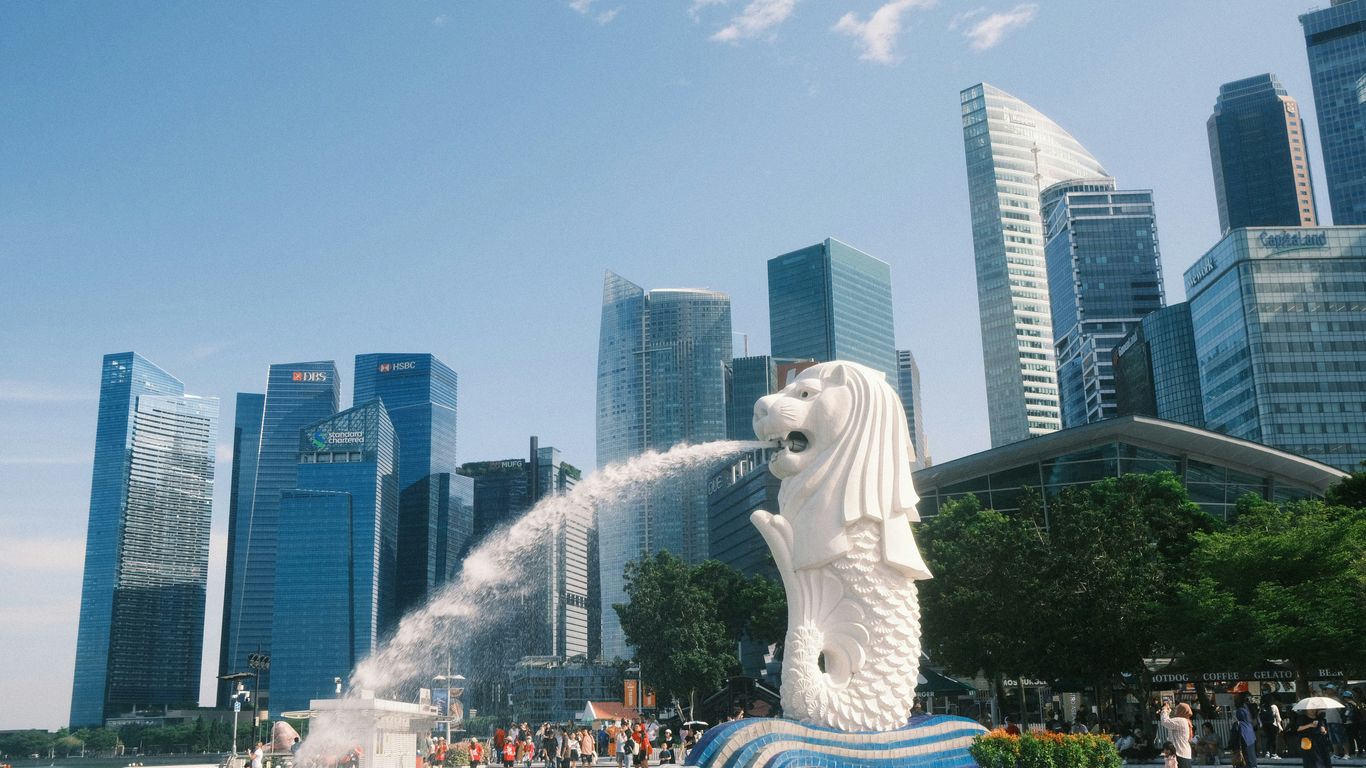
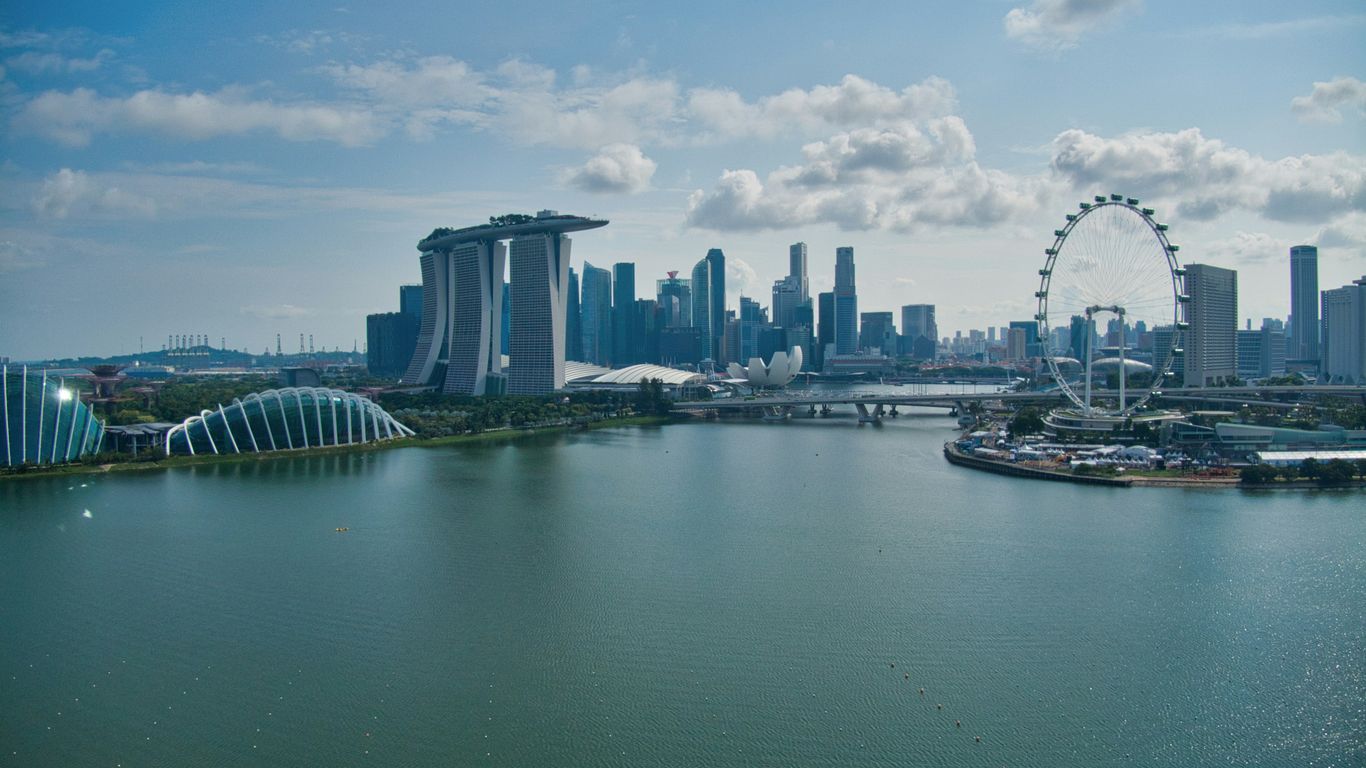
The Civic District offers an unusually clear conversation between old and new. Low, pale façades sit beneath glass towers, while the river and open lawns preserve long views through a city that has grown dramatically upwards. The contrast can seem abrupt, but it also makes urban change visible.
Rather than treating the skyline as a backdrop, a visitor can use it as a timeline. The older buildings express one set of civic values; the newer towers speak of density, finance and a different economic confidence. Neither view is complete on its own.
Conservation and adaptive reuse in the Civic District
Conservation keeps historic structures in public use while accepting that their meanings will change. The National Gallery is a prominent example, but the principle extends across the district to museums, performance venues, offices and public spaces. Old buildings survive most convincingly when people have a reason to enter them.
This is also where a Singapore heritage archive can add texture to the walk. Formal architecture records institutions, while stories of ordinary routines, changing work and national milestones explain how those institutions were experienced. The two forms of evidence are strongest when read together.
Understand the people and communities behind the monuments
Monuments can make history appear tidy. The people who built, staffed, crossed and contested these places were not a single community, and their experiences did not always align with the official story. Trade, migration, faith, domestic life and public service all shaped the Civic District.
A thoughtful walk therefore moves between the grand view and the human scale. It notices where workers might have waited, how people travelled to the river, which spaces were open to whom and what kinds of memory have been preserved outside the main monuments.
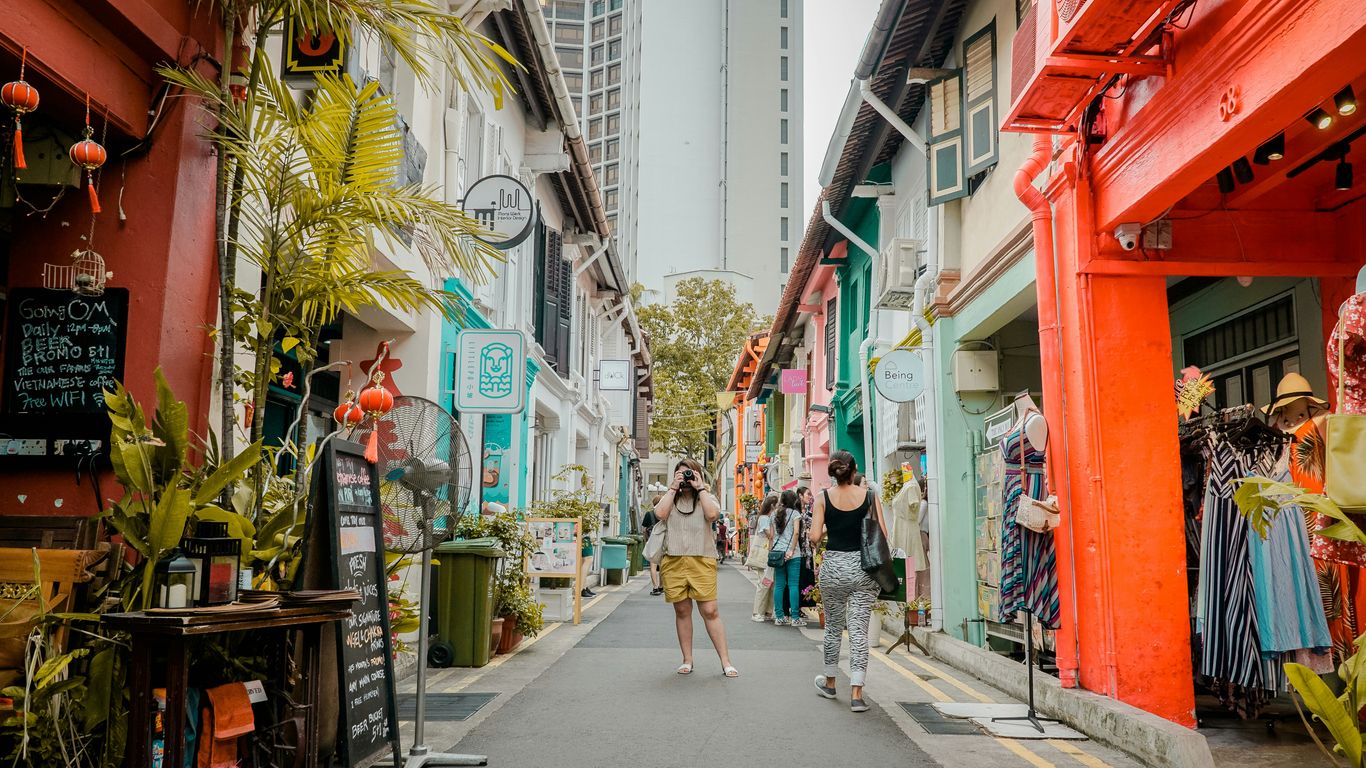
Trade, migration and life along the Singapore River
The river was a workplace as much as a scenic edge. Boats, warehouses, shopfronts and markets connected Singapore to regional networks, and migrants brought languages, skills, foodways and religious practices into the growing port. Much of that life stood just beyond the formal civic buildings, but it enabled the district to function.
The surviving streets do not reproduce the past exactly. They do, however, offer clues in building depth, entrances, signs and the relationship between water and road. The everyday lives of Singapore are a useful lens here, shifting attention from famous administrators to fishermen, shopkeepers, port workers and families.
The civic district beyond colonial institutions
The civic centre was never only a European enclave. Clerks, labourers, domestic workers, traders, worshippers, students and visitors moved through it, even when institutions were designed around unequal systems. Nearby religious buildings and commercial streets complicate any reading of the district as a self-contained colonial stage.
That wider context is why heritage should be followed beyond the main square. Singapore’s history lives in food, craft, old trades and remembered routines as much as in official architecture. The stories of neighbourhood life help connect the monumental centre to those everyday forms of knowledge.
Public ceremonies, protests and national milestones
Open civic spaces gather people in ways that buildings cannot. The Padang and the areas around City Hall have hosted ceremonies, celebrations and moments of political significance, allowing national identity to be performed in public. Their importance comes partly from repetition: each event adds another layer to a familiar setting.
A visitor need not know every date to sense this accumulation. The broad lawn, viewing points and formal façades still guide attention towards collective occasions. They also remind the walker that public space can accommodate agreement, disagreement and changing ideas of citizenship.
Whose history is represented in the landscape
The Civic District’s plaques and monuments are valuable, but they are selective. Some names are carved into stone; many others survive through family stories, community archives and the memories of people whose work was never commemorated formally. A fuller history needs more than monuments.
That does not make the official landscape untrustworthy. It makes it incomplete, and therefore worth reading alongside oral histories, photographs and local accounts. A considerate visitor can hold both kinds of evidence together without turning lived experience into a decorative footnote.
Plan a self-guided Singapore history tour
The Civic District is well suited to an independent walk because its landmarks are close together and connected by clear public routes. Still, the experience improves when the route leaves room for pauses rather than treating each building as a box to tick. Shade, water and indoor stops matter in Singapore’s climate.
A self-guided walk can be entirely quiet, shared with family or shaped around conversation. The seven neighbourhood heritage routes offer a helpful reminder that the Civic District is one part of a much larger living map.
A walkable route from Raffles Place to the Padang
A practical route begins near Raffles Place, follows the river towards Raffles Landing Site, then continues past Victoria Theatre and Empress Place. From there, the walker can cross towards the Former Supreme Court, Old City Hall, St Andrew’s Cathedral and the Padang. The route is short enough to adjust according to weather and energy.
The order creates a natural narrative: water and commerce first, civic institutions next, then the open ceremonial landscape. Anyone who prefers a slower introduction can begin at the river and spend time watching the movement of the waterfront before approaching the monuments.
Suggested timing, distance and rest stops
The route can be covered briskly, but two to three hours allows time for photographs, reading plaques and entering a museum or gallery. Rest stops are easiest to find near the river, in shaded arcades and within air-conditioned cultural venues. Comfortable shoes are more useful than a tightly packed itinerary.
The following simple plan keeps the walk flexible:
- Allow about 30 minutes for the riverfront and Raffles Landing Site.
- Set aside 45 minutes for the Victoria Theatre and Empress Place area.
- Reserve an hour for the civic buildings around the Padang.
- Add museum time if the weather is hot or unsettled.
This structure gives the route shape without making it feel hurried. It also leaves enough space for an unexpected detail, a conversation or a longer pause beneath the trees.
When to visit for cooler weather and better light
Early morning and late afternoon are generally more comfortable than the middle of the day, with softer light on the façades. The riverfront can feel cooler before traffic and heat build, while late afternoon brings longer shadows around the Padang. Rain remains a possibility, so a lightweight umbrella is sensible.
The best time is ultimately the time when the walker can pay attention. A cloudy morning may reveal subtle architectural details more clearly than harsh sunshine, and a brief shower can make the old stone and painted surfaces look unexpectedly vivid.
Museums, opening hours and indoor alternatives
Opening hours and admission arrangements can change, so visitors should check official sources shortly before setting out. The National Gallery offers a substantial indoor alternative, while Victoria Theatre and other venues may have their own schedules and access conditions. Even when a building is closed, its exterior can still be read from the public route.
A useful plan keeps one indoor stop in reserve rather than assuming the weather will cooperate. Museums also provide context that the street cannot: objects, documents and artworks can turn a passing architectural impression into a more grounded understanding of Singapore’s past.
Make the walk more meaningful
The most rewarding heritage walks do not end when the last monument has been photographed. They leave the visitor with better questions, a stronger sense of proportion and an awareness that history continues in working streets and inhabited neighbourhoods. The Civic District is a beginning, not a complete portrait of Singapore.
The approach is simple: slow down, observe respectfully and connect public landmarks to the people whose lives made them significant. A local storyteller or community archive can add details that a solitary reading of plaques may never reveal.
What to look for in plaques, statues and memorials
Plaques often tell visitors what an institution wants remembered, while the placement of a statue shows who has been given physical prominence. Read the wording closely, then look around it: entrances, side streets and overlooked service areas may suggest a different social history. Dates are useful, but verbs and omissions can be just as revealing.
Photographs of details such as inscriptions, ventilation grilles and worn thresholds can support later research. They are most valuable when paired with notes about sound, shade, movement and the people using the space at the time of the visit.
How to connect landmarks to Singapore’s national story
The Civic District can be read through several broad transitions: a regional trading settlement, British colonial rule, wartime occupation, self-government and nation-building. No single building explains all of them. The connections emerge when a court, memorial, riverfront and public field are considered together.
A Singapore history timeline can help arrange these moments without flattening them into a straight line. The walker can then return to the streets and ask how each transition affected housing, work, education, public services and ordinary movement.
Responsible photography and respectful behaviour
Historic places are also public places, workplaces and sites of remembrance. Visitors should keep walkways clear, avoid intrusive photographs of people and follow any restrictions inside museums or memorial spaces. The quietness of a place can be part of its meaning, particularly around the Cenotaph and religious buildings.
The same care applies when exploring beyond the Civic District. Singapore Heritage creates small-group heritage walks that connect visitors and residents with community stories, and its story-led tours extend that spirit across different neighbourhoods. The value lies in attention and exchange, not in collecting images as quickly as possible.
Ways to explore further after the walk
After the route, a visitor might compare the Civic District with a residential estate, a market or an old trade corridor. That change of setting makes it easier to see that heritage is not limited to monumental architecture. Singapore Heritage also offers researched gifts rooted in neighbourhoods, foodways, objects and everyday practices, allowing a story to remain present after the walk.
Further reading can take many forms, including community-focused content, greener public spaces, functional restoration, neurological care and Singapore street noodles. These subjects do not belong to the Civic District itself, but they show how a broader archive may gather practical, cultural and human stories in one place. Readers interested in planning a guided experience can also book a heritage walk.
Conclusion
A Singapore history tour through the Civic District moves from river trade to civic authority, from colonial architecture to national memory, and finally towards the people whose lives sit behind the official landscape. With time, shade and curiosity, the route becomes more than a sequence of impressive buildings: it becomes a way of noticing how Singapore has been made, remembered and continually reinterpreted.
Frequently Asked Questions
How long does a Civic District history walk take?
A brisk walk can take around an hour, while a more rewarding visit usually allows two to three hours for pauses, plaques, photographs and an indoor stop.
Where is the best place to begin?
Raffles Place or the Singapore River provides a strong starting point because the route can then move naturally from waterfront trade towards the civic buildings and the Padang.
Is the route suitable during rainy weather?
Parts of the route are exposed, but museums, galleries, covered walkways and nearby cafés can provide useful breaks. Checking opening hours before leaving is sensible.
What is the significance of the Padang?
The Padang is a major open civic space associated with ceremonies, public gatherings, sport and national milestones. Its meaning comes from repeated use as well as from its setting.
Can visitors enter the historic buildings?
Some buildings operate as museums or performance venues, while others may have restricted access. Visitors should check current arrangements and opening times with the relevant institution.
What should visitors notice about colonial architecture?
Columns and symmetry express formal authority, while verandas, deep shade, tall windows and ventilation features show how imported styles were adapted to Singapore’s tropical climate.
How can visitors explore Singapore’s history beyond monuments?
They can visit neighbourhoods, markets, religious sites and old trade areas, listen to community stories and pay attention to ordinary routines as well as officially commemorated events.