Key Takeaways
Singapore’s lost landmarks include demolished buildings, vanished leisure grounds and neighbourhoods reshaped beyond recognition. Their stories remain accessible through archives, oral histories and careful walks through the city that replaced them.
- The National Theatre, Van Kleef Aquarium and the old National Library remain powerful memories despite being gone.
- Great World, the Satay Club and old cinemas reveal how Singapore once spent its leisure time.
- Kampongs, quays, railway spaces and familiar streetscapes were altered by housing, roads and redevelopment.
- Small details such as tiles, verandas, trees and market routines can carry as much memory as grand buildings.
- Remembering lost places helps residents and visitors read the living city with greater care.
What makes a Singapore landmark “lost”
A landmark does not have to disappear completely to become lost. It may be demolished, absorbed into a new development or transformed so thoroughly that its former character is difficult to see. The phrase “lost Singapore landmarks” therefore includes both absent buildings and places whose physical setting has been overtaken by another city.
Demolished buildings, vanished places and transformed sites
Some losses are straightforward: a theatre comes down, a library is demolished, or an amusement park closes and is replaced. Others are less final but just as significant, when a waterfront is cleaned up, a road widened or a cluster of homes moved elsewhere. The map still carries a name, yet the sounds, smells and routines attached to it have gone.
A vanished place can also be understood through the kind of life it held. The building may have been architecturally modest, but it could have been where families met, workers waited, children learned or young people had their first night out. That ordinary use is often what makes a lost landmark feel personal.
Landmarks that survive through photographs, maps and personal stories
Photographs provide the obvious clues: a distinctive roofline, a painted sign or a crowded pavement. Maps add a different kind of evidence, showing how a lost site once fitted into routes between schools, markets, workplaces and homes. Personal stories fill in what neither image nor map can show, including who gathered there and what a place meant at different times.
A useful way to read these sources is to place them beside one another rather than treating any single record as complete. The lost landmarks archive offers a starting point for recalling buildings, theatres and attractions, while family albums and remembered directions can make the picture more intimate.
Why redevelopment changed Singapore’s physical memory
Singapore’s limited land and rapid growth made redevelopment a practical part of nation-building. Housing, transport, public services and commercial districts had to be provided at speed, and older sites were often assessed through their usefulness for a new plan. The result was a city that gained efficiency while losing parts of its familiar backdrop.
That exchange was not experienced evenly. A replacement may have brought better housing or easier travel, but it could also remove a social world that had taken decades to form. Physical change leaves emotional traces, especially when several familiar places disappear within one generation.
The difference between a lost landmark and a preserved one
A preserved landmark retains enough of its fabric, setting or use for people to encounter something of its earlier identity. A lost landmark survives in a less direct form, through records, stories, names, fragments or the habits of people who remember it. Neither category is entirely fixed: a preserved building can be altered, while a demolished site can acquire new meaning through interpretation.
The distinction becomes clearer when considering what exactly remains. This simple comparison helps separate the physical building from the wider memory around it.
| Kind of survival | What remains | How people encounter it |
|---|---|---|
| Preserved building | The structure and some original details | A visit to the site |
| Transformed site | The location, name or fragments of the earlier place | Comparison with maps and photographs |
| Demolished landmark | Records and recollections | Archives, exhibitions and oral history |
| Living memory | Stories, habits and family associations | Conversation and community storytelling |
The table also shows why demolition does not end a landmark’s story. A place can remain culturally present even when there is no wall left to stand beside.
Civic landmarks erased by modernisation
Civic buildings often carry a particularly public kind of memory. They host ceremonies, education, performances and everyday encounters with government and culture, so their loss can feel like the removal of a shared room. Singapore’s modernisation left behind important institutions, but not every building that housed them remained.
The National Theatre and its role in Singapore’s cultural life
The National Theatre was remembered for its bold architectural presence and its place in the cultural life of a young nation. Concerts, performances and national occasions made it more than a shell for events; it became part of how audiences experienced public culture together. Its later disappearance left photographs and recollections to carry the atmosphere of those gatherings.
For former visitors, the memory may begin with a queue, a programme or the particular feeling of entering a large shared auditorium. Such details explain why a demolished theatre can remain vivid even to people who only know it through family stories.
Van Kleef Aquarium and early public education
Van Kleef Aquarium introduced generations of visitors to aquatic life in a setting that combined leisure with public education. It belonged to an earlier idea of a city attraction: a place where a family could spend an afternoon, encounter unfamiliar species and learn through direct observation.
Its absence is felt not only as the loss of a building but also as the loss of a recurring childhood ritual. The aquarium’s memory sits alongside other vanished attractions that taught visitors about the natural world through an accessible, shared outing.
The old City Hall and civic buildings around the Padang
The former City Hall was part of a wider civic setting around the Padang, where institutions, open space and ceremonial movement formed a legible public centre. Even when the buildings remain in some form, their meanings can shift as uses change and new layers are added. The Civic District heritage walk is useful for noticing those layers, including the relationship between public buildings, the river and the open ground around them.
The old civic landscape also reminds visitors that a landmark is rarely isolated. Its significance comes from the walk towards it, the neighbouring institutions and the people who gathered in the surrounding streets.
The former National Library and the debate over progress
The former National Library on Stamford Road was cherished as a red-brick presence in the city and as a place of study, browsing and quiet refuge. Its demolition became a particularly clear expression of the argument between renewal and preservation. A new road or infrastructure plan could serve a broad public purpose, while still removing a building that many people regarded as part of their personal history.
That tension remains productive when approached without easy nostalgia. The former library asks what a city should retain, what it can document and how it can explain the reasons behind difficult choices.
Entertainment and social spaces that disappeared
Leisure places reveal a city through its informal habits. They show where people went after work, where courtship happened, where children were taken on weekends and where food was shared outdoors. Their histories are often less formally recorded than those of civic buildings, yet they can be just as important to the memory of a neighbourhood.
Great World and the golden age of leisure parks
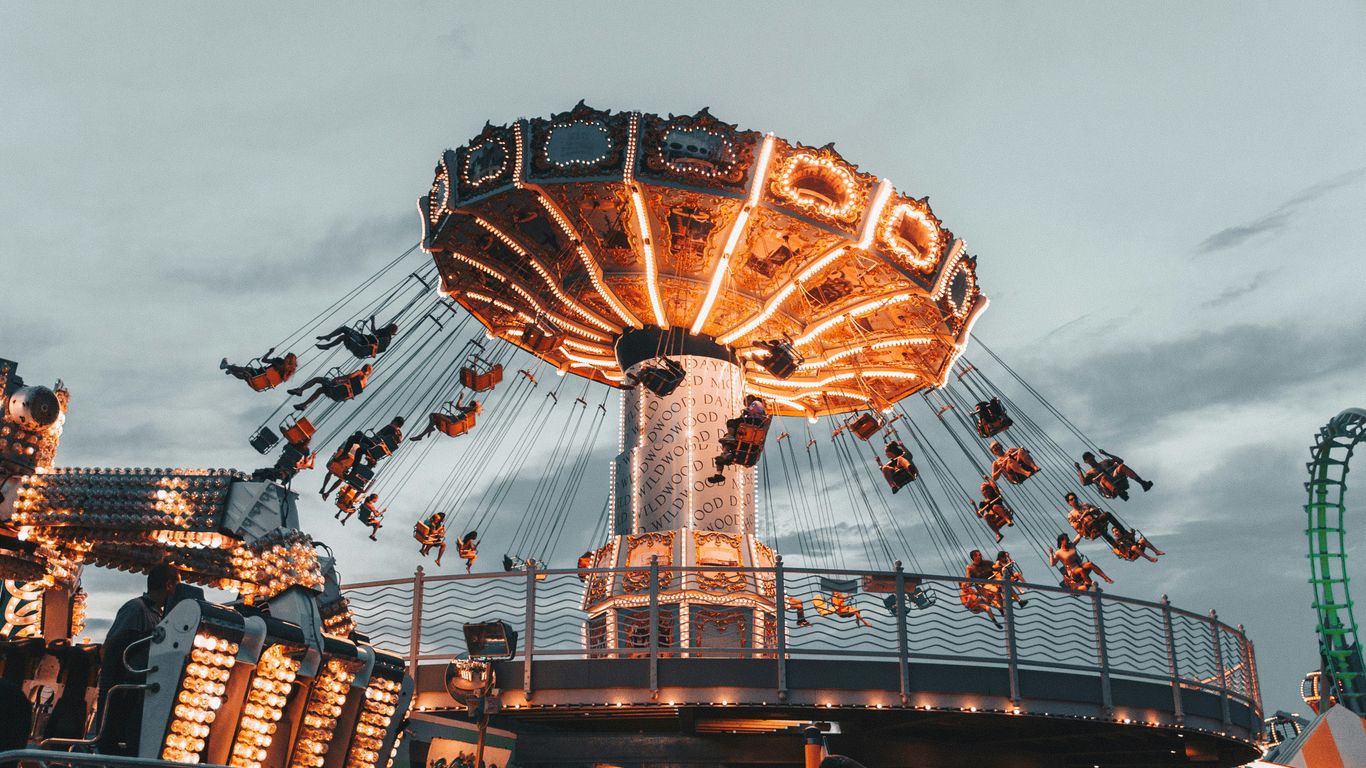
Great World was part of an earlier culture of leisure parks, with entertainment, food and social activity gathered in one lively destination. Its appeal lay in variety: different generations could find their own reason to visit, whether for a show, a meal or an evening out. The name still evokes a Singapore in which leisure was more visibly shared across a local district.
Remembering Great World also means remembering the rhythm of getting there and leaving afterwards. The journey, the crowds and the surrounding stalls were part of the experience rather than incidental details.
The Satay Club as a vanished waterfront gathering place
The Satay Club was a waterfront gathering place associated with smoky grills, informal seating and the easy sociability of eating outside. Its memory is carried through taste and smell as much as through photographs. A former visitor may remember choosing skewers, wiping away the heat and watching the shoreline while dinner unfolded around them.
When such a place disappears, the loss is not simply culinary. It removes a particular arrangement of people, vendors, tables, weather and public space that cannot be reproduced by a name alone.
Old cinemas, dance halls and night-time meeting spots
Old cinemas and dance halls gave neighbourhoods their evening identities. Their illuminated signs, ticket counters and late performances created meeting points for workers, students and courting couples. Some were grand, while others were plain, but both kinds could become landmarks through repetition.
Night-time places also reveal histories that are easily missed in daytime accounts of the city. They show how people made room for pleasure, romance and friendship within a working port and a rapidly organising metropolis.
Amusement parks and family attractions remembered by generations
Amusement parks offered a concentrated form of family memory: rides, lights, snacks, noise and the small negotiations of a day out. Attractions could be temporary or long-lived, but their emotional lives often outlasted their operating years. A child’s favourite ride may become a parent’s story, then a grandparent’s description of a city that no longer looks the same.
Several patterns recur in recollections of these places:
- The journey there was part of the anticipation.
- Food stalls shaped the memory as strongly as the rides.
- Different generations used the same attraction in different ways.
- A closing date could turn an ordinary outing into a final visit.
These details make nostalgia more precise. They move it beyond a general longing for the past and towards the social life that once filled a particular site.
Lost neighbourhoods beneath a changing city
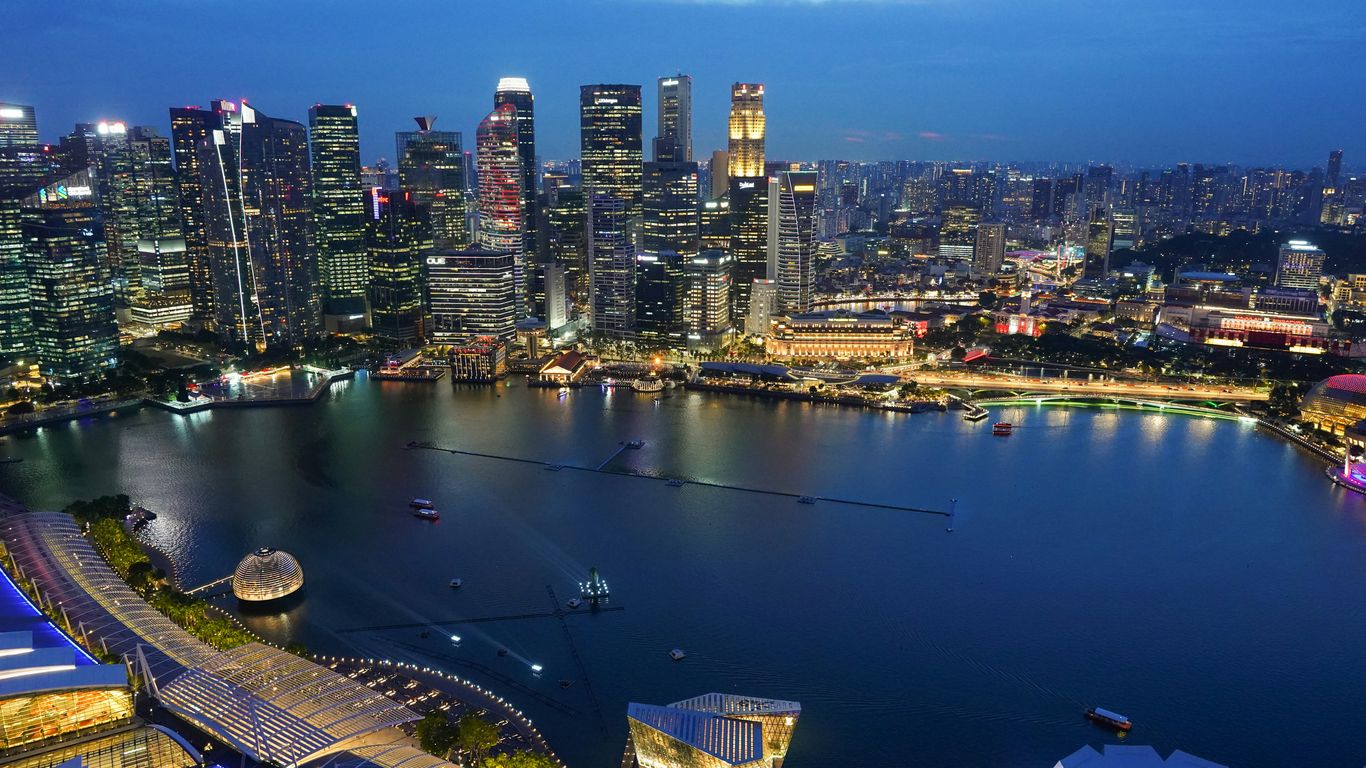
Some of the most consequential losses are not single buildings but whole environments. Kampongs, working quays and older streetscapes could be replaced in stages, leaving little visual evidence of what came before. Yet neighbourhood memory often survives in routes, recipes, names and the recollections of people who lived or worked there.
Kampongs replaced by housing estates and infrastructure
Kampongs were not uniform or untouched worlds, but they supported dense networks of neighbours, trades and shared routines. Their replacement by housing estates and infrastructure brought improvements in services and living conditions for many families, while also changing the scale and texture of daily contact. A doorstep, lane or shared yard could not always be carried into a new address.
The history of Queenstown’s planned estate shows how housing development also created new forms of community. That comparison matters: urban change can involve both genuine loss and the formation of different social institutions.
The Singapore River’s former warehouses, quays and working life
The Singapore River once functioned as a working landscape of warehouses, lighters, cargo and labour. Its quays were places of movement, trade and physical work, not only scenic edges. The Singapore River’s working history helps restore the people behind the waterfront, including the workers whose effort connected ships, warehouses and the wider port.
Cleaning and reshaping the river changed its appearance and uses. The modern promenade can be appreciated on its own terms, but it becomes more meaningful when the older working river is kept in view.
Beach Road and the transformation of the waterfront
Beach Road’s name hints at a coastline that has been repeatedly reconfigured. As the waterfront moved and the city expanded, roads, buildings and open spaces altered the relationship between residents and the sea. What looks like a settled urban district today contains older lines of travel, commerce and recreation beneath it.
Street names can preserve a faint outline of those changes. A guide to Singapore’s historic street names offers a way to read place names as clues rather than treating them as neutral labels.
Streetscapes altered by road expansion and urban renewal
Road expansion can remove more than façades. It can shorten a familiar route, divide a community and change which shops receive foot traffic. Urban renewal may also replace a mixed streetscape with a single large development, making movement more efficient while reducing the variety of small encounters along the way.
The everyday history of Singapore is especially helpful here because it centres residents, workers, migrants and families rather than viewing the city only from its major buildings. Their routines reveal what a changed road or relocated estate actually meant.
Architecture and everyday details that still matter
The memory of a place often rests on details that were never officially called landmarks. A tiled threshold, a five-foot way, a market awning or a tree at the end of a lane may be enough to bring an earlier landscape into focus. These details are modest, but they connect architecture to the bodies and habits that used it.
Shophouse facades, verandas and decorative features
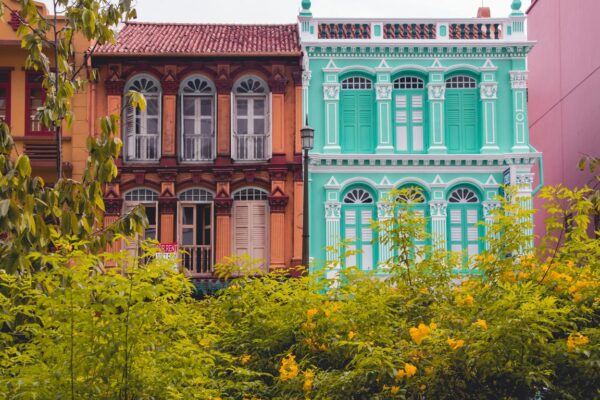
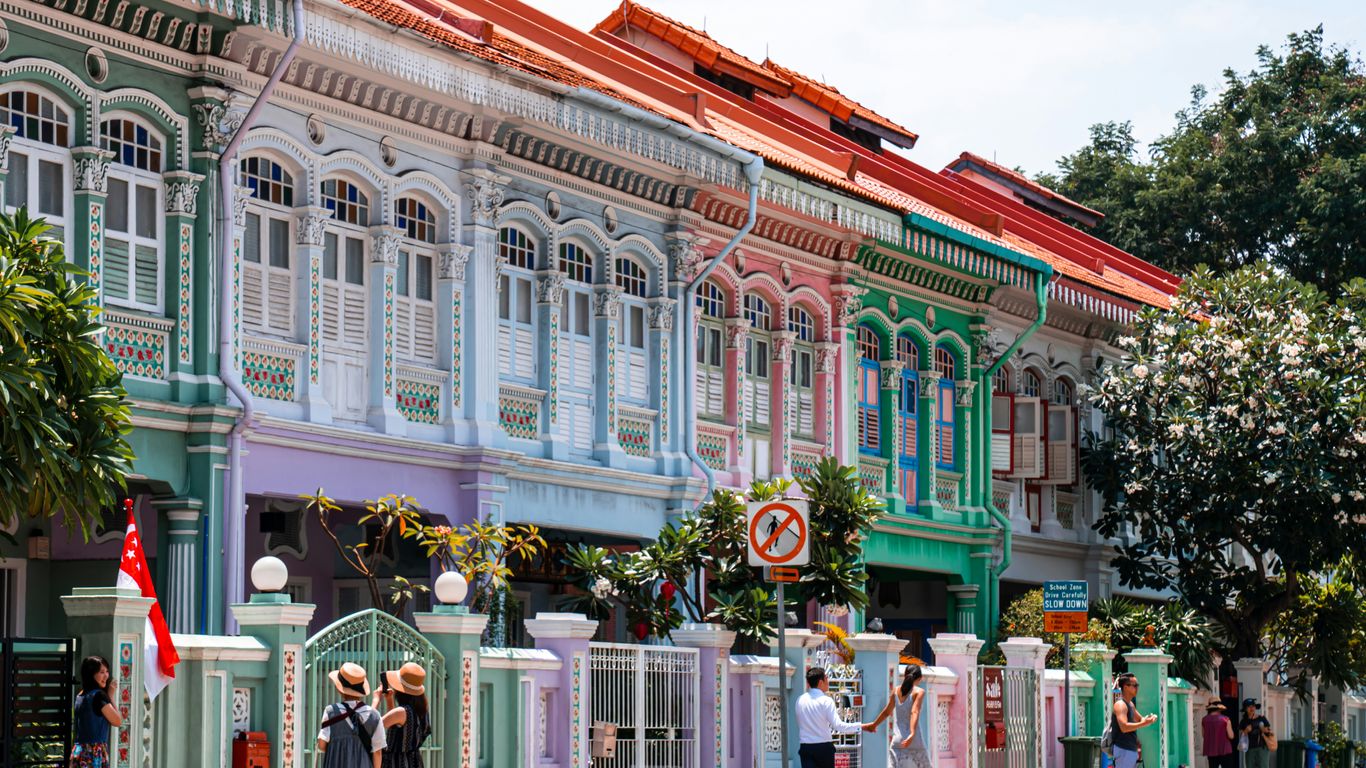
Shophouses preserve an unusually rich vocabulary of urban detail: patterned tiles, shutters, plasterwork, columns and sheltered walkways. Even when a block survives, changes in ownership, paint and use can alter the feeling of the street. A façade is therefore only one part of the story; the work conducted behind it matters too.
The neighbourhood guide to Joo Chiat and Katong shows how architecture can be read alongside food, family businesses and local change. Decorative features become more than visual ornaments when their practical and cultural settings are understood.
Markets, hawker centres and informal public spaces
Markets and hawker centres are social rooms without formal walls. They organise mornings, lunch breaks and chance meetings, while vendors develop knowledge that is often passed through practice rather than written instruction. When a market moves or a stall closes, the loss may be measured in changed habits as much as in missing structures.
Food routes, old trades and objects can preserve these connections in another form. The heritage stories collection approaches the city through neighbourhoods, foodways and everyday things, allowing small memories to sit beside more familiar monuments.
Railways, bridges and transport landmarks that shaped movement
Transport landmarks give a city its sense of distance. Stations, bridges and railway gates mark departures, reunions, commutes and the movement of goods. Tanjong Pagar Railway Station, for example, is remembered not only for its Art Deco architecture but also for the passengers, families and traders who passed through it; the railway station’s human history makes that emotional geography visible.
A transport site can therefore be a landmark even for someone who never admired its design. Its importance may lie in what it enabled: a journey home, a new job, a trading connection or a long-awaited arrival.
Trees, open spaces and natural landmarks hidden by development
Trees, drains, ponds and open plots can anchor memory as surely as buildings. They provide shade, meeting places and orientation, especially in neighbourhoods where formal architecture changes quickly. Development can retain a name while removing the view, path or canopy that gave the place its character.
This is why a historically informed walk should include pauses for absence. A missing line of trees or an inaccessible shoreline can say something about the city’s priorities, even when there is no plaque to explain it.
How lost Singapore landmarks live on today
A lost landmark is not preserved by nostalgia alone. It needs records, careful interpretation and opportunities for people to add their own knowledge. Archives can establish dates and locations, while oral histories explain how a place was actually used.
Archival photographs, newspapers and heritage collections
Photographs and newspapers help identify changing façades, businesses, crowds and public language. Heritage collections can place a remembered site within wider histories of migration, trade, education or urban planning. Museums also provide a useful setting for connecting separate fragments, as shown by Singapore’s history museums, which present different perspectives on the island’s past.
Readers should still approach archives with curiosity rather than assuming that one image tells the whole story. A photograph records a moment, and the missing moments around it may belong to people whose lives were less often documented.
Oral histories from residents, workers and former visitors
Residents, workers and former visitors remember things that formal records tend to overlook: the shortcut through a lane, the sound of a closing shop or the vendor who knew every customer. Oral history is strongest when it preserves these specific textures while acknowledging that memories can differ. Contradictions are not necessarily flaws; they can show how one place held several meanings at once.
Community-led projects are particularly valuable when contributors retain credit and consent. They allow memory to remain connected to the people who made a place meaningful.
Recreated spaces, commemorative plaques and digital exhibitions
Recreated spaces can help visitors imagine a vanished interior, but they should be identified as interpretation rather than mistaken for original fabric. Plaques and digital exhibitions perform a similar task by giving an absent site a visible point of reference. Their success depends on context: a date alone is less evocative than an explanation of who used the place and why it mattered.
For families and schools, small museums and place-based collections can make this work approachable. The small heritage museums guide suggests a slower way to encounter stories that might be overlooked in larger institutions.
Walking tours and heritage trails that connect past and present
Walking brings lost landmarks into relationship with the city that replaced them. A guide can point out an old alignment, a surviving shopfront or the distance between a former home and a present-day road. The experience is not a performance of certainty; it is an invitation to notice what remains and ask what has changed.
A good route usually combines several kinds of evidence:
- A map or photograph that locates the earlier place.
- A resident’s or worker’s account of daily use.
- A surviving architectural, street or landscape clue.
- Time to discuss how the area feels now.
That combination keeps the walk grounded. It connects research with lived experience without pretending that a vanished site can be fully restored.
Why remembering lost landmarks matters
Remembering lost places is not an argument against every act of redevelopment. Cities have to provide homes, transport and public services, and communities themselves change. The value of memory lies in making those changes legible, so that progress is understood alongside the lives and attachments it has displaced.
The cultural cost of replacing familiar places
When a familiar place disappears, a community loses a shared reference point. The cost may appear in small ways: an older person can no longer explain where a childhood cinema stood, or a family story loses its physical setting. Over time, these absences can make a city feel newer than its people are.
Remembering does not require preserving every structure unchanged. It can mean recording names, acknowledging former uses and leaving room for the people affected by change to describe it in their own words.
What vanished sites reveal about class, migration and daily life
Lost sites often expose whose work and leisure were visible, and whose were overlooked. River quays point towards labour and migration; markets reveal informal economies; entertainment grounds show how different groups shared or occupied public space. The city’s history becomes fuller when these ordinary activities are considered alongside official institutions.
The heritage sites beyond the usual stops approach is valuable for this reason. It directs attention towards communities, faith, trade and human experience rather than limiting heritage to grand façades.
Lessons for conserving Singapore’s remaining heritage
The clearest lesson is that conservation should begin before a place is reduced to a final photograph. Buildings matter, but so do interiors, streetscapes, working practices, trees, foodways and community access. Research should therefore ask not only whether a structure is old, but what relationships and knowledge depend on it.
The city’s conservation choices also benefit from honest explanation. People can understand difficult decisions more readily when the record includes both public gains and cultural losses.
How to explore the city with a more historically informed eye
A historically informed eye notices layers rather than searching only for intact monuments. It looks at a shop sign, a road bend, a sheltered walkway or a gap between buildings and asks what stood there before. It also listens to residents and workers, whose knowledge may not appear on official plaques.
Visitors and residents can begin with a neighbourhood, follow an old street name, compare a current view with an archive image and leave space for uncertainty. For those who want a more guided encounter, plan a heritage walk can turn that curiosity into a small-group experience rooted in local stories.
Walk Through Singapore’s Stories
Singapore Heritage offers small-group heritage walks and storytelling experiences that connect people with neighbourhoods, foodways, objects, places and everyday practices. Readers can choose a route that helps them carry the city’s layered stories beyond the page.
Conclusion
Lost Singapore landmarks endure because buildings are only one part of a place’s life: memory also lives in routes, meals, work, voices and the details people notice without thinking. To remember them is to see the present city more clearly, with affection for what remains and care for what may still be protected.
Frequently Asked Questions
What are lost Singapore landmarks?
They are buildings, attractions, neighbourhoods or landscapes that have been demolished, removed or transformed so extensively that their earlier character is no longer physically present.
Why were many Singapore landmarks demolished?
Landmarks were often removed as the city provided housing, transport, infrastructure and new commercial or civic space. Decisions could also involve age, maintenance, safety or changing patterns of use.
Is a transformed place the same as a demolished landmark?
Not exactly. A transformed place may retain its location, name or fragments, while a demolished landmark survives mainly through records, memories and interpretation.
Which lost civic landmarks are most remembered?
The National Theatre, Van Kleef Aquarium, the former National Library and earlier civic buildings around the Padang are frequently remembered because they hosted public, cultural or educational experiences.
How can someone research a vanished place?
They can compare archival photographs, maps, newspapers, museum collections and oral histories. Current street visits can then reveal surviving alignments, names or architectural traces.
Why are ordinary markets and cinemas part of heritage?
They shaped daily routines and social relationships. Their importance comes from repeated use by residents, workers, families and visitors, not only from architectural distinction.
Can a walking tour reveal a landmark that no longer exists?
Yes. A thoughtful walk can connect the former location to photographs, street names, surviving buildings and personal accounts, helping participants understand both the vanished place and the city around it today.